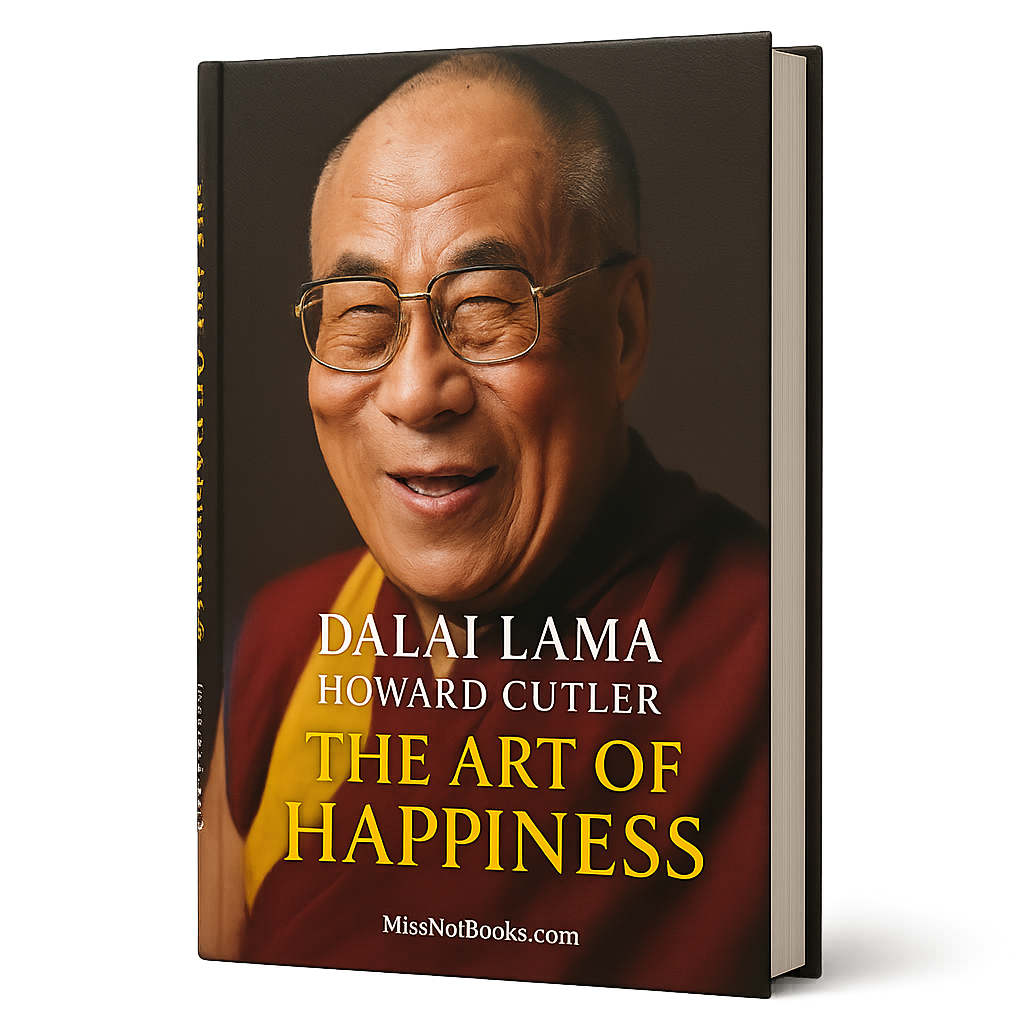
The Art of Happiness
In a world where the relentless pursuit of material wealth and success often overshadows the quest for inner peace and fulfillment, one groundbreaking book stands apart, offering profound insights into the nature of happiness and the human experience. This transformative work challenges conventional wisdom about what it means to live a truly happy life, blending ancient Buddhist philosophy with contemporary psychology. It invites readers to reassess their priorities, emphasizing that happiness is not just a fleeting emotion but a deep, lasting state that can be cultivated through mindful practices and compassion. Its impact resonates across cultures and generations, appealing to anyone seeking solace and understanding amidst life’s complexities.
Core Ideas and Main Arguments
- Happiness as a Skill: The book posits that happiness is not merely a byproduct of external circumstances but a skill that can be developed through training the mind.
- Importance of Compassion: Central to the arguments is the idea that cultivating compassion—both for oneself and others—is fundamental to achieving lasting happiness.
- Mindfulness and Presence: Readers are encouraged to practice mindfulness, emphasizing the importance of being present in the moment to appreciate life.
- Suffering as a Teacher: The authors frame suffering not as a barrier to happiness but as an essential part of the human experience that offers valuable lessons.
- Interconnectedness: The book underscores the interconnectedness of all beings, revealing how our happiness is linked to the happiness of others.
Author’s Intentions and Context In an era characterized by rapid change and increasing discontent, the authors of this work set out to bridge the gap between Eastern wisdom and Western thought. They aimed to provide a practical guide rooted in the Dalai Lama's profound understanding of human nature while incorporating modern psychological theories. The intent was to help individuals navigate the complexities of modern life by fostering a mindset that prioritizes inner joy, contentment, and community rather than superficial measures of success.
Structure of the Book The book is structured thoughtfully, beginning with foundational concepts of happiness before delving deeper into practical applications.
- The Nature of Happiness: Introduces the idea that happiness is a skill.
- The Role of Compassion: Explores various forms of compassion and their role in our well-being.
- Mindfulness Practices: Provides techniques for cultivating mindfulness in everyday life.
- Understanding Suffering: Discusses the importance of recognizing and learning from suffering.
- Cultivating Connection: Concludes with insights on the importance of relationships and community in fostering joy.
Key Takeaways
- Happiness can be deliberately cultivated through practice and intention.
- Compassion acts as a powerful antidote to personal suffering and a gateway to collective happiness.
- Mindfulness enhances our awareness and appreciation of life.
- Embracing suffering can lead to deeper understanding and growth.
- Recognizing our interconnectedness highlights the importance of empathy in our pursuit of happiness.
Why It’s Important to Read This book remains a critical resource for anyone seeking not just surface-level happiness but a profound understanding of what it means to live well. Its insights are as applicable today as they were at the time of its writing, making it essential reading for individuals grappling with the stresses of modern life, practitioners of mindfulness, or anyone in search of deeper meaning in their daily experiences. It offers valuable tools for self-reflection and personal growth, making it a life-changing read for those willing to engage with its teachings.
Impactful Quotes and Analysis
-
“Happiness is not something ready-made. It comes from your own actions.”
This quote encapsulates the book's core message—that happiness is an active pursuit, cultivated through conscious effort rather than external circumstances. -
“If you want others to be happy, practice compassion. If you want to be happy, practice compassion.”
Here, the authors highlight the reciprocal nature of happiness and compassion, suggesting that our well-being is deeply intertwined with our treatment of others. -
“Suffering usually arises from wanting things to be different than they are.”
This quote serves as a reminder of the acceptance that is often necessary for inner peace, encouraging readers to embrace their realities rather than resist them.
About the Author His Holiness the 14th Dalai Lama, Tenzin Gyatso (born July 6, 1935), is the spiritual leader of Tibetan Buddhism and a global advocate for peace and compassion. His teachings integrate ancient Buddhist wisdom with modern concerns, influencing millions around the world. Dr. Howard Cutler, a psychiatrist, authored this work alongside the Dalai Lama, contributing a perspective grounded in contemporary psychological practices. Together, they created a legacy that transcends cultural boundaries, encouraging individuals to discover happiness within themselves.
This monumental work is The Art of Happiness by Dalai Lama and Howard Cutler, brought to you for educational purposes by MissNotBooks.com.