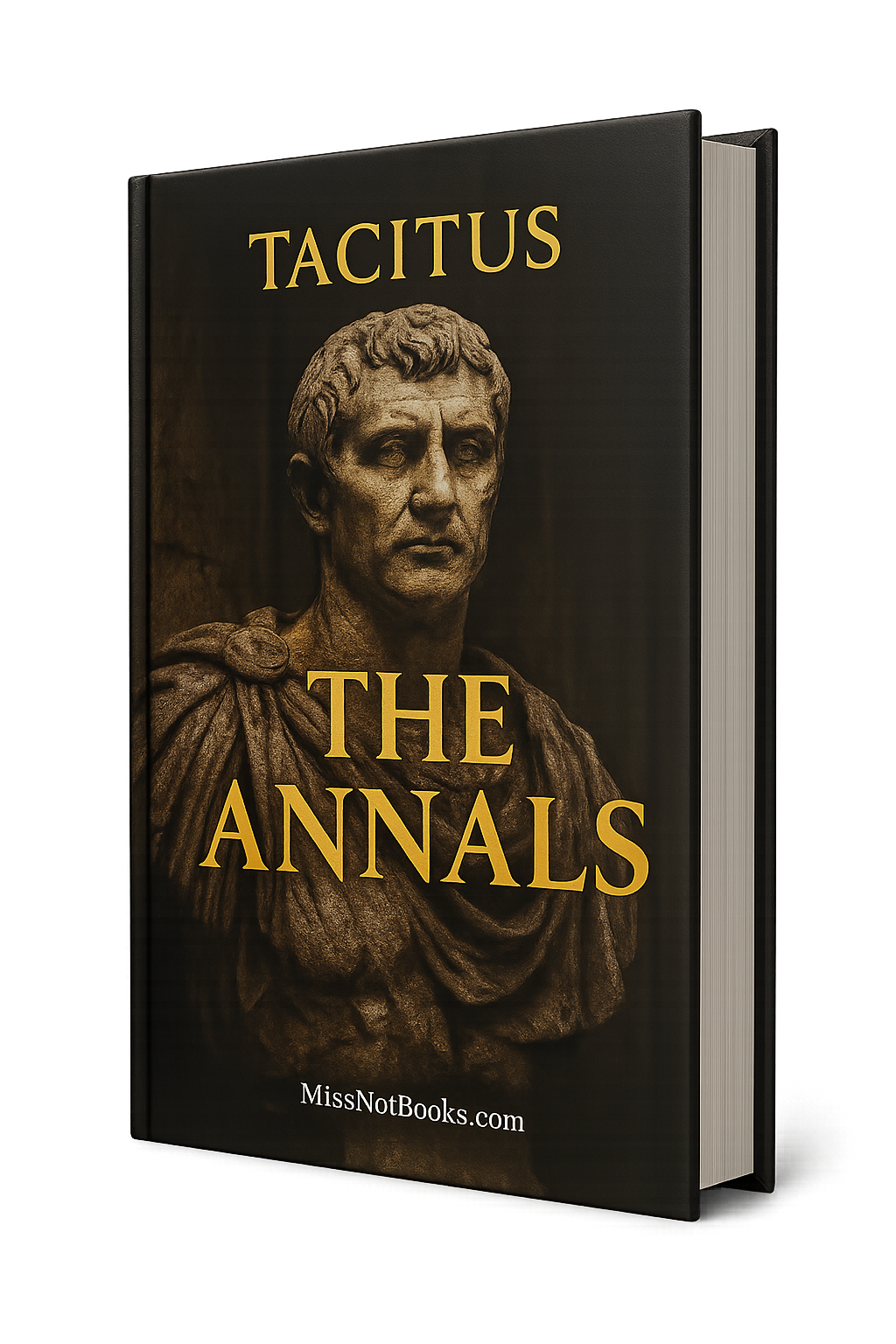
The Annals
In the rich tapestry of literary history, certain works stand apart for their profound ability to illuminate the human condition and offer unflinching critiques of power. One such work delves into the depths of political intrigue and moral decay, revolutionizing the narrative of history by presenting it through a lens of skepticism and a commitment to truth. This book not only challenged contemporary perceptions of authority and governance but also introduced a nuanced understanding of the complex dynamics that characterize human behavior within the corridors of power. Its transformative impact lies in its relentless pursuit of realism in recounting events, forever altering how subsequent generations conceive of historical narrative.
Core Ideas and Main Arguments
- The Complexity of Power: The book examines how the pursuit of power often leads to corruption, betrayal, and moral compromise, reflecting on the intricate relationship between rulers and the ruled.
- The Role of the Individual: It highlights the influence of individuals in shaping historical events, portraying them as both victims and agents of change within the sociopolitical landscape.
- Critique of Governance: Through incisive analysis, the work critiques the flaws of leadership and governance, questioning the legitimacy and morality of authority in times of upheaval.
- Historical Methodology: The author innovatively blends narrative history with personal anecdotes, emphasizing the importance of firsthand accounts and reliable sources.
Author’s Intentions and Context The author embarked on a mission to document the tumultuous history of the Roman Empire during a period marked by profound political instability and moral decline. Responding to a landscape rife with despotism and moral failures, he aimed to present an authentic historical account that would serve as both a warning and a lesson for future generations. In a time when history could easily veer into propaganda, his commitment to factual integrity and critical examination offered a refreshing and necessary perspective.
Structure of the Book The book is meticulously organized into sections that unfold chronologically, allowing readers to navigate through various pivotal events and their implications. Each chapter delves into significant episodes that illustrate the overarching theme of the corruptive nature of power and the volatile interplay between various factions within Roman society. This structured approach not only aids comprehension but also enhances the dramatic tension as narratives unfold, culminating in profound insights.
Key Takeaways
- The intricacies of human ambition often lead to moral decay and societal breakdown.
- Historical accounts must be critically assessed and contextualized, emphasizing the reliability of sources.
- Individual actions, however small, contribute significantly to the larger historical narrative.
- A reflective examination of the past can provide valuable lessons for contemporary governance and ethics.
Why It’s Important to Read Engaging with this work remains essential today as it educates readers on the timeless characteristics of political power and morality. Its insights resonate especially with scholars, historians, and policymakers who grapple with similar challenges in their own contexts. Readers seeking to understand the undercurrents of power dynamics will find this book to be an invaluable resource, illuminating the persistent cycles of history that continue to echo in modern governance.
Impactful Quotes and Analysis
-
"In the midst of a corrupt society, virtue becomes a target, and the innocent suffer while the guilty flourish."
This poignant observation captures the paradox of morality in politics, exposing the painful truth of unjust societies and the plight of the well-meaning. -
"Those who hold power are often the least fit to wield it."
This striking statement serves as a clarion call to question authority and scrutinize the motives of leaders, reminding us that competence and virtue do not always align. -
"History is the witness of the times, the light of truth."
This reflects the author’s dedication to chronicling an honest account of events, establishing the importance of truth as a guide for understanding and navigating human affairs.
About the Author The author of this remarkable work, Publius Cornelius Tacitus (c. 56 – c. 120 AD), was a Roman historian and senator known for his eloquent prose and critical examinations of political life in the Roman Empire. His legacy endures through his meticulous chronicling of history and his profound insights into human nature, making his work foundational for both historical study and the analysis of political power.
Don’t miss the opportunity to engage with one of the most influential works of all time. Buy it today and explore the complexity of power and human nature that shaped our past and continues to challenge our present. This monumental work is The Annals by Tacitus, brought to you for educational purposes by MissNotBooks.com.