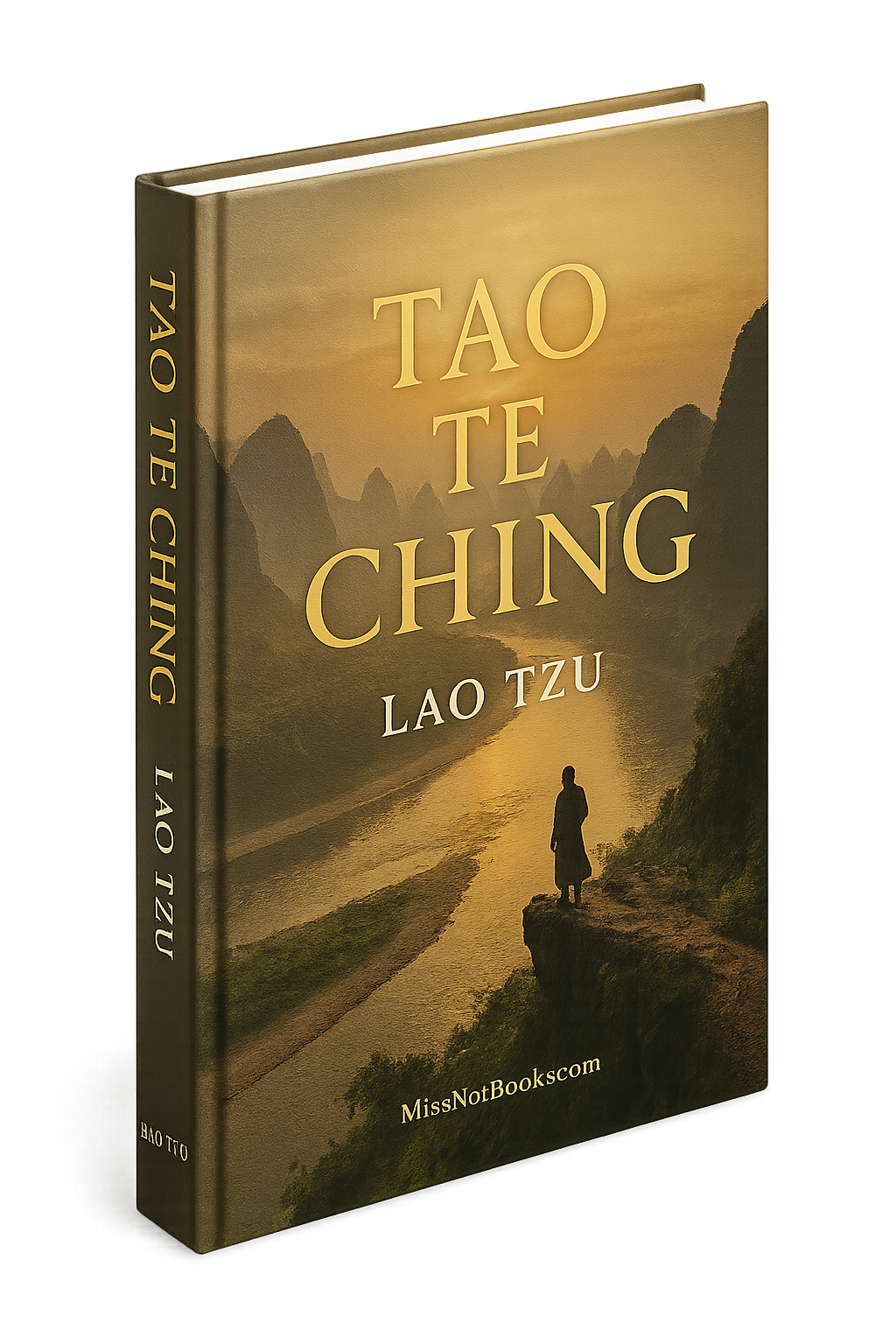
Tao Te Ching
Throughout the annals of human thought, few texts have wielded such profound transformative power as the work we explore today. It revolutionizes our understanding of life, existence, and the nature of the world itself. By presenting a philosophy that emphasizes harmony, balance, and the simplicity of nature, it challenges the complexities of human desires and societal structures, inviting readers to embrace a fundamentally different view of the universe. This text has been a touchstone for millions, inspiring spiritual seekers, philosophers, and artists alike with its poetic language and deep insights. Don’t miss the opportunity to engage with one of the most influential works of all time. Buy it today and explore the roots of Eastern philosophy.
Core Ideas and Main Arguments
- Wu Wei (Non-Action): The concept of effortless action, advocating for alignment with the natural flow of life rather than forced interventions.
- Naturalism: A focus on the inherent value of nature and the importance of living in accordance with its rhythms.
- Dualism of Opposites: Emphasizes the interdependence of opposites such as light and dark, male and female, suggesting that all things derive their meaning from contrast.
- Simplicity and Humility: Encourages a return to simplicity as a means of achieving peace and understanding, asserting that true wisdom lies in humility.
- The Dao (The Way): Introduces the central idea of a universal principle that governs all things, which is both a path and a force that transcends human understanding.
Author’s Intentions and Context
The author set forth his philosophical insights during a time of significant upheaval in ancient China, characterized by social unrest, political strife, and a search for meaning among the populace. Aiming to provide clarity and guidance, the text reflects a desire to heal the divisions within society and restore a sense of inner peace through an understanding of the Dao. In a world overly caught up in the struggle for power and recognition, the author challenges readers to seek serenity and balance, drawing from the wisdom of nature and their own inner selves.
Structure of the Book
The text is intricately structured into 81 short chapters or verses, each containing aphoristic wisdom and profound insights.
- Chapters 1-35: Focus on the nature of the Dao, introducing the fundamental concepts of existence and the importance of living in accordance with its principles.
- Chapters 36-60: Address interpersonal relationships and governance, advocating for humility and restraint in leadership while promoting harmony among people.
- Chapters 61-81: Conclude with reflections on simplicity, virtue, and the nature of the wise person, urging the reader to embody the teachings in daily life.
Each section contributes to a cumulative understanding of the holistic perspective that the text promotes, guiding the reader from abstract principles toward practical application.
Key Takeaways
- Embracing an attitude of non-action can lead to greater harmony within oneself and the world.
- Recognizing the interconnectedness of opposites can foster deeper understanding and compassion.
- Simplicity is not a lack of wealth, but an abundance of clarity and peace.
- True strength lies not in aggression, but in humility and the ability to yield.
Why It’s Important to Read
The teachings found in this text are timeless and resonate deeply with the human condition across cultures and epochs. Its emphasis on living in harmony with nature speaks to contemporary issues such as environmental sustainability and personal well-being. Anyone interested in philosophy, spirituality, or self-improvement will find that engaging with this work not only enriches their worldview but also provides practical wisdom for navigating life's complexities. Scholars, seekers, and casual readers alike will benefit immensely from the insights offered within its pages.
Impactful Quotes and Analysis
-
“The journey of a thousand miles begins with a single step.”
This iconic quote encapsulates the essence of beginning any endeavor, emphasizing the importance of taking initial, often humble, action toward our goals. -
“When you are content to be simply yourself and don’t compare or compete, everybody will respect you.”
Here, the author highlights the pitfalls of societal competition, proposing that self-acceptance fosters genuine respect from others, a powerful lesson in today’s culture of comparison. -
“Knowing others is intelligence; knowing yourself is true wisdom.”
This profound differentiation invites the reader to explore deeper self-awareness as a pathway to true wisdom, shifting focus from external evaluations to internal insights.
About the Author
Lao Tzu, a seminal figure in Chinese philosophy, is believed to have lived around the 6th century BCE. Renowned as the founder of Daoism, his teachings have profoundly influenced Eastern thought, religion, and culture. His work underscores the importance of living in harmony with the Dao and promoting peace and balance in interpersonal relations. Lao Tzu’s legacy endures through the countless generations that have turned to his teachings in pursuit of wisdom and enlightenment.
This monumental work is Tao Te Ching by Lao Tzu, brought to you for educational purposes by MissNotBooks.com.