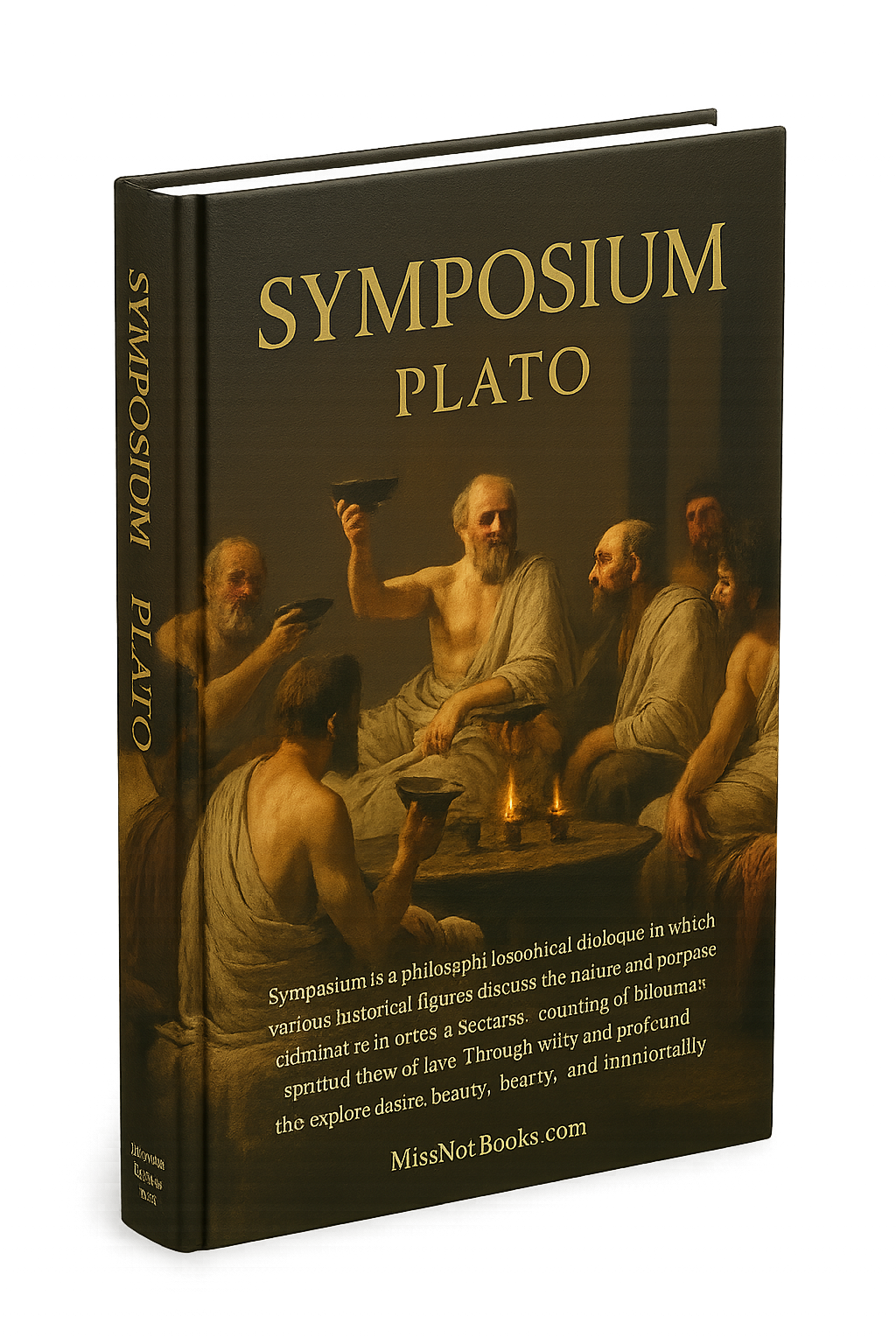
Symposium
Throughout history, few texts have profoundly reshaped the landscape of philosophical inquiry, art, and the understanding of love and human relations as dramatically as this pivotal work. Its daring insights challenge traditional views and ignite passionate discourse, placing timeless questions at the forefront of human thought. It revolutionizes not only how we comprehend love, beauty, and desire but also sets the stage for numerous fields of study including ethics, psychology, and theology. This work continues to resonate powerfully, breaking down barriers of time and culture, and inviting readers into a rich tapestry of dialogues that reflect the complexities of the human experience. Don’t miss the opportunity to engage with one of the most influential works of all time. Buy it today and explore the beauty of human language.
Core Ideas and Main Arguments
- The Nature of Love: The text presents various perspectives on love (Eros), defining it as a pursuit of beauty and truth that transcends the physical and leads to higher forms of knowledge.
- Dialectical Method: It employs a dialectical approach to reach deeper truths, showcasing how philosophical discourse fosters understanding and enlightenment.
- The Role of Desire: Desire is depicted as a driving force for philosophical inquiry, suggesting that our deepest longings lead us to contemplation and, ultimately, to the divine.
- Immortal Ideas: The work explores the concept of immortality through ideas, positing that ideas themselves, especially those of beauty and love, achieve a form of eternal existence beyond physical life.
- The Social Dimension of Love: It examines the communal aspects of love and how relationships inform personal growth and societal structures.
Author’s Intentions and Context
This influential work emerges from a time of vibrant philosophical exploration in Ancient Greece, particularly during the peak of Athenian democracy. The author sought to unveil the multifaceted nature of love, offering a response to the cultural, ethical, and political challenges of the era. In an age where rhetoric and personal opinion often overshadowed objective truth, the author aimed to lay down a systematic exploration of ideas that would encourage reasoned dialogue and deeper understanding among people.
Structure of the Book
The text is organized into a series of dialogues among prominent figures, each contributing unique perspectives and insights:
- Introduction - Sets the stage for the exploration of love.
- Contributions from Various Speakers - Each character articulates their vision of love, juxtaposing views on physical versus intellectual desire, and the nature of beauty.
- Socrates’ Conclusion - Concludes with a philosophical account of love, integrating the threads of discussion into a holistic understanding.
- Reflection on the Divine - Engages with the theme of transcendence, culminating in discussions of immortality and the pursuit of truth.
Key Takeaways
- Love as a Unifying Force: The text conveys that love is a fundamental force that connects individuals, driving us toward a greater understanding and appreciation of one another.
- The Pursuit of Truth: It emphasizes the importance of seeking truth through dialogue, revealing that wisdom often emerges from collective reasoning.
- Philosophy as a Way of Life: The work suggests that philosophical inquiry is not merely academic but a vital part of living a fulfilled and meaningful life.
Why It’s Important to Read
This text remains essential not just for its philosophical depth but for its exploration of themes that continue to define human existence. It encourages introspection and dialogue about love, truth, and the nature of relationships in a contemporary context. Whether you are a student of philosophy, a lover of literature, or someone seeking understanding in personal and social dynamics, this work offers profound insights that are relevant in today's world.
Impactful Quotes and Analysis
-
“Love is the pursuit of the whole.”
- This quote encapsulates the idea that love drives us to seek completeness, both in our relationships and in our quest for knowledge, inspiring readers to reflect on the nature of their connections.
-
“He who is in love is in a kind of madness.”
- Here, the author acknowledges the transformative and often irrational nature of love, emphasizing its power to transcend ordinary existence, which resonates with the emotional experiences of many.
-
“The greatest good is the pursuit of truth.”
- This statement underscores the book's central premise that the quest for truth is the highest calling, positioning intellectual integrity as a vital part of love and existence.
About the Author
Plato, born around 428/427 BC and passing in 348/347 BC, was a pivotal figure in Western philosophy, establishing the foundations for much of Western thought through his dialogues which examined ethics, politics, and the nature of reality. As a student of Socrates and the teacher of Aristotle, his influence permeated a range of disciplines, making him a cornerstone of philosophical inquiry. His legacy continues to inspire and challenge thinkers across generations.
This monumental work is Symposium by Plato, brought to you for educational purposes by MissNotBooks.com.