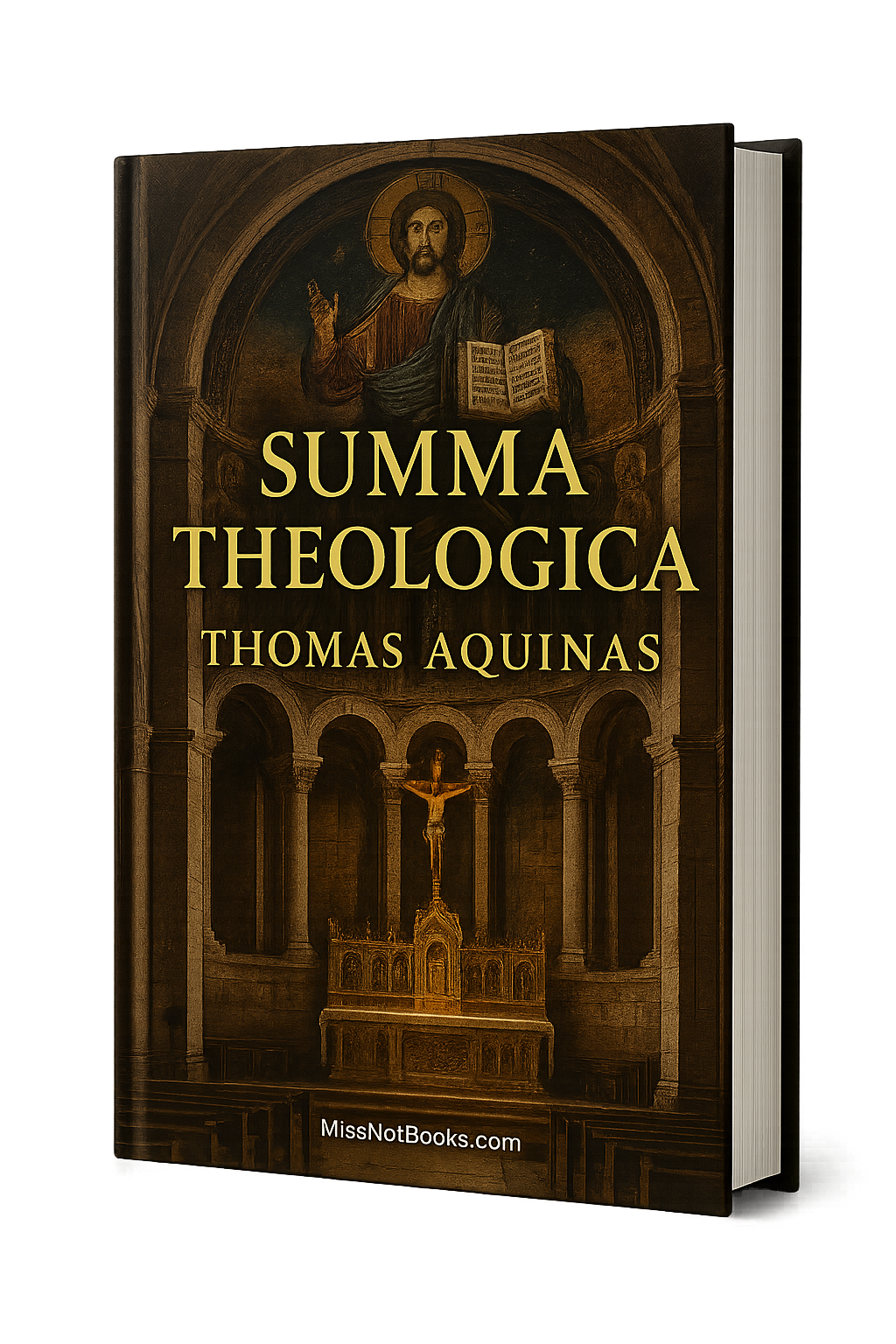
Summa Theologica
At the crossroads of faith and reason lies a transformative work that revolutionized theological discourse, offering a comprehensive synthesis of Christian doctrine and Aristotelian philosophy. This book boldly challenged preconceived notions of divine knowledge and human understanding, ushering in an era where faith and rational inquiry could coexist harmoniously. Its influence has permeated centuries, affecting not only religion but also the realms of ethics, law, and metaphysics. Engaging with this seminal text invites readers into a profound dialogue about existence, morality, and the nature of God, firmly establishing it as a touchstone for scholars and seekers alike. Don’t miss the opportunity to engage with one of the most influential works of all time. Buy it today and explore the foundation of modern theology.
Core Ideas and Main Arguments
- The Nature of God: The book meticulously delineates God's attributes, including omnipotence, omniscience, and transcendence, providing a rational foundation for understanding the divine.
- Faith and Reason: It emphasizes the compatibility of faith and reason, asserting that human intellect can lead to an understanding of divine truths.
- Moral Law: The author articulates a vision of natural law as innate to human beings, suggesting that moral truths are discoverable through reason.
- The Role of Grace: It explores the necessity of divine grace for salvation, juxtaposed with human free will, to highlight the interplay between divine assistance and personal agency.
Author’s Intentions and Context
Thomas Aquinas wrote this work during the 13th century, a critical time when Islamic philosophy and the rediscovery of Aristotle were reshaping the intellectual landscape of Europe. His intention was to provide a comprehensive defense of Christian teachings against the backdrop of emerging rationalist thought. By addressing philosophical challenges posed by his contemporaries and integrating classical philosophy with theology, Aquinas aimed to demonstrate the reasonableness of faith, thus reinforcing the intellectual legitimacy of Christianity within a rapidly evolving cultural framework.
Structure of the Book
The book is divided into multiple parts, each structured to build upon the preceding arguments:
- First Part: Discusses the existence and nature of God.
- Second Part: Delves into human nature, including the morality of human actions.
- Third Part: Addresses Christ and the sacraments, culminating in a synthesis of all preceding discussions into a coherent system of Christian belief.
Each section meticulously constructs a philosophical argument, guiding the reader through intricate theological concepts with clarity and order.
Key Takeaways
- The harmonious relationship between faith and reason can enrich one’s understanding of both.
- Moral truths are discernible through human reason, laying the groundwork for a universal ethical framework.
- The essence of humanity encompasses both the inclination toward good and the need for divine support to fulfill moral obligations.
Why It’s Important to Read
This work remains essential for anyone interested in the foundational principles of Christian thought, philosophy, or ethics. Scholars in theology, philosophy, and law will find invaluable insights that continue to resonate in contemporary discussions around morality and human rights. It serves as a profound reminder of the power of rational inquiry into spiritual matters and stands as a testament to the intellectual tradition that informs modern discourse.
Impactful Quotes and Analysis
-
“To love is to will the good of another.”
This quote encapsulates the ethical core of Aquinas’ thought, positing love as a deliberate action directed toward seeking the welfare of others, resonating with contemporary discussions of altruism and ethics. -
“Grace does not destroy nature, but perfects it.”
In this statement, Aquinas masterfully illustrates the interplay between divine grace and human nature, proposing that true fulfillment arises not from abandonment of natural inclinations but from their elevation through divine influence. -
“The things that we love tell us what we are.”
This profound observation invites reflection on personal values, suggesting that one's affections reveal foundational truths about identity and purpose.
About the Author
Thomas Aquinas (1225–1274) was an Italian Dominican friar, theologian, and philosopher whose legacy profoundly shaped Western thought. Renowned for his systematic approach to theology, Aquinas is often referred to as the "Angelic Doctor." His integration of Aristotelian philosophy with Christian doctrine laid the groundwork for Roman Catholic theology and had a lasting impact on medieval and modern philosophy. His intellectual contributions continue to resonate in contemporary theological and philosophical discussions.
This monumental work is Summa Theologica by Thomas Aquinas, brought to you for educational purposes by MissNotBooks.com.