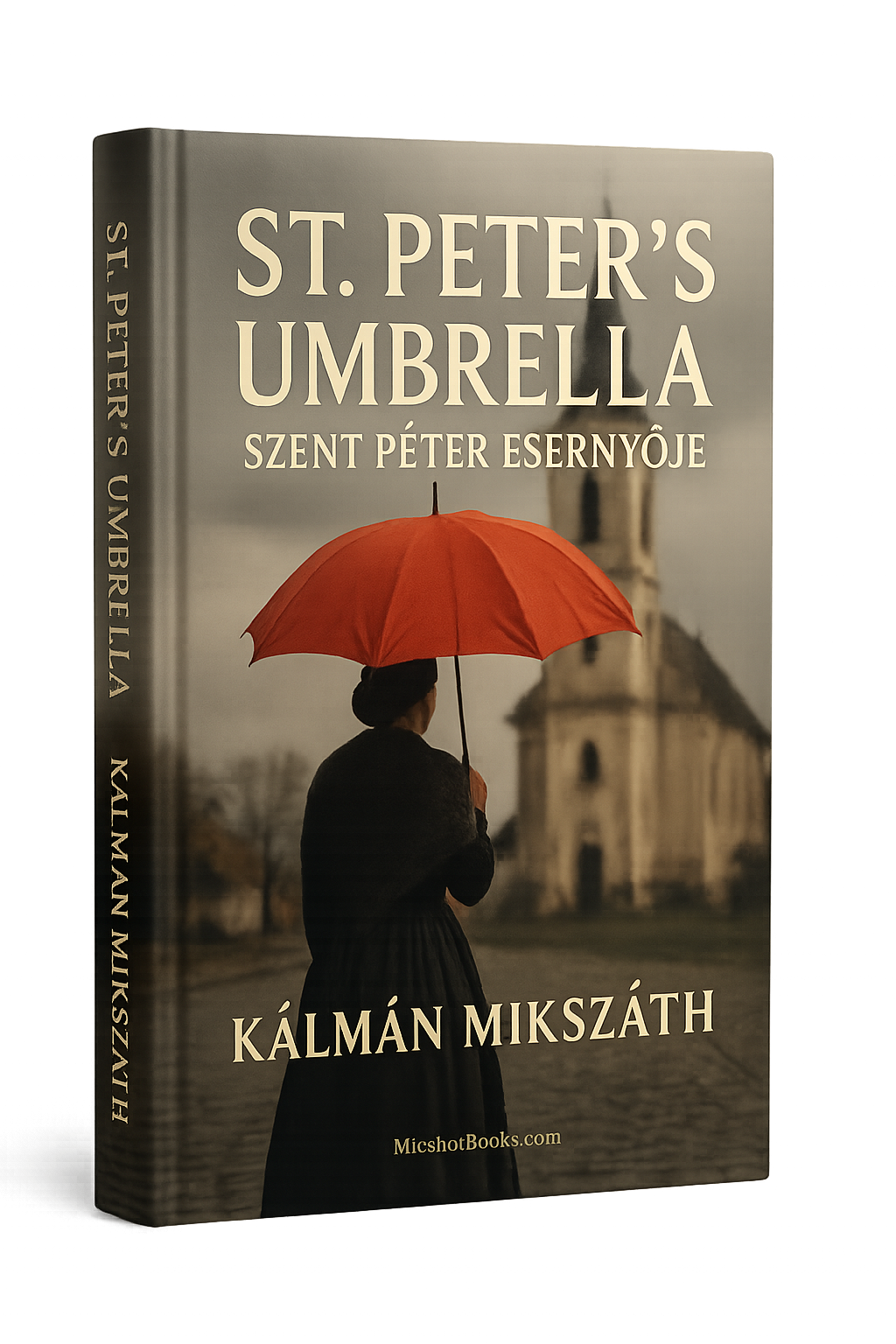
St. Peter’s Umbrella (Szent Péter esernyője)
In an era marked by political upheaval and social change, a profound examination of human nature and systemic flaws found its voice, challenging preconceived notions and resonating through the corridors of time. The work in question not only illuminated the intricate dynamics of societal structures but also laid bare the often tragicomic inconsistencies of human behavior. This transformative narrative has shaped discourse across generations, revolutionizing the way we perceive individual agency within the tapestry of cultural and political landscapes. Don’t miss the opportunity to engage with one of the most influential works of all time. Buy it today and explore the beauty of human resilience against the backdrop of societal adversity.
Core Ideas and Main Arguments
- Human Fallibility: The exploration of the inherent weaknesses within individuals and systems, highlighting the folly of absolute power and the absurdity that often accompanies it.
- Society vs. Individual: A nuanced portrayal of the tension between societal expectations and personal ambition, showcasing how these forces shape human relationships and moral decisions.
- Cultural Critique: An incisive commentary on the socio-political climate of the time, critiquing prevailing ideologies and reflecting on the innate contradictions of societal progress.
- Humor as a Mirror: The clever use of humor to reveal deeper truths about human nature, effectively bridging the gap between comedy and tragedy.
- Resilience of the Human Spirit: An underlying current that celebrates the tenacity and courage of individuals navigating the absurdities of life.
Author’s Intentions and Context
The author, responding to a period rife with societal contradictions and burgeoning modernity, aimed to create a reflection on the human condition that transcended mere entertainment. By marrying satire with serious social critique, the author sought to stimulate critical thinking among readers, prompting them to question the efficacy of established norms and the authenticity of their own beliefs. This work emerged against a backdrop of rapid political change and cultural awakening, capturing the essence of a society on the brink of transformation, inviting readers to consider the broader implications of their own roles within it.
Structure of the Book
The narrative unfolds in a series of interconnected chapters that weave together various strands of character development and thematic exploration:
- Introduction of Key Characters: Set up the stage for a rich exploration of interpersonal dynamics and societal roles.
- Conflict and Conspiracy: Provide insight into the local political intrigues and personal ambitions that drive human interactions.
- Climactic Revelations: Lead to poignant moments that reveal character flaws and societal truths, challenging long-held assumptions.
- Resolution and Reflection: Conclude with a thoughtful analysis of the outcomes, encouraging readers to reflect on the lessons presented.
Key Takeaways
- Individuals often act in contradiction to their own values when faced with societal pressures.
- Humor can serve as a powerful tool to illuminate the absurdities of life.
- Political and social institutions are often flawed reflections of human nature.
- The capacity for personal growth exists even amid systemic failures.
Why It’s Important to Read
This work is not just historical literature; it is a timeless examination of the complexities of human nature and an exploration of the societal frameworks that shape our lives. Its relevance resonates today, as contemporary readers grapple with similar themes of legitimacy, authority, and ethical conduct. Academicians, social commentators, and anyone interested in the human experience will find deep value in revisiting these narratives and engaging with the questions they pose about our world.
Impactful Quotes and Analysis
-
“Laughter is the closest distance between two people.”
- This quote encapsulates the essence of human connection, suggesting that humor can bridge divides and foster understanding, even in turbulent times.
-
“In society, one must often wear a mask.”
- Here, the author reflects on the facades people adopt to navigate societal expectations, prompting the reader to ponder their own authenticity amid the roles they play.
-
“There is a fine line between courage and foolishness.”
- This poignant observation challenges readers to consider the motivations behind actions that often blur the boundary between bravery and folly.
About the Author
Kálmán Mikszáth (1847–1910) was a prominent Hungarian writer, journalist, and politician, renowned for his sharp wit and keen social commentary. Through his narratives, he provided insight into the socio-political landscape of Hungary during a transformative period, leaving a legacy that continues to influence Hungarian literature and beyond. His ability to weave humor with serious social critique has established him as one of the great literary figures of his time.
This monumental work is St. Peter's Umbrella (Szent Péter esernyője) by Kálmán Mikszáth, brought to you for educational purposes by MissNotBooks.com.