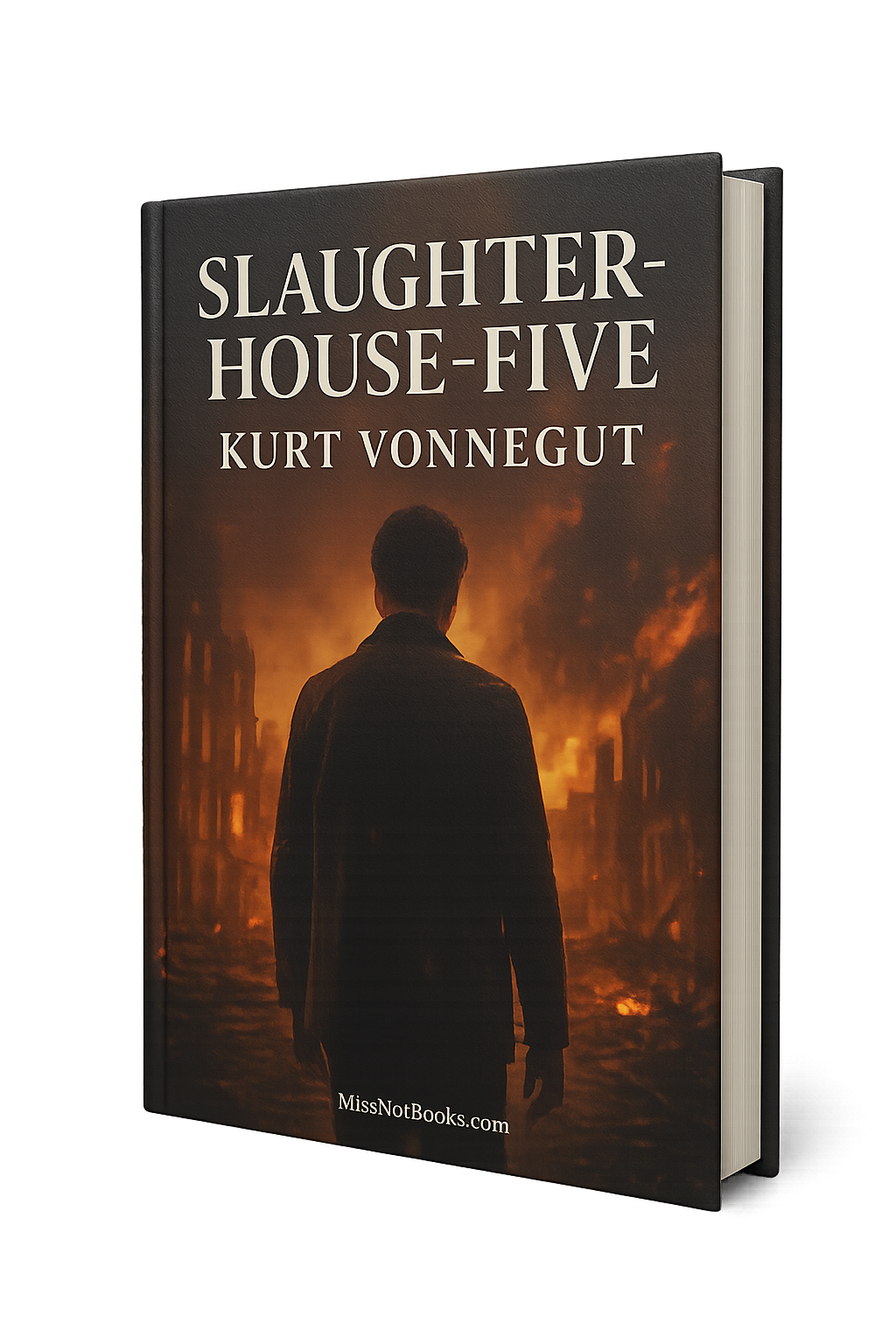
Slaughterhouse-Five
In the landscape of modern literature, few works have managed to upend traditional narratives and present a poignant critique of humanity, war, and the human condition. This seminal book revolutionized the way we think about time, free will, and the absurdity of life, inviting readers to grapple not only with its narrative structure but also with the moral dilemmas posed by war and suffering. It challenges readers to confront the consequences of conflict and the often disorienting experience of existence itself. By doing so, it has become one of the most influential texts of the twentieth century, leaving an indelible mark on literature and social thought. Don’t miss the opportunity to engage with one of the most influential works of all time. Buy it today and explore the haunting complexities of human experience.
Core Ideas and Main Arguments
- Nonlinear Narrative: The book employs a nonlinear approach to storytelling, illustrating the concept that time is not a straight line but rather an intricate, interwoven tapestry of moments.
- Futility of War: It presents a stark and unflinching portrayal of the destructiveness of war, particularly through the lens of World War II, highlighting its absurdity and tragedy.
- Free Will vs. Determinism: The protagonist’s experiences raise profound questions about free will, suggesting that much of life might be predetermined, pushing readers to consider the implications of their own choices.
- Critique of American Society: Through satire, it critiques American culture and its romanticization of war, positioning the reader to reflect on societal values and norms.
Author’s Intentions and Context
The author sought to capture the chaotic realities of war and its aftermath in a form that mirrors the fragmented experience of trauma. Writing in the aftermath of World War II and drawing on his own experiences as a prisoner of war, he aimed to illuminate the psychological scars carried by veterans and civilians alike. The book emerged from a historical context rife with disillusionment following a devastating conflict and an emerging anti-war sentiment. The philosophical questions posed in the book challenge readers to confront the moral implications of violence and the messy fabric of human existence.
Structure of the Book
The text is divided into ten chapters, which juxtapose specific moments of the protagonist’s life in a mosaic-like fashion. Each chapter serves as a piece of a larger puzzle, reflecting on various themes:
- Introduction to Billy Pilgrim - Establishes the protagonist's experiences and introduces the concept of "becoming unstuck in time."
- Battle of Dresden - A harrowing depiction of the bombing, emphasizing the horrors of conflict.
- Life on Tralfamadore - Introduces an alien perspective that complicates human notions of time and death.
- Reflections on War and Peace - The protagonist’s musings on the nature of existence and human choice.
The structure challenges normative storytelling conventions, contributing to the disorienting yet profound exploration of its themes.
Key Takeaways
- The understanding that time is subjective and memories are not bound by chronology.
- A deep sense of empathy for individuals affected by war, prompting questions about the nature of human suffering.
- An ironic view on the glorification of conflict and the societal pressures that perpetuate it.
Why It’s Important to Read
Reading this work provides an invaluable perspective on life, death, and the scars left by conflict. Its revolutionary style and profound ideas resonate with anyone seeking to understand the human experience more deeply—from students of literature and philosophy to veterans and advocates for peace. The book not only challenges the reader’s perceptions of time and existence but also invites ongoing dialogue about the impacts of war and the condition of humanity itself.
Impactful Quotes and Analysis
-
"So it goes."
This phrase is recurring throughout the book, capturing a sense of acceptance toward death and suffering, reflecting the inevitability of loss in life. It underscores the book's meditation on the absurdity of life. -
"Everything was beautiful and nothing hurt."
This ideal reflects a longing for peace and the desire to escape pain, highlighting the stark contrast with the realities he portrays. It resonates deeply with anyone who has experienced trauma or loss. -
“I have no problem with you, I have a problem with your society, with your culture.”
This quote critiques not only the individual but also the societal constructs that contribute to human suffering, urging readers to reflect on their own cultural contexts.
About the Author
Kurt Vonnegut (1922-2007) was an American author known for his satirical and darkly humorous style that often blended speculative fiction with commentary on society, technology, and war. Born in Indianapolis, Indiana, he experienced profound horrors during World War II, which deeply influenced his literary voice. Vonnegut’s works, characterized by their unconventional narrative techniques and philosophical inquiries, have garnered a lasting legacy that continues to inspire readers and writers alike.
This monumental work is Slaughterhouse-Five by Kurt Vonnegut, brought to you for educational purposes by MissNotBooks.com.