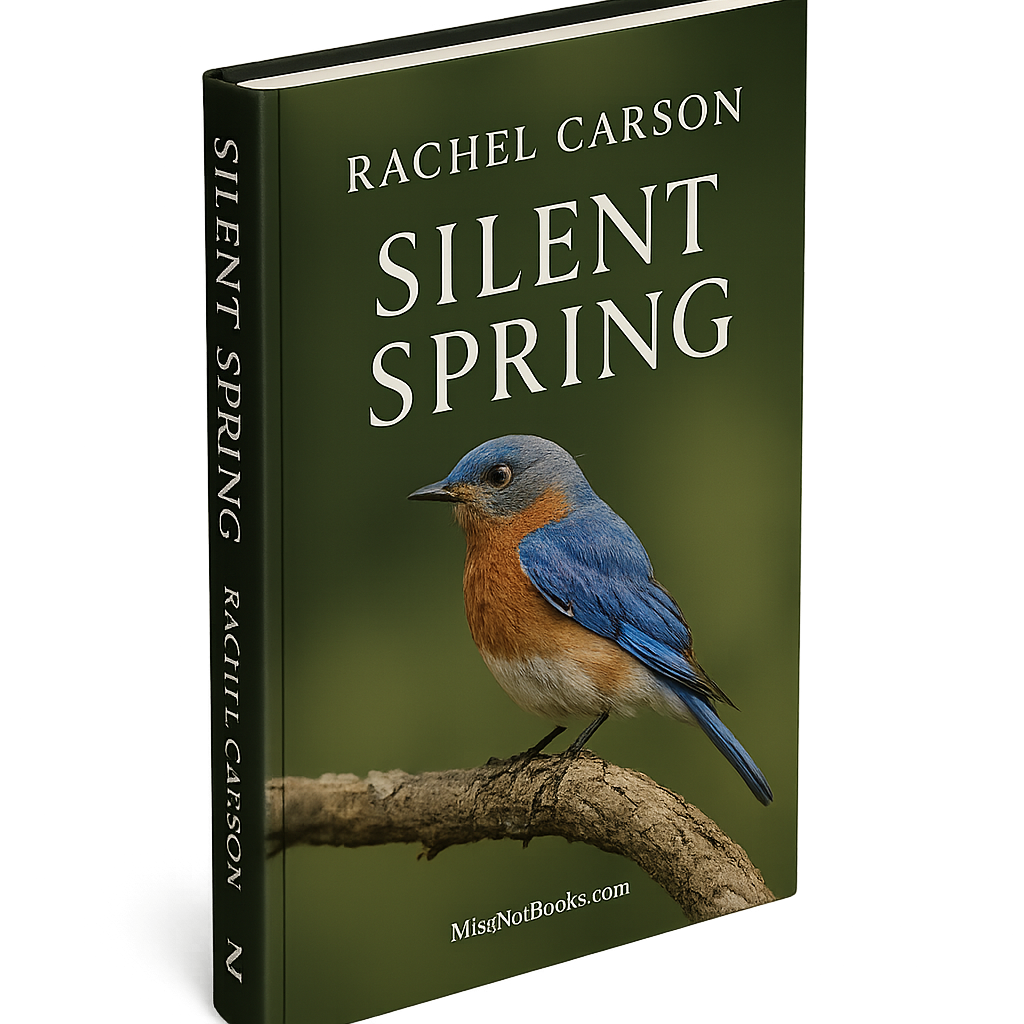
Silent Spring
In the annals of literary and scientific history, few texts have reshaped the discourse on humanity’s relationship with the environment as profoundly as this seminal work. Its compelling call for ecological awareness and responsibility not only illuminated the detrimental effects of pesticide use but also initiated a widespread environmental movement that continues to resonate today. In its pages, readers discover a revolutionary perspective that challenges people's assumptions about nature's bounty and the human role within it. This book catalyzed the birth of modern environmentalism, inspiring legions to reconsider not just agricultural practices but also our broader impact on the planet.
Core Ideas and Main Arguments:
- Interconnectedness of Life: The book urges readers to recognize the complex web of relationships among living organisms, advocating for a holistic view of ecosystems.
- Consequences of Pesticides: It details the harmful effects synthetic pesticides can have on wildlife and human health, emphasizing that nature resists harmful substances with adverse effects that can be far-reaching.
- Call to Action: The author implores society to reconsider its reliance on chemical solutions, advocating for better practices that honor ecological balance and health.
- Moral Responsibility: It communicates that humanity is not separate from nature, challenging the notion that we can exploit natural resources indiscriminately without repercussions.
Author’s Intentions and Context: Written during the post-World War II era, a time characterized by rapid technological advancement and widespread industrialization, the author aimed to confront the prevailing narrative of unchecked progress through technological solutions. Responding to the emerging concerns over environmental degradation and human health, the book sought to raise awareness about the consequences of human actions on the natural world. The author’s intent was not merely to inform but to awaken a collective consciousness, urging readers to assume responsibility for the earth they inhabit.
Structure of the Book:
- Introduction: Lays the groundwork by discussing the relationship between humans and the environment.
- The Poisoning of the Environment: Explore the chemical landscape of modern agriculture and its disastrous outcomes.
- Nature’s Resilience: Examines how ecosystems respond to human interference, emphasizing the need for respect and caution.
- A Call for Change: Offers solutions and advocates for less harmful agricultural techniques and sustainable practices.
Key Takeaways:
- Ecosystems are fragile and interconnected, necessitating a thoughtful approach to environmental stewardship.
- The use of harmful chemicals can have unforeseen consequences that extend beyond initial applications, affecting biodiversity and human health.
- Our moral obligation to protect the environment is rooted in our own survival and interconnectedness with the natural world.
Why It’s Important to Read: Engaging with this transformative text is crucial for anyone seeking to understand the roots of today's environmental movements and the ongoing discussions about sustainability. Readers from all walks of life, whether they are policymakers, educators, scientists, or simply concerned citizens, will find invaluable insights and motivation to advocate for a more harmonious existence with nature. The ideas presented remain relevant amidst contemporary crises, emphasizing our need for a sustained commitment to environmental responsibility.
Impactful Quotes and Analysis:
-
“The human race is challenged more than ever before to demonstrate our mastery, not over nature but of ourselves.”
This quote encapsulates the crux of the author’s argument: true guardianship of the planet requires self-control and a profound understanding of our impact on the world around us. -
“In every pestilence, there is a lesson.”
Here, the author reminds us that ecological crises serve as dire warnings, encouraging us to learn from our mistakes rather than repeating them.
About the Author: Rachel Carson (1907–1964) was a pioneering marine biologist and conservationist whose writings are credited with advancing the global environmental movement. Through her career in government and her notable literary contributions, she effectively bridged the gap between science and public understanding, leaving a legacy that continues to inspire conservation efforts and awaken environmental consciousness across the globe.
Don’t miss the opportunity to engage with one of the most influential works of all time. Buy it today and explore the foundation of modern environmental philosophy. This monumental work is Silent Spring by Rachel Carson, brought to you for educational purposes by MissNotBooks.com.