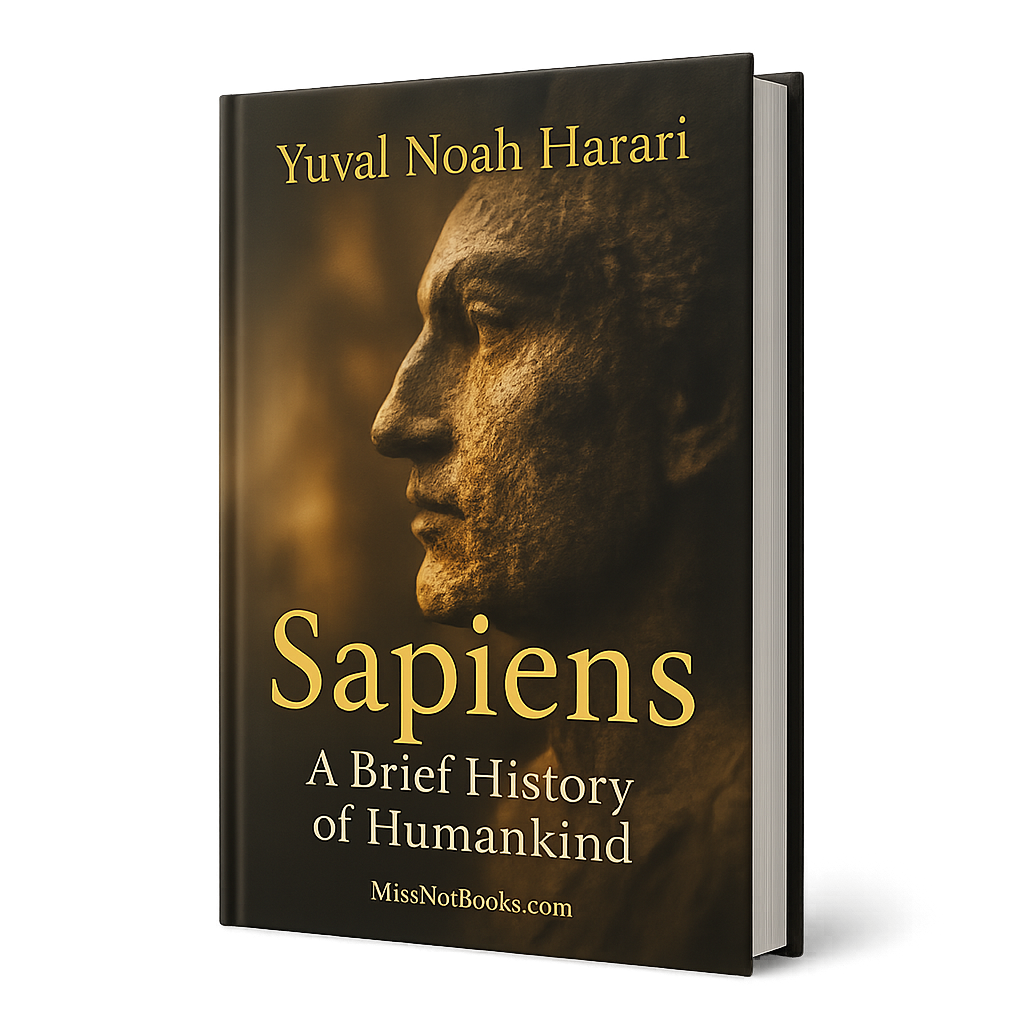
Sapiens: A Brief History of Humankind
In an era marked by rapid advancement and the relentless march of technology, a work has emerged that compels us to reconsider our past, our present, and our future as a species. This groundbreaking book masterfully synthesizes vast swathes of human history into a narrative that not only informs but inspires transformative thinking about societal evolution, cultural constructs, and the very fabric of humanity. By illuminating key phases in the story of our species—from the emergence of Homo sapiens to modern-day complexities—it challenges our preconceived notions and invites us to ponder profound questions about identity, progress, and the interconnectedness of all human endeavors.
Don’t miss the opportunity to engage with one of the most influential works of all time. Buy it today and explore the roots of our civilization and the paths we might take into the future.
Core Ideas and Main Arguments
-
Cognitive Revolution: Examines how the ability to think abstractly and share complex ideas distinguished Homo sapiens from other species, laying the groundwork for culture and society.
-
Agricultural Revolution: Analyzes how the shift from foraging to settled agricultural practices reshaped human life, leading to population surges and the birth of cities, but also to social stratification and conflict.
-
Unification of Humankind: Discusses the forces that have led to the development of large-scale societies, including shared myths, money, and empires, which have unified disparate groups through common narratives.
-
Scientific Revolution: Explores the emergence of modern science as a catalyst for societal change, fostering a culture of inquiry that driven innovation while also generating existential questions regarding human purpose and ethics.
Author’s Intentions and Context
The author set out to bridge disciplinary gaps, offering a comprehensive overview that encapsulates not just the chronology of human development, but also the underlying themes and implications of our collective journey. Written during a time of unprecedented technological and political upheaval, this work addresses the philosophical and ethical challenges posed by advancements such as artificial intelligence and biotechnology. It is a clarion call for reflective engagement with the consequences of our choices as we navigate the complexities of modern life.
Structure of the Book
The book is thoughtfully organized into four parts, each focusing on a pivotal phase in human history:
-
The Cognitive Revolution: Discusses the emergence of modern thought and social constructs.
-
The Agricultural Revolution: Examines the transition from hunter-gatherer societies to settled existence and its implications.
-
The Unification of Humankind: Explores the ways in which shared beliefs and money have woven together disparate cultures.
-
The Scientific Revolution: Analyzes the transformative power of science and its impact on human understanding and global interconnectivity.
Each section builds upon the previous one, guiding the reader through a logical progression of ideas that enrich comprehension and provoke deeper thought.
Key Takeaways
-
Understanding the Cognitive Revolution highlights the pivotal moment when humans began to communicate and collaborate in sophisticated ways, allowing for the development of complex societies.
-
Recognizing the dual-edged nature of the Agricultural Revolution reveals the unintended consequences of progress, including social hierarchies and environmental degradation.
-
Appreciating the role of shared myths in unifying humanity underscores the power of storytelling and collective belief systems throughout history.
-
Acknowledging the impact of the Scientific Revolution prompts critical reflection on our relationship with technology and the ethical challenges that arise from it.
Why It’s Important to Read
This work's ongoing relevance cannot be overstated; it is a vital resource for anyone curious about the trajectory of human civilization and our current place within it. Scholars, students, and general readers alike will benefit from its insights, as it equips them to engage thoughtfully with the pressing issues of our time, be it climate change, social justice, or the future of artificial intelligence. This narrative not only informs but encourages a reflective approach to our humanity, fostering a deeper understanding of both our achievements and our responsibilities.
Impactful Quotes and Analysis
-
“History began when people learned to communicate, to tell each other stories.”
This quote encapsulates the essence of human sociology—the understanding that shared narratives forge connections and cultures, shaping the course of civilizations. -
“The most important thing to realize about the present is that it is just one of the many possibilities.”
Here, the author invites readers to reflect on the fluidity of societal norms and future trajectories, emphasizing the importance of choice in shaping our destinies. -
“We are not chained to the past; instead, we walk with it.”
This assertion beautifully implies that the past informs our identities and choices, but it does not dictate our future; we have the capacity to redefine our paths.
About the Author
Yuval Noah Harari, born on February 24, 1976, is an Israeli historian and professor at the Hebrew University of Jerusalem, renowned for his ability to distill complex historical and philosophical ideas into accessible narratives. His work has sparked global dialogue regarding the nature of history, technology, and human consciousness, cementing his legacy as a formidable intellectual voice of our time.
This monumental work is Sapiens: A Brief History of Humankind by Yuval Noah Harari, brought to you for educational purposes by MissNotBooks.com.