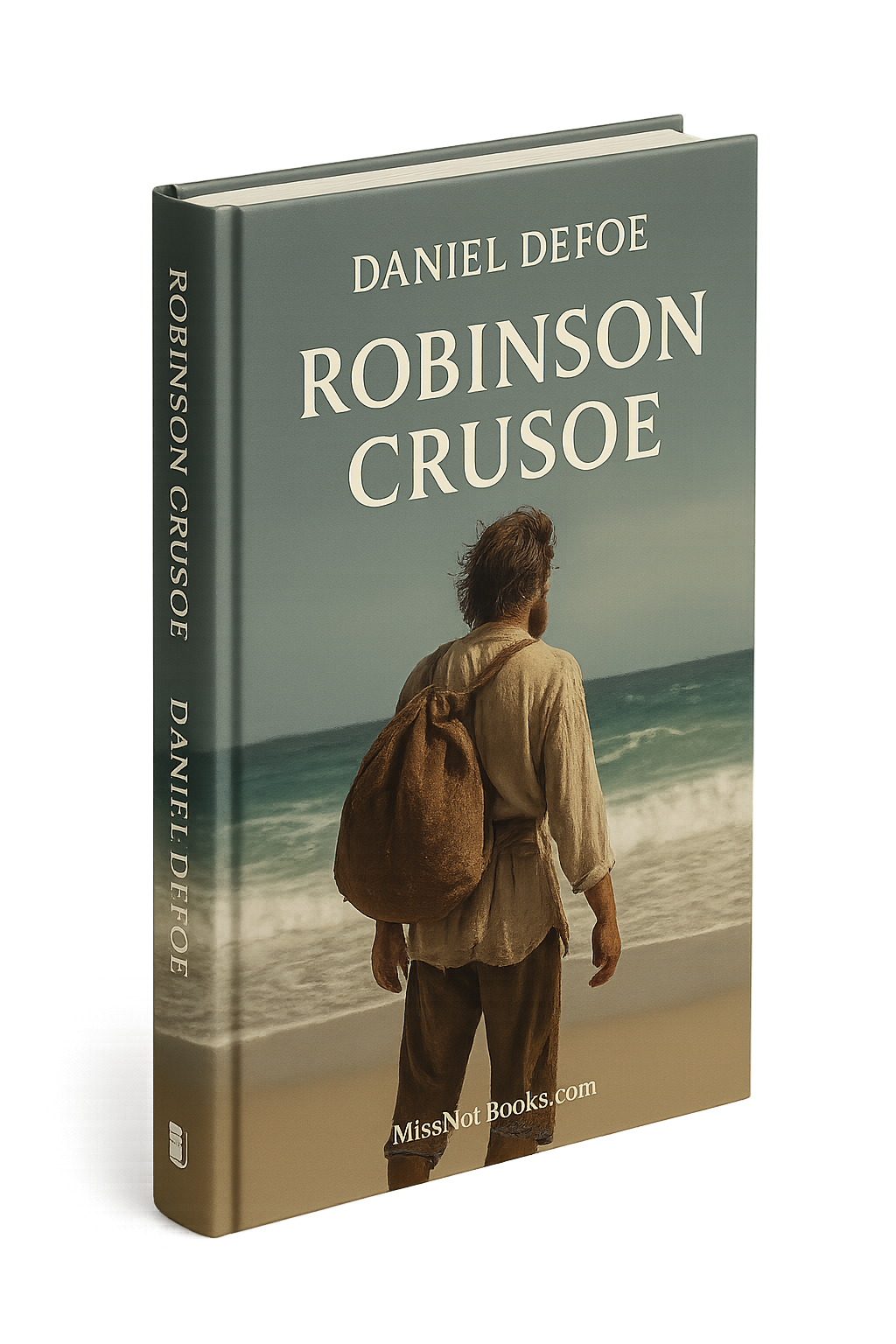
Robinson Crusoe
In a world where the complexity of human experience often obscures the simplicity of survival and self-discovery, one extraordinary narrative stands as a beacon of transformation. This groundbreaking tale not only captivated the imagination of its contemporaries but also revolutionized literature, establishing the novel as a vital and dynamic form of storytelling. It challenged prevailing notions of adventure, individualism, and the very essence of what it means to be cast adrift—physically and existentially—in an unfamiliar world. The book provided a profound exploration of resilience, resourcefulness, and the inexorable relationship between man and nature, leaving an indelible mark on intellectual and cultural thought that resonates to this day.
Core Ideas and Main Arguments
- Individualism and Self-Sufficiency: The protagonist's journey emphasizes the human spirit's ability to triumph over adversity through ingenuity and hard work.
- Man vs. Nature: The narrative explores the intricate and often conflicting relationship between humanity and the natural world, showcasing both the beauty and dangers of the environment.
- Colonial Reflection: The book serves as a commentary on colonialism, engaging with themes of civilization versus savagery and the ethical implications of empire.
- Faith and Providence: Through trials and tribulations, the story underscores the importance of faith and divine providence, suggesting a moral framework through which the protagonist interprets his experiences.
- Isolation and Identity: The characters' isolation leads to profound self-reflection, raising questions about identity, belonging, and the essence of humanity when stripped of societal constructs.
Author's Intentions and Context
Written during the early 18th century, the author aimed to narrate not just an adventure but also an introspective gaze into the human condition. In the wake of exploratory voyages and colonial expansion, Defoe sought to reflect on themes relevant to an age increasingly grappling with the nature of individualism, the role of civilization, and moral philosophy. By placing his character on a deserted island, he effectively responded to the cultural and philosophical challenges of the Enlightenment, seeking to illustrate both the physical and existential explorations that define human existence.
Structure of the Book
The narrative unfolds in several key parts:
- The Voyage and Shipwreck: Introduces the protagonist's background and the pivotal moment that leads to his isolation, establishing the premise of survival.
- Life on the Island: Chronicling his day-to-day experiences, this section illustrates his struggles, successes, and the development of his character.
- Encounters and Reflections: As he meets other characters, such as Friday, the narrative delves into themes of companionship, cultural exchange, and the ethics of power dynamics.
- Rescue and Return: Concludes with his eventual return to civilization, prompting reflection on what he has learned and how he has changed.
Key Takeaways
- The essence of survival lies in adaptability and resilience.
- Isolation can lead to profound personal growth and self-understanding.
- The consequences of colonialism are complex, offering opportunities for both reflection and critique.
- Faith can serve as both a guiding force and a source of personal strength in times of crisis.
Why It’s Important to Read
This work remains a cornerstone of literary history and exploration. Its themes of survival, identity, and human resilience are timeless, speaking to anyone who has faced adversity or sought meaning in isolation. It is especially relevant for readers engaged in literature, history, anthropology, or philosophical studies, as it provides insight into the shaping of modern thought and offers timeless lessons in self-discovery.
Impactful Quotes and Analysis
-
“I am cast upon a horrible desolate island, void of all hope of recovery.”
- This line encapsulates the protagonist's profound sense of isolation, reflecting the universal fear of abandonment and despair.
-
“I learned to know the meaning of the word ‘dependence.’”
- Here, Defoe highlights the fundamental human experience of interdependence, reminding readers of the role community plays in survival, even in solitude.
-
“I was a king, and a king without a crown.”
- This statement reflects the protagonist's journey toward self-determination, conveying a sense of sovereignty and personal agency despite his dire circumstances.
About the Author
Daniel Defoe (c. 1660–1731) was a prolific English writer, trader, and journalist, widely considered one of the founding figures of the modern novel. His diverse body of work, which includes political pamphlets, essays, and novels, reflects the complexities of early 18th-century England, especially concerning commerce, society, and individualism. Defoe’s legacy lies in his ability to craft compelling narratives that transcend time, enabling readers to grapple with the fundamental questions of existence.
This monumental work is Robinson Crusoe by Daniel Defoe, brought to you for educational purposes by MissNotBooks.com.