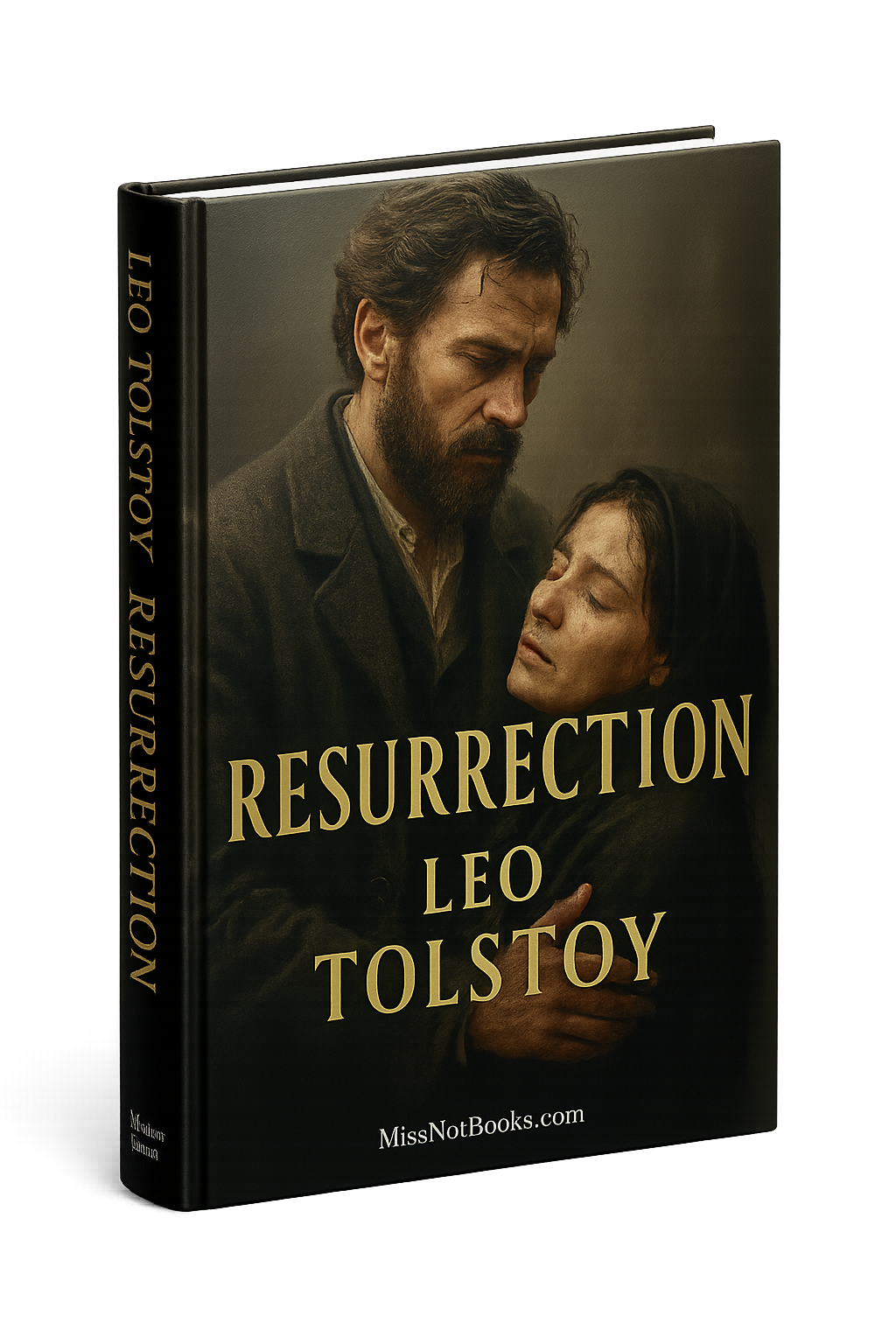
Resurrection
Few literary works possess the transformative power to alter both individual consciousness and collective societal understanding as profoundly as the masterpiece in question. At the intersection of spirituality, morality, and the human condition, it compels readers to engage deeply with core ethical dilemmas that transcend time and culture. By brilliantly weaving narrative with philosophical reflections, this book not only challenges established norms but also redefines the moral compass of society, urging readers to reconsider their relationship with guilt, redemption, and justice. It revolutionized the literary world by integrating personal struggle with broad social commentary, setting a standard for future generations of writers and thinkers.
Core Ideas and Main Arguments
- Moral Redemption: Central to the narrative is the theme of personal redemption through acts of conscience and selflessness.
- Social Justice and Inequality: The book robustly critiques class disparities and the moral failings of the privileged class, compelling readers to confront societal injustices.
- Spiritual Awakening: It explores the search for deeper meaning in life, investigating the connections between faith, morality, and the ability to enact change.
- Human Relationships: The complexities of human bonds—especially love, betrayal, and forgiveness—are examined through the characters’ interactions and transformations.
- The Role of Conscience: A profound discussion on the significance of following one’s conscience, even when it may lead to social ostracism or personal cost.
Author’s Intentions and Context
The author sought to awaken the moral sensibilities of his contemporaries during a period of significant social upheaval in Russia. Responding to the rampant corruption and moral ambiguity of his time, he aimed to provoke a reconsideration of individual and social responsibilities. With a keen awareness of the struggles faced by the lower classes and the spiritual barrenness of the elite, the author sought to challenge readers to reflect on their own lives and the impact of their choices on the broader social landscape.
Structure of the Book
The narrative unfolds across several key sections that mirror the protagonist's journey toward enlightenment:
- Exposition: Introduces the main character and the initial moral conflicts that trigger the journey.
- Conflict: Delves into the interpersonal and societal struggles that manifest from the protagonist’s past actions.
- Climax: Captures the pivotal moment of realization where the protagonist confronts the truth of his choices.
- Resolution: Concludes with transformative resolutions that highlight themes of reconciliation and redemption.
Key Takeaways
- Readers will understand the profound significance of individual accountability in the wake of societal injustices.
- The exploration of spiritual and personal redemption provides a framework for addressing one’s moral failings.
- The work invites introspection regarding the impact of one’s actions on others and the world at large.
Why It’s Important to Read
This book remains critically relevant, resonating deeply with contemporary issues of inequality, ethical governance, and personal responsibility. It is an essential read for anyone interested in moral philosophy, social justice, or the intricate facets of human relationships. Students, activists, and those in search of spiritual clarity will find invaluable insights that challenge and inspire.
Impactful Quotes and Analysis
-
“The sole meaning of life is to serve humanity.”
This quote encapsulates the fundamental essence of altruism that permeates the narrative, urging readers to prioritize the welfare of others in their quest for meaning. -
“Inability to forgive is just as bad as the act of betrayal.”
Here, the author emphasizes the weight of moral injury and the necessity of forgiveness, highlighting how unresolved grievances can perpetuate cycles of pain. -
“The most important step in the life of a person is to understand their own mistakes.”
This powerful proclamation underscores the necessity of self-reflection and admission of one’s faults as a precursor to growth and redemption.
About the Author
Leo Tolstoy (1828–1910) was a Russian novelist, moral philosopher, and social reformer regarded as one of the greatest authors of all time. His works, characterized by rich characterization and deep philosophical insights, explored themes of faith, morality, and the human experience. Tolstoy’s legacy extends beyond literature; his ideas have influenced peace movements and have inspired countless readers to engage in a search for moral truth and social justice.
Don’t miss the opportunity to engage with one of the most influential works of all time. Buy it today and explore the transformative journey of redemption and moral awakening. This monumental work is Resurrection by Leo Tolstoy, brought to you for educational purposes by MissNotBooks.com.