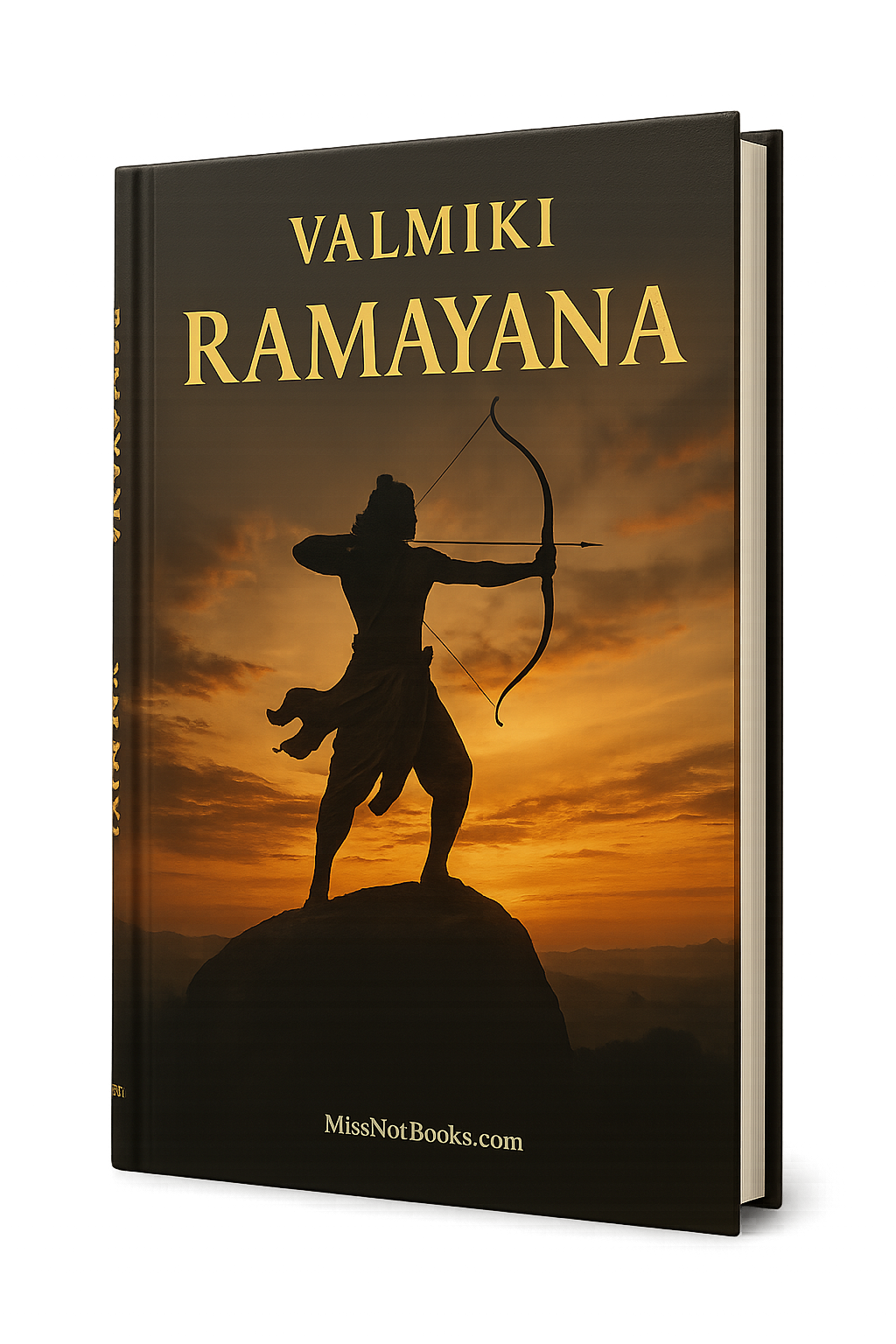
Ramayana
The landscape of ancient literature has often been defined by powerful narratives that transcend time, cultures, and boundaries. Among these transformative works, one stands out for its profound exploration of duty, ethics, love, and the complexities of human emotion within the framework of divine interventions. This epic tale revolutionized not only the way stories are told but also how societies conceive of morality, virtue, and the interplay between the mortal and the divine. Its rich tapestry of characters and themes has left an indelible mark on the cultural and philosophical fabric of entire civilizations. Don’t miss the opportunity to engage with one of the most influential works of all time. Buy it today and explore the beauty of human language.
Core Ideas and Main Arguments
- Dharma and Duty: The work poignantly illustrates the concept of 'dharma'—one's duty according to their position in society—and the struggles associated with adhering to it.
- The Nature of Good and Evil: The narrative navigates complex moral dilemmas, depicting characters who embody both virtues and flaws, thus challenging simplistic notions of good and evil.
- The Power of Devotion: Central themes of loyalty, love, and sacrifice are embodied through the divine relationship between Rama and his wife Sita, showcasing the transformative power of love and devotion.
- Gender Roles and Agency: The portrayal of female characters, particularly Sita, ignites discussion on gender roles and agency within the context of the epic’s patriarchal society.
Author’s Intentions and Context
Composed in a time of profound socio-political change, the author aimed to create a narrative that not only entertained but also educated and inspired its audience. Valmiki wrote during a period where the moral fabric of society was challenged, and he sought to provide a guide through the tangled web of ethical decision-making. By embedding moral and philosophical inquiries within an epic tale, he addressed the cultural uncertainties of his time, offering insights into human behavior, governance, and the divine.
Structure of the Book
- Bala Kanda: Chronicles the divine birth of Rama and his early life, establishing his character as the ideal man.
- Ayodhya Kanda: Covers Rama’s exile and the ensuing emotional and political turmoil.
- Aranya Kanda: Depicts Rama’s life in the forest and the abduction of Sita, highlighting themes of loyalty and sacrifice.
- Kishkindha Kanda: Focuses on the alliance with Hanuman and the vanara army, symbolizing camaraderie and the search for justice.
- Sundara Kanda: Celebrates Hanuman's journey to find Sita, emphasizing bravery and devotion.
- Yuddha Kanda: Illustrates the epic battle between Rama and Ravana, filled with heroic deeds and moral quandaries.
- Uttara Kanda: Concludes the tale with themes of redemption and the repercussions of actions, reinforcing the cyclical nature of fate.
Key Takeaways
- Understanding Duty: Readers will grasp the intricate responsibilities that accompany various roles in society.
- Complex Morality: The nuanced portrayals of character motivations challenge oversimplified understandings of morality.
- Cultural Legacy: The epic provides a deep cultural context that continues to influence literature, art, and philosophy across generations.
Why It’s Important to Read
This profound narrative remains a cornerstone of South Asian culture and spirituality, influencing countless generations through art, theatre, and moral teachings. Its exploration of complex themes is relevant today as individuals navigate their own moral landscapes. Scholars, students of literature, or anyone grappling with ethical dilemmas will find invaluable insights that inspire both personal reflection and broader understanding of cultural values.
Impactful Quotes and Analysis
- “Where there is righteousness, there is victory.” This statement encapsulates the essence of virtue leading to ultimate triumph, resonating across cultures as a timeless truth about justice.
- “A person should never abandon their principles for the sake of fear or greed.” This profound insight underlines the importance of moral integrity in the face of temptation—a lesson of enduring significance.
- “The greatest happiness is found in the light of love.” This declaration reflects the underlying theme of devotion that permeates the text, echoing the deep human longing for connection and affection.
About the Author
Valmiki, believed to have lived around the 5th century BCE, is revered as the “Adi Kavi” or the first poet in Sanskrit literature. His foundational contribution to epic poetry has cemented his legacy as a pivotal figure in Indian cultural history. His works, especially the narrative of the epic, have inspired countless adaptations, discussions, and philosophical dialogues throughout centuries, shaping the moral and spiritual outlooks of diverse societies.
This monumental work is the Ramayana by Valmiki, brought to you for educational purposes by MissNotBooks.com.