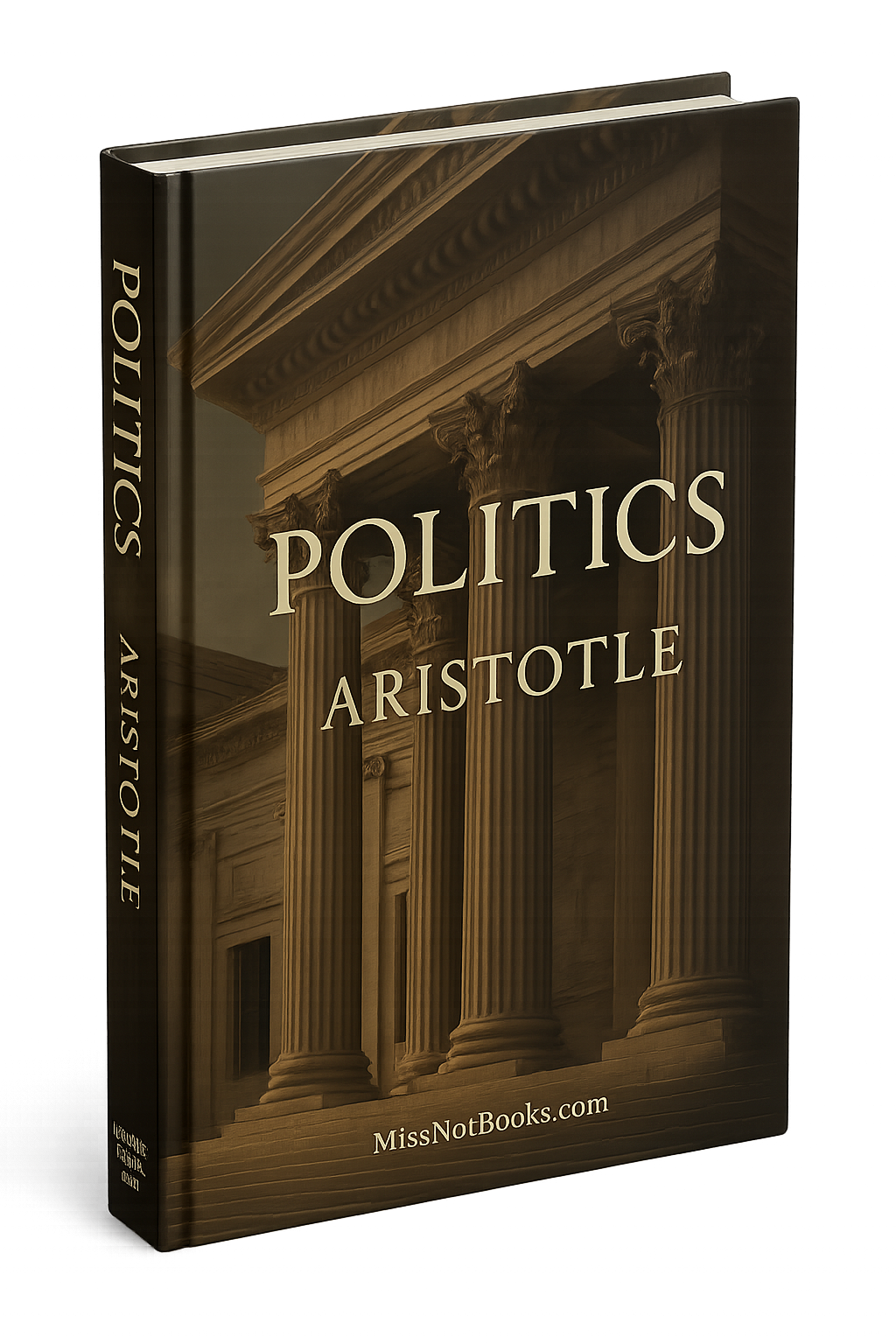
Politics
Overview
In an age defined by the quest for governance and ethical society, a groundbreaking work emerged that forever altered the landscape of political philosophy. This monumental text not only examined the structure of political systems but also delved deeply into the nature of human beings as political creatures. Its transformative impact revolutionized our understanding of democracy, ethics, and the interrelations of power and justice, challenging pre-existing notions and laying the foundation for countless generations of thinkers to come. Don’t miss the opportunity to engage with one of the most influential works of all time. Buy it today and explore the roots of political theory.
Core Ideas and Main Arguments
- Nature of Citizenship: The text argues that true citizenship involves active participation in political life, suggesting that one’s identity is intricately linked to civic engagement.
- Forms of Government: It categorizes various governmental systems, evaluating their strengths and weaknesses, and emphasizes the importance of balancing power through mixed governance.
- Ethics and Politics: There is a profound connection between ethical behavior and political governance, advocating that the state should promote virtuous living among its citizens.
- Purpose of the State: It posits that the aim of the state is not merely to maintain order but to enable the flourishing of its citizens, introducing concepts of the common good and justice.
- Role of Law: Emphasizes the importance of law as a guiding force in political life, arguing that the rule of law is essential for ethical governance.
Author’s Intentions and Context
The author wrote this influential text during a time of political upheaval in ancient Greece, particularly within the context of city-states grappling with democracy, oligarchy, and tyranny. His primary aim was to analyze existing political structures and articulate the ideal state that promotes the common good, thus responding to the philosophical and political challenges of his time. Through this exploration, he sought not only to evaluate existing systems but also to elevate the discourse surrounding ethics in governance.
Structure of the Book
The work is systematically organized into several key sections, each contributing to the overarching thesis of the nature of governance and human society:
- Introduction to Political Science: Establishes the significance of studying political life.
- Monarchy, Aristocracy, and Democracy: Detailed discussions of different forms of government, examining their benefits and drawbacks.
- The Role of the Citizen: Explores the responsibilities and privileges of citizenship.
- Legislation and Law: An analysis of the importance of law in establishing a just society.
- Practical Advice for Statesmen: Offers guidance for leaders on achieving and maintaining a virtuous state.
Key Takeaways
- Understanding citizenship as active engagement is crucial for the health of a democracy.
- Different governments can contribute to societal wellbeing; a mixed constitution harnesses strengths while mitigating weaknesses.
- Ethical considerations must inform political action, as the state has a role in cultivating virtue among its citizens.
- Law is fundamental in ensuring justice and guiding political life, reinforcing the notion that governance must be grounded in principle, not mere power.
Why It’s Important to Read
This work continues to resonate within contemporary society as it addresses fundamental questions about governance, justice, and ethical leadership. Political scholars, history enthusiasts, and engaged citizens alike will find that the lessons within remain relevant as they navigate the complexities of modern political landscapes. The insights lead us to reflect on our roles as citizens and the importance of active participation in fostering a just society.
Impactful Quotes and Analysis
-
“The good for man is an activity of the soul in accordance with virtue.”
This quote encapsulates the author's belief that the true purpose of human life extends beyond mere survival to encompass living virtuously, a principle that needs to be at the heart of governance. -
“Man is by nature a political animal.”
This assertion reflects the intrinsic connection between human nature and political life, emphasizing that social cooperation is not merely beneficial but essential to human existence. -
“The law is reason unaffected by desire.”
Here, the author underscores the importance of law in guiding ethical behavior, suggesting that justice should be rooted in rationality rather than subjective whims.
About the Author
The genius behind this seminal work is Aristotle, born in 384 BCE and passing in 322 BCE. A polymath and student of Plato, Aristotle made contributions to various fields, including metaphysics, ethics, and natural sciences. His philosophical legacy remains profound, influencing the development of Western thought and establishing foundational principles in numerous disciplines. His insights continue to provide essential frameworks for political theory and ethical governance today.
This monumental work is Politics by Aristotle, brought to you for educational purposes by MissNotBooks.com.