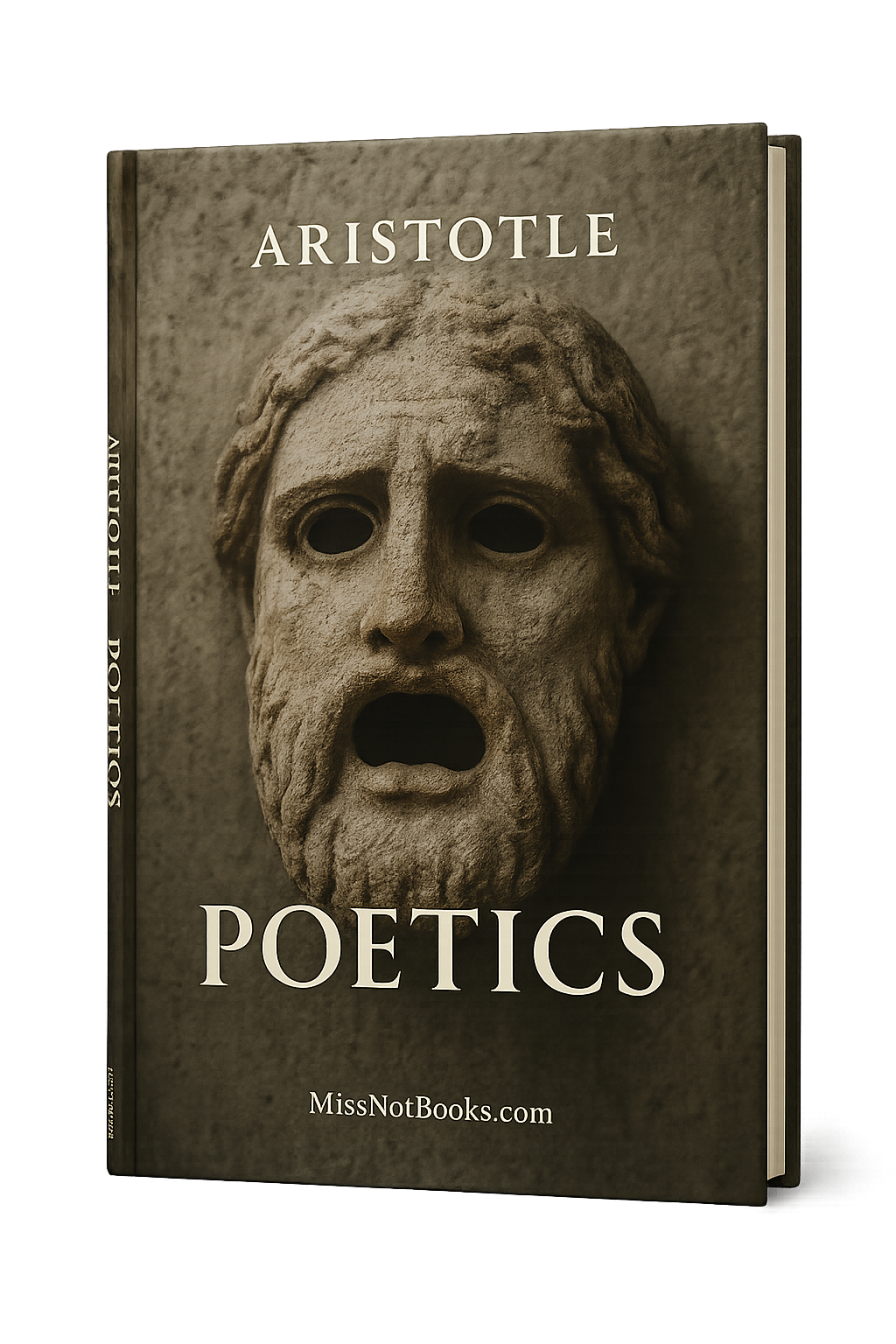
Poetics
In the annals of human thought, few works have dramatically reshaped our understanding of literature, art, and aesthetics as profoundly as this monumental text. It revolutionized the discourse on narrative and performance, introducing rigorous analyses of tragedy, comedy, and poetry while providing a framework that scholars and artists have relied upon for centuries. By dissecting the elements that comprise successful storytelling—such as plot, character, and theme—it challenged prevailing notions and laid down foundational principles that continue to influence creators and critics alike today.
Core Ideas and Main Arguments
- Definition of Tragedy: The author delineates the characteristics of tragedy, emphasizing catharsis—the emotional release experienced by the audience—as a critical outcome.
- The Three Unities: The exploration of unity of time, place, and action sets a standard for dramatic structure that aspiring writers would strive to achieve.
- Mimesis: The concept of imitation as a natural human characteristic, illustrating that art reflects life and engages with reality in profound ways.
- Role of Character: Stressing that character is pivotal to drama, which is not merely about plot but also the moral and psychological complexities of its protagonists.
Author’s Intentions and Context
The author, writing in a time of flourishing art and theater in ancient Greece, aimed to distill the essence of poetic form and dramatic representation. Responding to both the rich cultural milieu of his time and the philosophical inquiries initiated by predecessors, he sought to establish a systematic approach to understanding the impact of art on the human soul. This work emerged amid debates about morality, ethics, and the purposes of artistic expression, positioning itself as a counterbalance to the idealistic views prevalent in literary criticism.
Structure of the Book
The organization of this seminal work is methodical and insightful:
- Introduction: Lays the groundwork for the examination of poetry and its significance in society.
- Analysis of Tragedy: A comprehensive dissection of tragedy, its components, and its effects on the audience.
- Discussion of Epic Poetry: Contrasts the elements of epic narratives with those of dramatic poetry, highlighting their unique attributes and purposes.
- Conclusion: Synthesizes the findings and posits conclusions on the value and function of literature in human life.
Key Takeaways
- The crucial role of emotional engagement in art, highlighting how effective storytelling can lead to deep personal reflection and catharsis.
- An understanding of the formal qualities that contribute to successful poetry and drama, underscoring the distinct traits that elevate art above mere entertainment.
- Insights into character development and the moral dimensions of narratives, encouraging readers to consider the ethical implications of storytelling.
Why It’s Important to Read
The insights offered by this text resonate across centuries, providing critical perspectives for anyone interested in literature, performance art, or philosophy. Students, writers, critics, and general readers alike will find value in its exploration of the human experience as conveyed through narrative. In an era where storytelling shapes culture and influences public discourse, engaging with these ideas fosters a deeper appreciation for the art of narrative.
Impactful Quotes and Analysis
-
“The aim of art is not a representation of the outward appearance of things, but their inward significance.”
This remark underscores the transformative power of art, urging creators to look beyond the surface and to uncover deeper truths about existence. -
“Tragedy is an imitation of an action that is serious, complete, and of a certain magnitude.”
This definition encapsulates the gravitas of tragedy while illustrating the importance of structure and emotion in resonating with audiences. -
“Through pity and fear effecting the proper purgation of these emotions.”
Here, the author articulates the profound psychological impact art can have—an enduring concept that continues to be vital in the understanding of human emotions and storytelling.
About the Author
Aristotle (384–322 BCE) was a towering figure in ancient philosophy, serving not only as a philosopher but also as a polymath whose work spanned various disciplines, including ethics, metaphysics, politics, and, of course, literature. His intellectual legacy is summed up in his extensive writings that have influenced countless thinkers, from his immediate successors to modern theorists. He is often regarded as the father of literary criticism and remains a cornerstone of Western philosophy.
Don’t miss the opportunity to engage with one of the most influential works of all time. Buy it today and explore the foundation of modern literary theory. This monumental work is Poetics by Aristotle, brought to you for educational purposes by MissNotBooks.com.