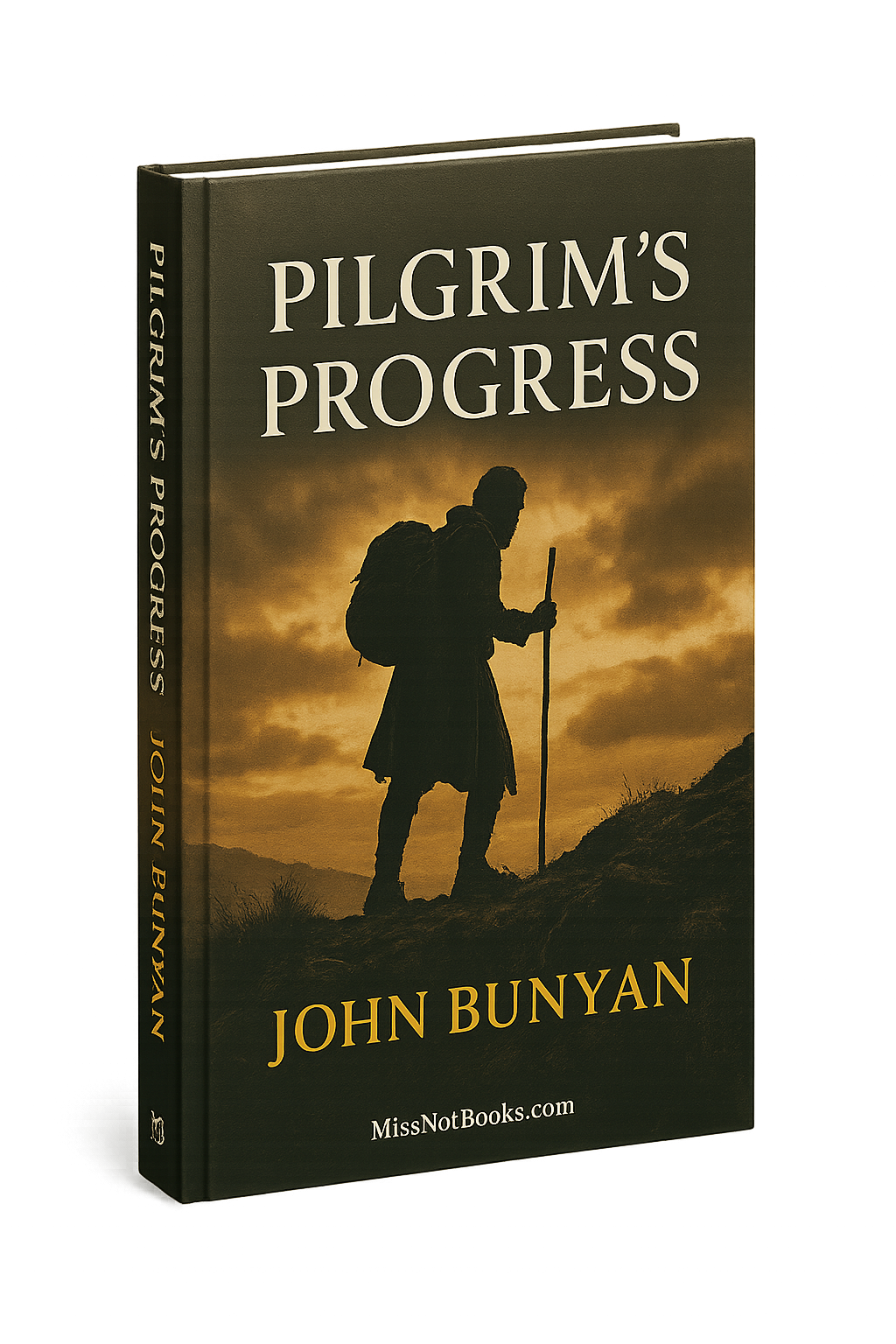
Pilgrim’s Progress
In the landscape of literary and spiritual works, few texts have the power to evoke profound transformation as this seminal piece does. It has deftly navigated the waters of human experience, blurring the lines between allegory and reality, urging readers to explore the depths of faith, the rigors of moral integrity, and the unwavering quest for redemption. This work has revolutionized the genre of the allegorical narrative, launching an entire literary tradition while continually challenging the conception of the spiritual journey as a personal pilgrimage. Its ability to resonate across different eras and cultures serves as a testament to its enduring legacy and relevance. Don’t miss the opportunity to engage with one of the most influential works of all time. Buy it today and explore the beauty of the human spirit’s struggle for salvation.
Core Ideas and Main Arguments
- The Journey of Faith: Central to the narrative is the character of Christian, whose pilgrimage from the City of Destruction to the Heavenly City symbolizes the path of salvation, emphasizing the importance of faith as a guiding force in life.
- The Nature of Temptation: The protagonist encounters various personifications of vice and sin, illustrating the myriad challenges faced on the spiritual journey, reinforcing the understanding of moral struggle.
- Community and Solitude: Relationships among characters reflect the necessity of fellowship in the journey of faith, while also showcasing moments of solitude that reveal inner conflicts and reliance on divine grace.
- Hope and Perseverance: The persistence of Christian in the face of adversity serves as an inspirational motif, underscoring the belief that faith can overcome the deepest obstacles.
Author’s Intentions and Context
The author aimed to provide a powerful allegory of the Christian experience that was accessible to the common man. Bunyan wrote during a period of significant religious turmoil in 17th-century England, when dissenters like himself faced persecution for their beliefs. By crafting a narrative that captured the essence of the Christian journey, he sought not only to instruct but also to inspire his readers to persevere in their faith, irrespective of societal challenges and personal doubts.
Structure of the Book
The narrative unfolds in a series of distinct stages marked by trials, encounters, and revelations:
- The Departure: Introduction of Christian and his realization of the need for salvation, setting the stage for his quest.
- The Journey: A series of encounters with characters such as Pliable, Evangelist, and Obstinate, each embodying different aspects of sin and virtue that confront the believer.
- The Trials: Christian faces various challenges (the Slough of Despond, Vanity Fair), representing the trials of faith and moral integrity.
- The Arrival: Concludes with Christian’s arrival at the Celestial City, symbolizing the ultimate fulfillment of the believer's journey.
Key Takeaways
- The Universality of the Faith Journey: Readers learn that the search for meaning and redemption is a universal experience transcending time and culture.
- Moral Choices Shape Destiny: The narrative emphasizes how personal choices define one’s spiritual path, underlining the significance of free will.
- Hope in Adversity: The work inspires resilience, suggesting that struggles are integral to spiritual growth and ultimate salvation.
Why It’s Important to Read
The timeless resonance of this book lies in its vivid portrayal of the spiritual struggle inherent in the human experience. It invites readers—whether seasoned Christians or those searching for existential meaning—to reflect on their own journeys of faith, providing both comfort and challenge. Its insights into the nature of temptation and the importance of perseverance remain relevant for anyone facing life’s trials. The allegory continues to inspire scholars, theologians, and casual readers alike, contributing richly to discussions about faith, morality, and the quest for spiritual truth.
Impactful Quotes and Analysis
-
“As I walked through the wilderness of this world, I lighted on a certain place where was a den, and I laid me down in that den to sleep.”
This opening line sets the tone for the entire journey, illustrating the spiritual and moral ambivalence of life that precedes awakening and enlightenment. -
“The things also that I have spoken of, I would have you remember; that you may be the more watchful and wary in your pilgrimage.”
This serves as a poignant reminder of the importance of vigilance in maintaining one’s faith amidst numerous distractions and pitfalls. -
“No man is able to come to me, except the Father which hath sent me draw him.”
A profound assertion of divine sovereignty and grace, this quote encapsulates the belief that the path to salvation is not merely a human endeavor, but is ultimately guided by God.
About the Author
John Bunyan (1628-1688) was an English writer and preacher, renowned for his deeply allegorical work that emerged during a tumultuous era marked by religious conflict. Coming from a humble background and enduring imprisonment for his nonconformist beliefs, his experiences profoundly shaped his writing. Bunyan’s legacy endures not only in his contributions to literature but also in the realm of spiritual thought, influencing countless readers and writers with his profound insights into faith and humanity.
This monumental work is Pilgrim’s Progress by John Bunyan, brought to you for educational purposes by MissNotBooks.com.