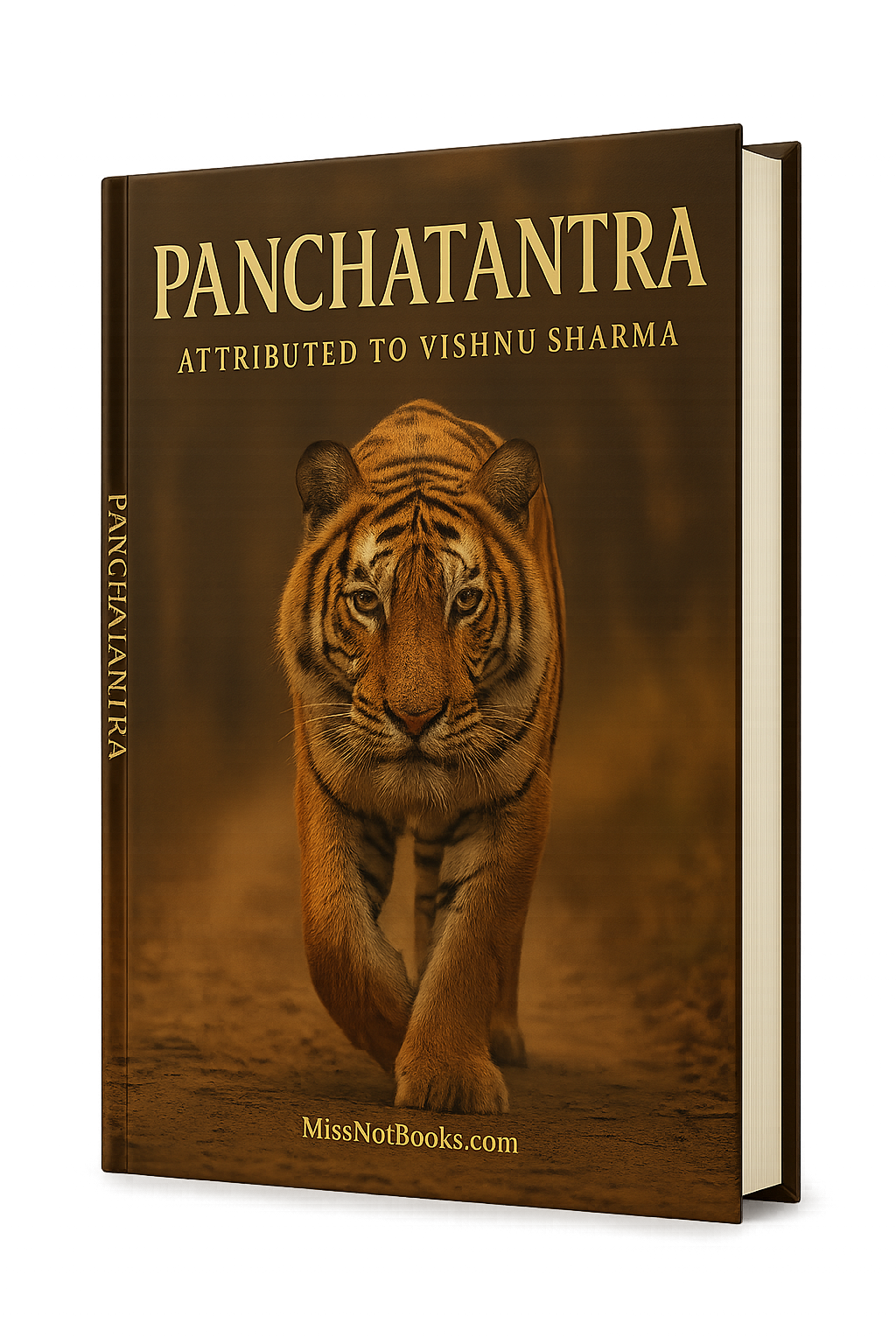
Panchatantra
In a world where ancient wisdom and storytelling intertwine, a collection of fables emerged that not only captivated the hearts and minds of generations but also seeded the very foundations of moral philosophy and animal fables. This transformative work uprooted conventional narratives, introducing a rich tapestry of allegorical tales that reflect the complexity of human nature and the ethical dilemmas inherent in everyday life. It revolutionized the way storytelling was perceived, making it both a source of entertainment and a profound educational tool. Its insights transcend time, challenging readers to reflect on ethics, strategy, and the essence of personal and social virtues. Don't miss the opportunity to engage with one of the most influential works of all time. Buy it today and explore the roots of moral wisdom.
Core Ideas and Main Arguments
- Moral Lessons: Each tale encapsulates a moral teaching, emphasizing the importance of wisdom, cunning, and ethical behavior.
- Animal Symbolism: The use of animal characters allows readers to observe human vices and virtues from a distance, enabling introspection without the usual biases.
- Pragmatic Wisdom: The narratives often illustrate clever solutions to complex problems, highlighting the value of intelligence and foresight.
- Real-World Relevance: Themes of leadership, governance, and interpersonal relationships resonate deeply, offering timeless advice applicable even today.
Author’s Intentions and Context
Attributed to a sage named Vishnu Sharma, the author set out to impart life lessons to the young princes of ancient India, aiming to mold them into wise and effective leaders. Written during a time characterized by political strife and moral ambiguity, the tales serve to address the philosophical challenges of governance and ethical leadership, weaving in cultural wisdom that remains relevant across centuries.
Structure of the Book
The book is traditionally structured into five distinct sections, each focusing on different themes:
- Education and Wisdom: Introduces foundational principles through simple yet profound stories.
- Friendship and Alliances: Explores the dynamics of relationships and the importance of loyalty and trust.
- Betrayal and Strategy: Addresses the darker aspects of human nature and the necessity of cunning in overcoming adversaries.
- Leadership and Governance: Offers insights into effective ruling practices, drawing parallels between animal behavior and human society.
- Conclusion and Reflection: Ties the narratives together, reinforcing the myriad lessons woven throughout the tales.
Key Takeaways
- Ethical behavior is essential for personal and societal harmony.
- Wisdom often lies in unexpected solutions and clever thinking.
- Relationships are complex and require nurture and respect.
- Leadership demands both intelligence and moral integrity.
Why It’s Important to Read
This collection not only offers timeless truths and moral guidance but also serves as a crucial touchstone in the landscape of world literature. Its vivid storytelling and compelling lessons make it an invaluable resource for educators, students, and anyone interested in the foundations of ethical thought. Readers will find that the morals contained within resonate regardless of culture or time, providing a universal language of wisdom that speaks to the heart of the human experience.
Impactful Quotes and Analysis
-
“The louder the monkey screams, the fewer the beats.”
- This poignant observation cautions against empty bravado and highlights the importance of substance over showmanship in personal and public life.
-
“Do not trust a friend who speaks bad of his companions.”
- This remark strikes at the core of loyalty and trustworthiness, a critical reminder of the values essential for meaningful relationships.
-
“A wise man learns more from a fool than a fool learns from a wise man.”
- This quote underscores the importance of humility and perspective, suggesting that wisdom can be extracted from even the most unexpected sources.
About the Author
Vishnu Sharma is an ancient Indian storyteller credited with the creation of this significant collection of fables. Little is known about his life, as much of his identity is shrouded in the mists of time. However, his legacy endures through these tales, which have influenced storytelling traditions and moral teachings across the globe. Sharma's ability to weave complex human emotions into simple narratives transcends cultural boundaries, solidifying his place as a pioneer of educational storytelling.
This monumental work is Panchatantra by Vishnu Sharma, brought to you for educational purposes by MissNotBooks.com.