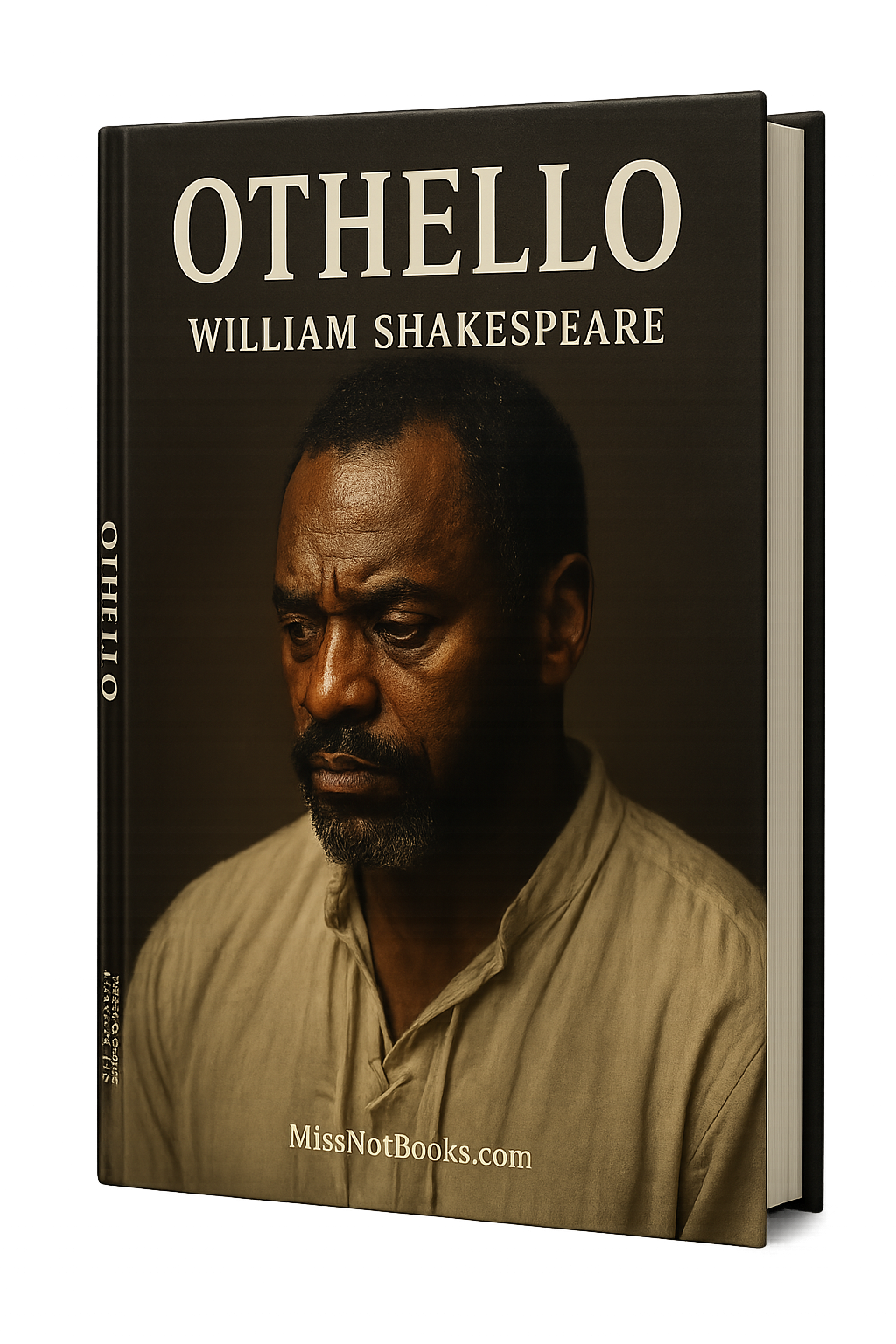
Othello
In a world thirsting for profound understanding of human emotion, jealousy, love, and betrayal, a transformative work emerged that not only revolutionized the literary landscape but also left an indelible mark on culture and psychology. This remarkable text delves into the dark corners of the human psyche, exploring the unfathomable depths of passion and the tragic consequences that often arise from our deepest insecurities. It challenges readers to confront the complexities of trust, identity, and the nature of perception — themes that resonate as powerfully today as they did in its own time.
Don’t miss the opportunity to engage with one of the most influential works of all time. Buy it today and explore the intricate web of emotion and morality that shapes our lives and relationships.
Core Ideas and Main Arguments:
- Jealousy and Its Consequences: The text presents jealousy as a devastating force that can corrupt reason and morality, showcasing how it can lead to tragic outcomes when left unchecked.
- The Complexity of Love: It examines the multifaceted nature of love, encompassing both its beauty and its potential for destruction, emphasizing the vulnerability that comes with deep emotional connections.
- Identity and Alterity: The work interrogates themes of identity, particularly how perceptions can be distorted through manipulation and deceit, impacting self-awareness and relationships.
- Racial and Cultural Dynamics: It also addresses the tensions arising from cultural differences and racism, contributing to a broader understanding of societal conflicts.
Author’s Intentions and Context:
Written during the early 17th century, a time marked by political and social turbulence in England and Europe, the author's intention was to deeply probe human relationships and societal mores through a compelling narrative framework. Responding to a changing world shaped by exploration and colonial expansion, the author aimed to bring forth the raw and often unflattering realities of human nature, prompting audiences to reflect on their own values and ethics amidst a backdrop of shifting paradigms.
Structure of the Book:
The text is masterfully structured in acts, each serving to build tension and develop characters in a way that drives the narrative forward:
- Act I: Introduces the main characters and sets up the initial relationships, grasping the audience's attention with themes of love and deception.
- Act II: Escalates conflict and reveals deep-seated insecurities, creating a palpable sense of foreboding.
- Act III: Heightens drama with significant plot twists and character decisions that reveal true natures.
- Act IV: Illustrates the tragic impact of unresolved jealousy and betrayal, leading to pivotal moments of both heartbreak and revelation.
- Act V: Culminates in tragedy, delivering powerful conclusions that resonate with the audience long after the final line.
Key Takeaways:
- The Danger of Miscommunication: Recognizes that a lack of open dialogue can lead to devastating misunderstandings.
- The Fragility of Trust: Suggests that once trust is broken, the social fabric can unravel, highlighting the delicate nature of relationships.
- Human Complexity: Affirms that individuals are not simply heroes or villains; instead, they embody a spectrum of motivations influenced by social and personal factors.
Why It’s Important to Read:
Reading this work is essential for anyone seeking to understand the intricacies of human emotion, societal structures, and moral dilemmas. It holds significant value for philosophers, psychologists, and those engaged in the arts, as it provides timeless insights into the human experience. The themes explored in this narrative remain relevant, encouraging readers to reflect on their personal lives and the broader human condition.
Impactful Quotes and Analysis:
-
"O, beware, my lord, of jealousy; It is the green-eyed monster which doth mock the meat it feeds on."
This quote encapsulates the destructive power of jealousy, highlighting how it can consume an individual and distort their reality. -
"I am not what I am."
Here, the conflict between authenticity and deception is powerfully articulated, emphasizing the often-hidden complexities of identity that challenge societal perceptions. -
"The robbed that smiles, steals something from the thief."
This poignant line underlines the idea that emotional injuries are not always black and white; victims can exhibit strength in ways that challenge their oppressors.
About the Author:
The playwright William Shakespeare (1564-1616) is celebrated as one of the most influential figures in English literature and drama. His works encompass an extraordinary range of themes, from love and tragedy to politics and human nature, and continue to shape the fields of literature and performing arts globally. Shakespeare's legacy is built upon his innovative use of language, character development, and deep exploration of the human condition, making his works perennial subjects of study and admiration.
This monumental work is Othello by William Shakespeare, brought to you for educational purposes by MissNotBooks.com.