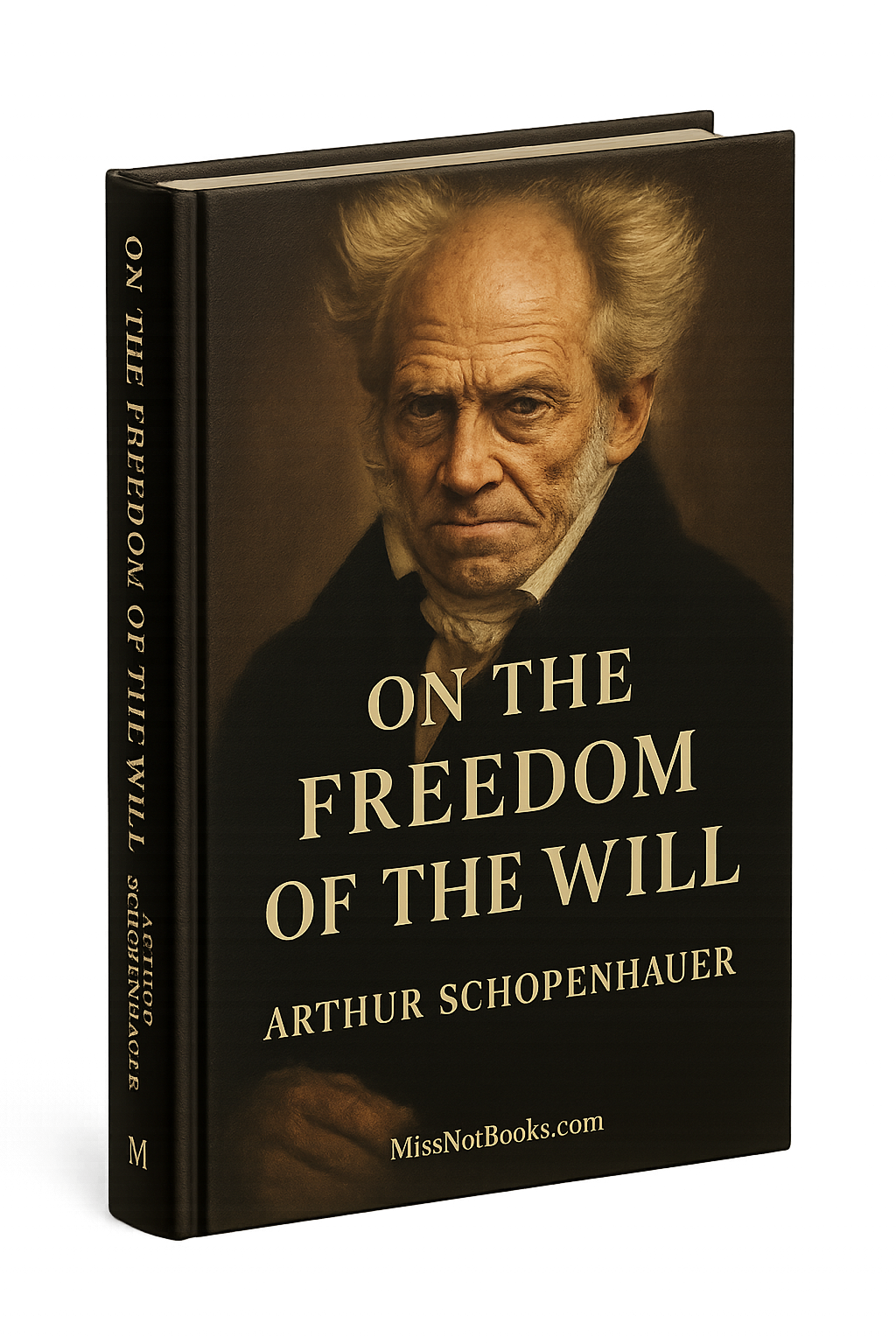
On the Freedom of the Will
In a landscape marred by unyielding determinism and the shackling nature of human desire, one seminal work emerged to confront and redefine the discourse on freedom, agency, and ethical thought. This book not only instigated philosophical debates that would ripple through the ages but also underscored the essential struggle for individual autonomy in an often indifferent world. It revolutionized our understanding of human motivation, illuminating the complex interplay between will and reason, leaving an indelible mark on existential philosophy and the psychology of choice. Don’t miss the opportunity to engage with one of the most influential works of all time. Buy it today and explore the foundations of free will and the philosophy that underpins our understanding of human existence.
Core Ideas and Main Arguments
- The Nature of the Will: The author posits that the will is the fundamental driving force behind human behavior, a force that supersedes reason and intellect.
- Determinism vs. Free Will: A critical examination of the illusion of free will, arguing that human actions are dictated by instinctual drives and desires.
- Ethical Implications: By understanding human motivation through the lens of the will, the work provides new insights into moral responsibility and ethical behavior.
- Suffering and Desire: The text delves deeply into human suffering, positing that unfulfilled desires are the root of unhappiness and that liberation comes from understanding and mastering one’s will.
Author’s Intentions and Context
The author undertook this profound exploration during a period marked by the rise of scientific rationalism and a mechanistic view of the universe that often neglected the nuances of human experience. Responding to the Enlightenment’s legacy, he aimed to reignite the discourse on individual freedom, challenging the prevailing notions of determinism that sought to minimize the role of human agency. His intention was to elevate the conversation around the complexities of moral choices and the human condition, positioning his arguments against the backdrop of burgeoning philosophical debates concerning autonomy and ethical responsibility.
Structure of the Book
- Introduction: Lays the foundation for the discussion of free will, summarizing the key questions and the significance of the will.
- The Nature of Will: Detailed exploration of will as the essence of human existence and decision-making processes.
- Case Studies and Examples: Analysis of various philosophical positions and real-world scenarios that illustrate the tension between will and determinism.
- Concluding Reflections: A wrap-up of the philosophical implications for ethics, morality, and human freedom.
Key Takeaways
- The distinction between the will and reason is crucial for understanding human motivations.
- True freedom involves comprehending and mastering one's desires rather than indulging them.
- Ethical considerations stem from the acknowledgment of the will’s primacy in human actions and decisions.
- Genuine liberation from suffering is achieved through willful understanding and acceptance.
Why It’s Important to Read
This work remains a cornerstone of philosophical literature, inviting introspection and challenging readers to reconsider their beliefs about agency and moral responsibility. Its rich psychological insights resonate with anyone grappling with the complexities of human choice, making it particularly relevant for philosophers, psychologists, and those interested in existential questions surrounding life's fundamental purpose. Readers will benefit not only from its historical context but also from its profound implications for contemporary discussions about freedom, ethics, and the human experience.
Impactful Quotes and Analysis
-
“The will is the essence of man.”
This profound assertion crystallizes the author’s view of human identity as intrinsically linked to the will, challenging more superficial understandings of self based solely on intellect or rationality. -
“Man can do what he wants, but he cannot will what he wants.”
This poignant statement encapsulates the paradox of freedom and desire, emphasizing the constraints placed upon human will by instinctual drives, framing a critical debate within existential philosophy. -
“Suffering is the sole source of consciousness.”
Here, the author powerfully argues that awareness and meaning are forged in the crucible of human suffering, bringing to light the transformative potential of our experiences and struggles.
About the Author
Arthur Schopenhauer (1788–1860) was a German philosopher best known for his work on metaphysics, ethics, and aesthetics. His philosophical outlook was significantly influenced by Eastern thought and his interpretations of Kantian ideals, positioning him as a forerunner to existentialism and influencing a wide array of thinkers, including Friedrich Nietzsche and Sigmund Freud. Schopenhauer’s exploration of the will as the driving force behind human behavior has left a lasting legacy, enduring the scrutiny and debates of generations of philosophers.
This monumental work is On the Freedom of the Will by Arthur Schopenhauer, brought to you for educational purposes by MissNotBooks.com.