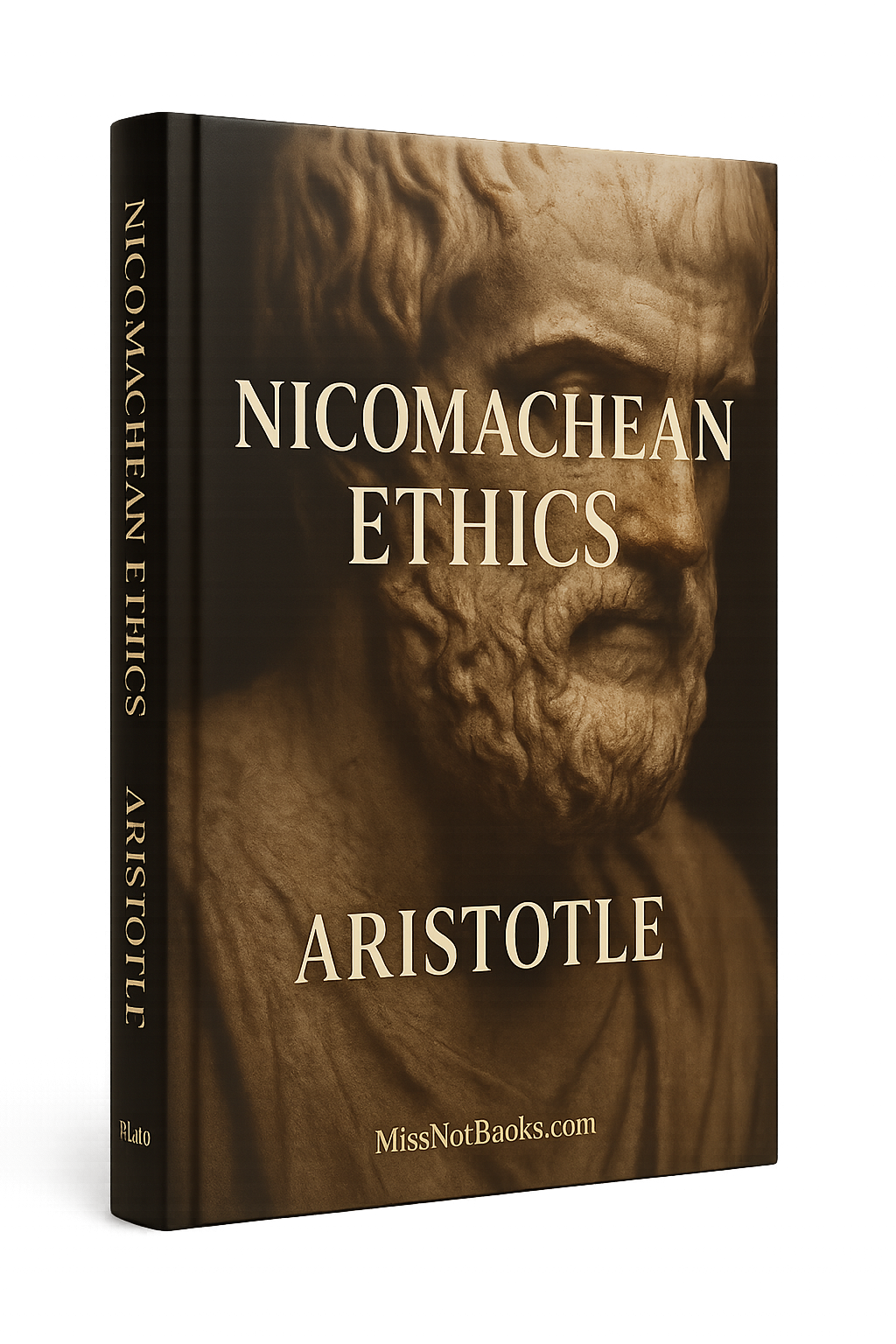
Nicomachean Ethics
The profound impact of a certain book has transformed the ways we understand ethics, morality, and the essence of human flourishing. It revolutionized philosophical discourse by intertwining practical ethics with the pursuit of the good life, challenging readers to contemplate deeper questions of virtue, character, and happiness within the context of their own lives and societies. This literary gem has remained a touchstone for ethical theory, continuously inspiring scholars, leaders, and thinkers through the ages.
Don’t miss the opportunity to engage with one of the most influential works of all time. Buy it today and explore the foundation of ethical philosophy.
Core Ideas and Main Arguments
- Virtue as the Mean: The central thesis posits that virtue lies in finding a balance or mean between extremes of excess and deficiency.
- The Role of Habits: It emphasizes the importance of habits in shaping moral character and the necessity of practicing virtues for moral development.
- Eudaimonia: The concept of the "good life" or eudaimonia is explored, articulating that true happiness is achieved through living virtuously and fulfilling one's potential.
- Practical Wisdom: The work delineates the importance of phronesis, or practical wisdom, as a guiding principle in ethical decision-making.
- The Social Nature of Humans: It recognizes that humans are inherently social beings, and ethical living cannot be divorced from our relationships with others.
Author’s Intentions and Context
Written during a time when ancient Greek society faced social and political upheaval, the author sought to cultivate a practical understanding of ethics that addressed the challenges of his era. The work responds to the philosophical void left by earlier thinkers, striving for a more action-oriented approach to ethics. By grounding ethical theory in human nature and the realities of everyday life, the author aimed to foster ethical discernment and responsibility amidst a fluctuating cultural landscape.
Structure of the Book
The book is methodically organized into ten sections, each strategically contributing to the overarching theme of achieving moral excellence. Key divisions include:
- The Nature of Goodness: Examining various definitions of the good life.
- Virtue and Character: Delving into moral virtues and their significance.
- Intellectual Virtues: Differentiating moral virtues from intellectual virtues, such as wisdom and understanding.
- Friendship: Analyzing the nature and significance of friendships in ethical living.
- Pleasure and Happiness: Exploring the relationship between pleasure and the good life.
Key Takeaways
- True virtue embodies a balanced approach to life, rejecting excess and deficiency.
- Moral excellence is cultivated through deliberate practice, not merely theoretical understanding.
- Individual fulfillment is intrinsically connected to one’s role within the community.
- Understanding practical wisdom is crucial for navigating ethical dilemmas.
- Happiness is not a mere state of feeling but a lifelong journey of virtuous activity.
Why It’s Important to Read
This book remains indispensable today as it lays the groundwork for contemporary ethical discourse, offering insights that resonate across various fields, including philosophy, politics, and psychology. It is particularly beneficial for students, educators, and those seeking a deeper understanding of personal ethics in an increasingly complex world. Its timeless lessons prompt us to reflect on how virtues inform our choices and relationships, making it a relevant guide for anyone aspiring to a fulfilled life.
Impactful Quotes and Analysis
-
"The good for man is an activity of the soul in accordance with virtue."
- This quote encapsulates the essence of the author’s belief that true happiness stems from living authentically in accordance with our virtues.
-
"It is the mark of a good man to be ever striving to attain the noble."
- Here, the call to constant self-improvement and the pursuit of excellence resonates powerfully, emphasizing moral aspiration as a lifelong endeavor.
-
"Friendship is a single soul dwelling in two bodies."
- This poignant observation highlights the profound connection forged between individuals through mutual respect and shared virtues, elevating interpersonal relationships to an ethical imperative.
About the Author
The author, Aristotle (384–322 BCE), was a towering figure in ancient philosophy whose contributions spanned fields such as logic, metaphysics, biology, ethics, and political theory. As a student of Plato and tutor to Alexander the Great, his work laid the foundation for much of Western thought. His legacy endures as a cornerstone of philosophical inquiry, revered for his meticulous approach and profound insights into human nature and society.
This monumental work is Nicomachean Ethics by Aristotle, brought to you for educational purposes by MissNotBooks.com.