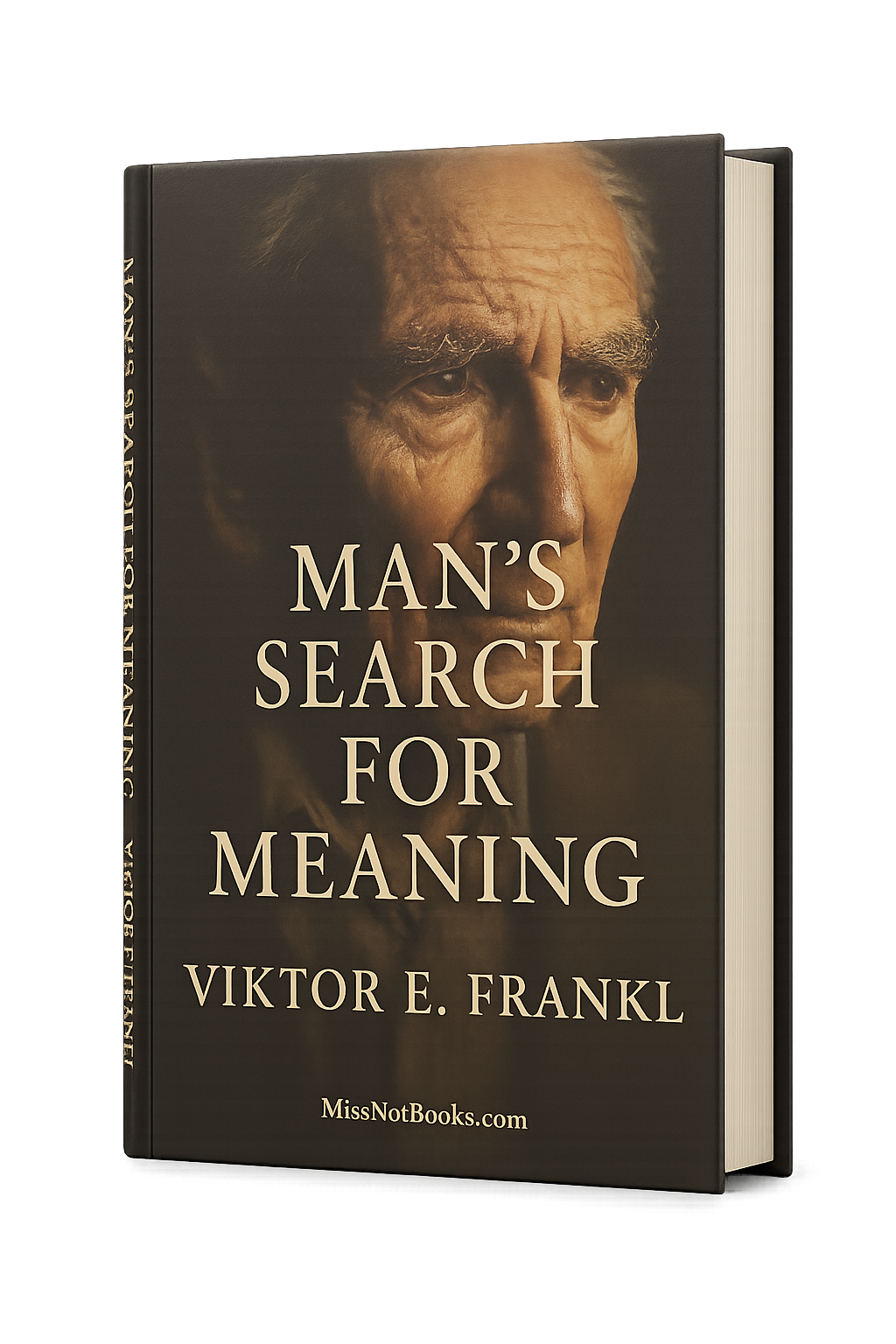
Man's Search for Meaning
In a world often defined by chaos and suffering, one remarkable book emerged and forever altered our understanding of the human spirit and its capacity for resilience. It challenges readers to confront the depths of despair while demonstrating the profound significance of finding purpose in life. This pivotal work not only revolutionized the field of psychology but also illuminated the ways in which individuals can transcend pain through meaning, making it an essential touchstone for countless seekers of truth and solace. Don’t miss the opportunity to engage with one of the most influential works of all time. Buy it today and explore the foundation of modern existential thought.
Core Ideas and Main Arguments
- The Will to Meaning: The central thesis posits that the primary drive in humans is not pleasure or power, but the search for meaning, which shapes our actions and provides fulfillment.
- Existential Vacuum: It highlights the existential crisis many individuals face in modern society, where traditional values may falter, leading to feelings of emptiness.
- Suffering and Meaning: The text argues that suffering is an inevitable part of life, and it is through suffering that individuals can discover purpose and significance.
- Freedom of Choice: It emphasizes the profound capacity of individuals to choose their responses to suffering, regardless of their circumstances, thereby asserting their autonomy in the face of adversity.
- Transcendence: The work promotes the idea that individuals can rise above their situations by focusing on a vision of the future, love for others, and their unique potential.
Author’s Intentions and Context
Written in the shadow of the Holocaust, the author aimed to articulate the profound psychological insights gained from his experiences as a concentration camp survivor. Viktor Frankl intended to address the existential crises of the 20th century, emphasizing that even in the most harrowing conditions, individuals can find meaning. In a time when humanity faced unprecedented atrocities, his work sought to provide a philosophical underpinning that could foster resilience and hope.
Structure of the Book
The book is organized into two main parts:
- Experiences in a Concentration Camp: The first section recounts Frankl's personal experiences and observations in Nazi concentration camps, offering raw insights into human suffering and resilience.
- Logotherapy: The second section introduces the principles of logotherapy, detailing a therapeutic approach focused on finding meaning in life, enriched with case studies and practical applications.
Key Takeaways
- The search for meaning is vital to human existence and health.
- Individuals possess the ability to choose their attitude in any situation, highlighting an essential facet of human freedom.
- Life can hold meaning even in the most challenging circumstances, providing a pathway for personal growth and transformation.
Why It’s Important to Read
This book remains immensely relevant today as it addresses universal questions about suffering, purpose, and human agency. Its insights resonate with anyone grappling with existential questions or facing personal crises. Mental health professionals, educators, and individuals on their journeys of self-discovery will find value in Frankl’s approach. The profound messages of resilience and purpose continue to inspire generations, making this work a timeless exploration of the human condition.
Impactful Quotes and Analysis
-
"When we are no longer able to change a situation, we are challenged to change ourselves."
This powerful statement encapsulates the essence of freedom and choice in the face of overwhelming circumstances, emphasizing personal agency. -
"Life is never made unendurable by circumstances, but only by lack of meaning and purpose."
Here, Frankl succinctly conveys the importance of meaning in navigating life's challenges, suggesting that perspective is key to resilience. -
"Each person’s task is as unique as his specific and unique opportunity to implement it."
This quote reflects the idea that individual purpose varies greatly and emphasizes the importance of personal exploration in the search for meaning.
About the Author
Viktor Emil Frankl (1905-1997) was an Austrian neurologist and psychiatrist, as well as a Holocaust survivor. He founded logotherapy, a form of existential analysis, which focuses on a person’s search for meaning as a primary motivational force. His experiences and insights have left an indelible mark on psychology, philosophy, and self-help literature, establishing him as a significant figure in understanding human resilience.
This monumental work is Man’s Search for Meaning by Viktor E. Frankl, brought to you for educational purposes by MissNotBooks.com.