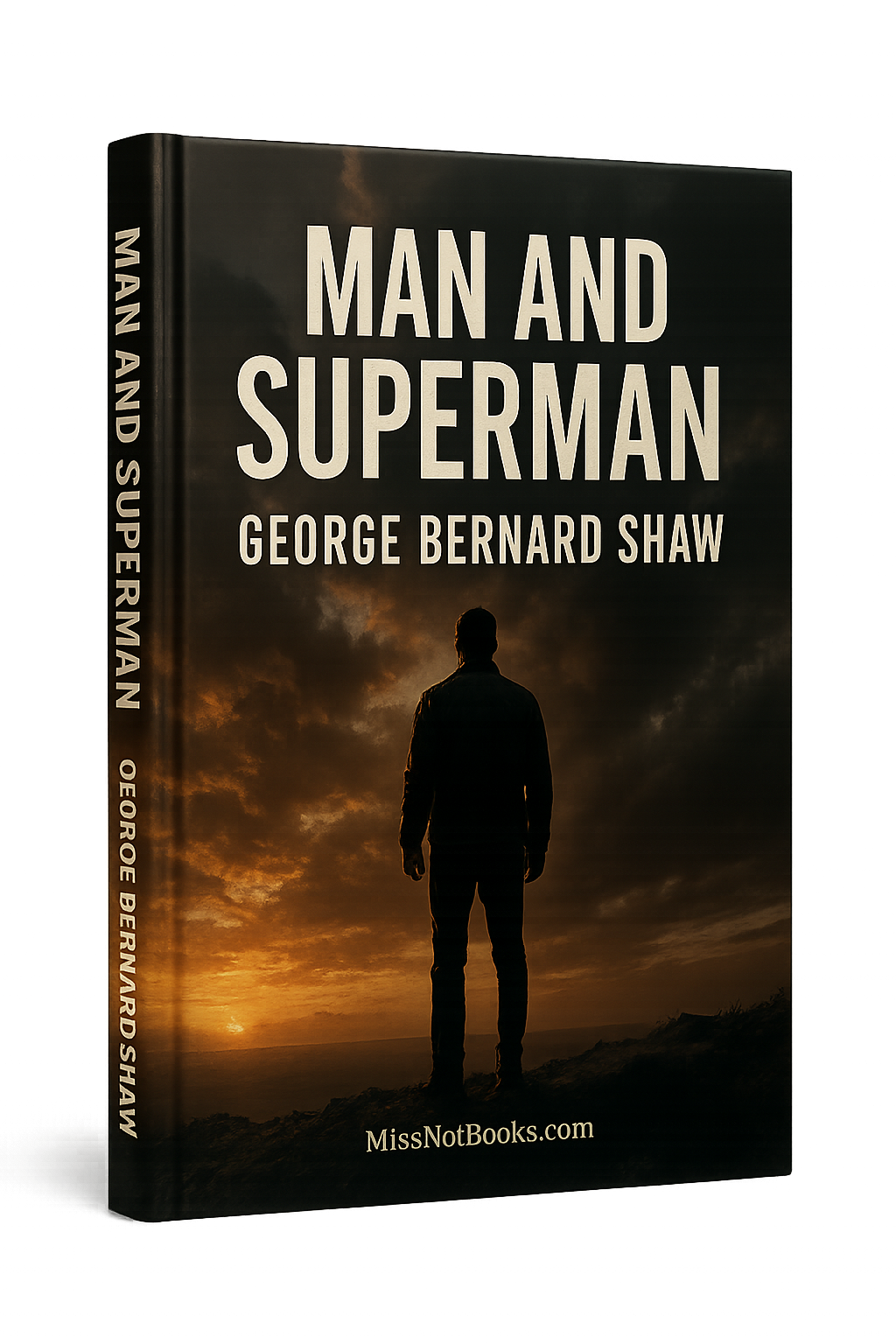
Man and Superman
In the realm of literature and drama, few works have provoked as much thought and challenged societal norms as the book in question, which deftly navigates the complexities of human relationships, societal expectations, and the transformative power of love and ambition. This groundbreaking text revolutionized the way characters engage in philosophical discourse, pushing the boundaries of traditional theatre and inviting audiences to reevaluate their beliefs about gender roles, morality, and the pursuit of happiness. Its keen observations and bold assertions continue to resonate, serving as a catalyst for discussions around equality, sexual politics, and the nature of human existence.
Core Ideas and Main Arguments
- Superman Concept: The notion of the "Superman" (or "Overman") serves as a central metaphor, challenging the audience to aspire to higher standards of personal development and ethical conduct.
- Marriage as an Adventure: The book critiques traditional notions of marriage, presenting it not just as a social contract but as a profound journey laden with both comedic and philosophical implications.
- Gender Dynamics: It boldly examines the roles of men and women, subverting stereotypes and highlighting the complexity of human desire and individuality over societal norms.
- Social Commentary: The text critiques the conventions of Edwardian society, using wit and satire to question the status quo and advocate for social reform.
- Philosophical Dialogues: Through extensive dialogues, the book explores existential themes, questioning the very essence of life, love, and human purpose.
Author’s Intentions and Context The author set out to create a work that would serve as both entertainment and a vehicle for social critique during a time of significant change in early 20th-century society. In the backdrop of a shifting cultural landscape, marked by the suffragette movement and evolving attitudes toward gender and sexuality, the author aspired to provoke thought and encourage audiences to confront uncomfortable truths about themselves and the world around them. By intertwining comedy with profound philosophical questions, this work aimed to facilitate meaningful discourse in an era ripe for transformation.
Structure of the Book The book is organized into several acts, each seamlessly blending narrative, philosophy, and dialogue, ensuring that the flow of ideas builds progressively towards the conclusion.
- Act I introduces the characters and establishes the central themes, setting the stage for the exploration of love and ambition.
- Act II deepens the conflict and challenges conventional views on relationships and societal roles.
- Act III features the climactic debates and philosophical exchanges, culminating in a resolution that invites self-reflection and re-evaluation of personal values.
Key Takeaways
- The importance of personal evolution and the pursuit of one's true potential.
- A critical look at the institution of marriage and its implications for personal freedom.
- The need for genuine communication and understanding between genders.
- The inherent conflict between societal constraints and individual desires.
- A renewed perspective on philosophical discussions presented through lively characters.
Why It’s Important to Read This work remains profoundly relevant in contemporary discourse surrounding gender, individuality, and societal conventions. Its exploration of the intricacies of human relationships and the continuous struggle for self-actualization resonates with readers navigating their paths in an increasingly complex world. Anyone seeking to understand the foundations of modern social thought, or who is interested in the progression of gender roles, will find valuable insights within its pages.
Impactful Quotes and Analysis
-
“The reasonable man adapts himself to the world; the unreasonable one persists in trying to adapt the world to himself. Therefore, all progress depends on the unreasonable man.”
- This provocative statement challenges readers to embrace unorthodox beliefs and strive for change, underscoring the importance of individual agency in shaping society.
-
“The secret of happiness is to have a genuine concern for others.”
- This quote encapsulates the central belief that true fulfillment comes from altruism and empathy, encouraging a perspective shift in how one approaches relationships and society.
-
“Nobody can be exactly like me. Sometimes even I have trouble doing it.”
- A humorous yet profound reflection on individuality, emphasizing the complexities and quirks of human nature, this quote resonates with readers’ own experiences of self-identity.
About the Author George Bernard Shaw (1856–1950) was an Irish playwright, critic, and polemicist, renowned for his sharp wit and keen social insights. A leading figure in the Fabian Society, he dedicated much of his life to advocating for socialist causes, women’s rights, and educational reform. His works, characterized by their intelligent dialogue and social critique, have left an indelible mark on literature and continue to be celebrated for their innovative blend of comedy and philosophy.
Don’t miss the opportunity to engage with one of the most influential works of all time. Buy it today and explore the beauty of human relationships and the quest for personal evolution. This monumental work is Man and Superman by George Bernard Shaw, brought to you for educational purposes by MissNotBooks.com.