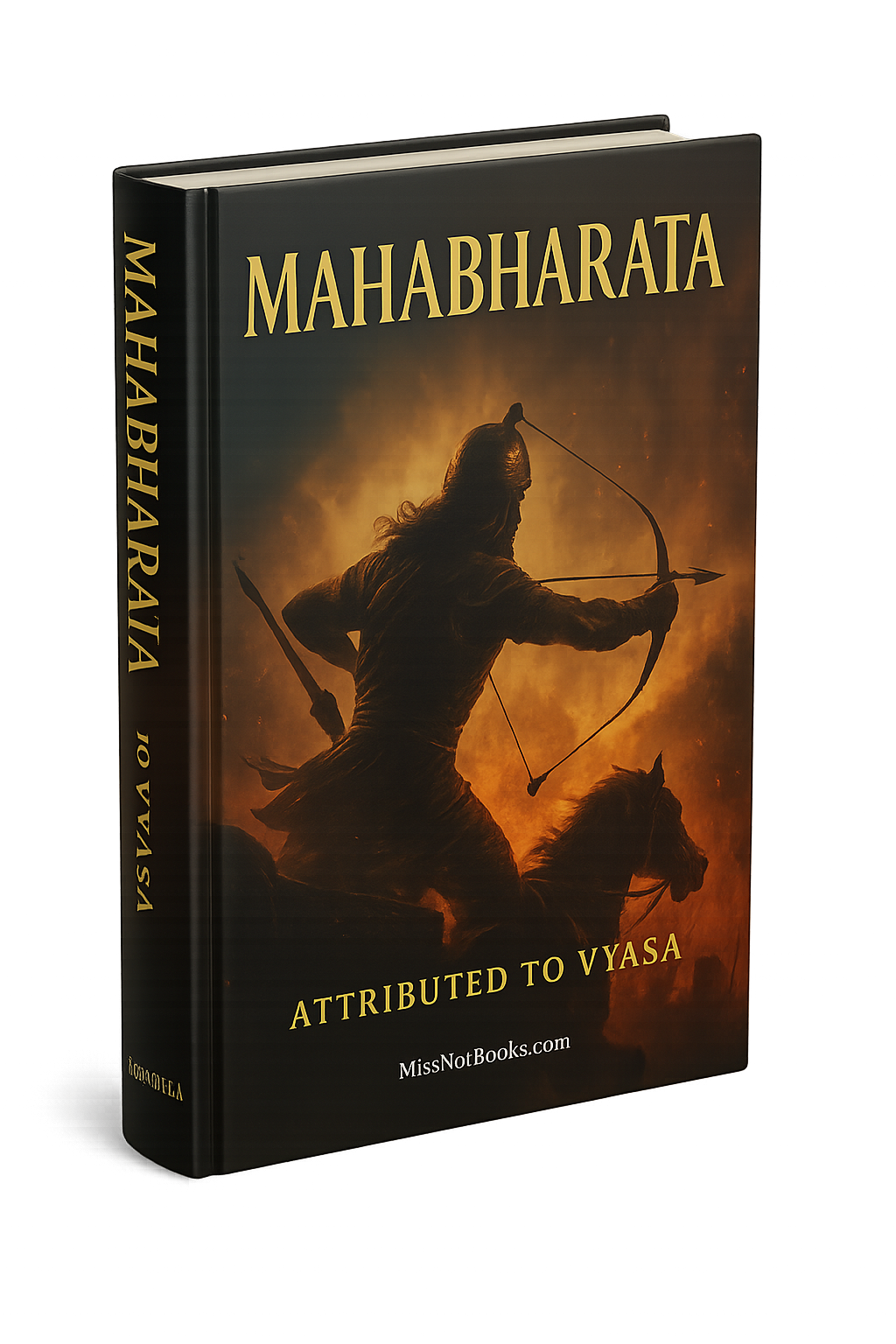
Mahabharata
In the vast tapestry of human civilization, few works have wielded as profound an influence across multiple domains of thought, culture, and spirituality as one remarkable epic. This literary masterpiece has not only shaped the philosophical and ethical paradigms of its homeland but has reverberated across the globe, challenging our perceptions of duty, righteousness, and the human condition. It stands as a monumental achievement, encapsulating the complexities of life, the eternal struggle between good and evil, and the intricacies of fate within a narrative that is both grand and deeply personal.
Core Ideas and Main Arguments
- The concept of Dharma (duty/righteousness): Central to the narrative, the text explores the moral dilemmas individuals face when adhering to their duties versus their personal desires.
- The complexity of human relationships: The story depicts the dynamics of kinship, loyalty, love, and betrayal, underscoring the multifaceted nature of human interaction.
- The inevitability of fate and free will: Characters grapple with their destinies and the extent to which their choices shape their futures, raising profound questions about control over one’s life.
- The exploration of war and peace: The grand epic portrays the ethical implications of war, the cost of conflict, and the quest for peace amidst chaos.
- Spiritual wisdom and philosophical inquiry: Interspersed with philosophical discourses, the text addresses fundamental questions about existence, duty to the self and society, and the nature of reality.
Author’s Intentions and Context
Attributed to one of the great sages of ancient India, this epic was crafted during a time of great social upheaval and the quest for identity within a burgeoning civilization. The author's intentions were multifaceted: to preserve ancient traditions, to provide moral guidance, and to challenge readers to confront the complexities of their existence. In an era when oral traditions were paramount, this written narrative sought to immortalize the struggles and triumphs of a diverse array of characters, offering a reflective lens through which audiences could examine their values and beliefs.
Structure of the Book
The text is organized into multiple books, each focused on different thematic elements and character arcs. The structure can be roughly summarized as follows:
- Adiparva: The genesis of the epic, introducing principal characters and the foundation of the conflict.
- Sabha Parva: Delving into social structures and the significance of loyalty and treachery.
- Vana Parva: A narrative of exile introducing themes of suffering and redemption.
- Udyoga Parva: The preparation for war, detailing the complexities of negotiation and diplomacy.
- Bhishma Parva to Anushasana Parva: The climactic battles, dissecting notions of justice and duty amidst carnage.
- Ashvamedhika Parva: The aftermath and reflections on morality, legacy, and governance.
Each segment progressively builds upon the previous, weaving a rich tapestry of interconnected lives and ethical quandaries that culminate in a powerful resolution.
Key Takeaways
- The deeply ingrained principle of Dharma serves as a guiding force for individual and collective behavior.
- Conflict and resolution are inherent in the human experience, mirrored through the choices of its characters.
- Ethical deliberation and philosophical inquiries remain relevant, offering timeless insights into contemporary issues.
- Understanding the human condition requires grappling with the complexities of relationships and the moral dilemmas they present.
Why It’s Important to Read
This epic's ongoing relevance lies in its profound exploration of universal themes: the struggle for truth, the weight of duty, and the meaning of life itself. Its teachings transcend cultural boundaries, offering insights that are applicable to modern ethical dilemmas, leadership, and personal growth. Scholars, philosophers, and anyone interested in human psychology will find invaluable lessons within its pages, revealing the incredible depth of human experience.
Impactful Quotes and Analysis
-
"He who is overly attached to his family members experiences fear and sorrow, for the root of all grief is attachment."
- This profound statement encapsulates the theme of attachment and detachment, offering a sobering reflection on how relationships can both uplift and burden us.
-
"There is neither happiness nor suffering in this world; they are merely constructs of the mind."
- Here, the narrative explores the philosophical concept of perception, encouraging readers to reconsider their internal experiences and the realities they create.
-
"The wheel of Dharma turns unceasingly; embrace your path without fear."
- This quote serves as a powerful reminder of the relentless nature of duty and fate, urging individuals to act with courage and integrity.
About the Author
The author, traditionally revered as Vyasa, is said to have lived millennia ago, playing a pivotal role as a sage, philosopher, and storyteller. His contributions extend beyond this epic; many regard him as a foundational figure in the Hindu tradition, credited with compiling and preserving extensive knowledge through texts that encompass philosophy, spirituality, and ritual practices. Vyasa's legacy continues to resonate, showcasing his enduring influence over Indian thought and literature.
Don’t miss the opportunity to engage with one of the most influential works of all time. Buy it today and explore the profound intricacies of life and duty that echo through the ages. This monumental work is Mahabharata by Vyasa, brought to you for educational purposes by MissNotBooks.com.