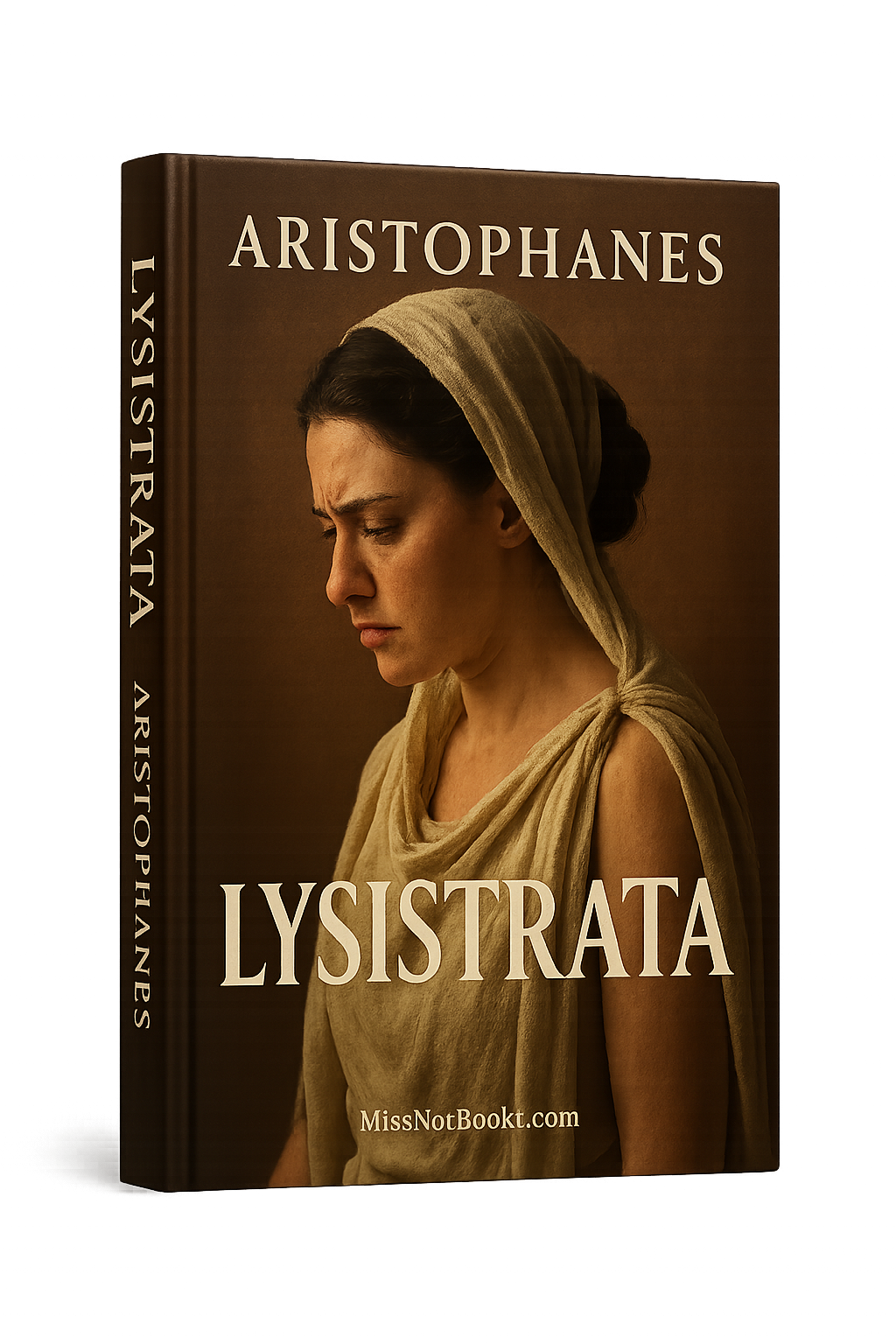
Lysistrata
In an era marked by relentless warfare and divisive political strife, a groundbreaking work emerged that challenged the very fabric of societal norms, revolutionizing not only how women were perceived in ancient Greece but also sparking discourse on the power of pacifism and sexual politics. This extraordinary narrative, layered with sharp wit and social critique, introduced an ingenious premise: what if women refused to engage in sexual relations until their men ended the war? The book intricately weaves humor with a profound commentary on the roles and agency of women, making it a timeless exploration of peace and power dynamics.
Core Ideas and Main Arguments:
- Gender and Power Dynamics: The book boldly examines the interplay of gender roles in a patriarchal society, challenging the notion of male dominance.
- Pacifism and Resistance: It introduces the radical idea that women could exert influence over men's decisions by withholding intimacy, illuminating the potential for nonviolent resistance.
- Social Critique: Through satire, it critiques the absurdities of war and the often detrimental impact it has on civilian life, particularly from a female perspective.
- Community and Solidarity: The work emphasizes the importance of unity among women, showcasing how collective action can lead to significant societal changes.
Author’s Intentions and Context: The playwright's intent was to provoke thought and laughter, inviting audiences to reflect on the state of their society amidst the Peloponnesian War, a time when violence and strife reigned supreme. Aristophanes aimed to address the cultural and philosophical challenges of his day, using humor as a tool to criticize the prevailing norms surrounding gender and conflict. His work served as both entertainment and a call to action, urging a reconsideration of established power structures.
Structure of the Book: The narrative unfolds in a series of acts that alternate between comedic dialogue and poignant monologues. It is primarily divided into the following thematic segments:
- Introduction of the women's pact and the rationale behind it.
- The initial resistance and eventual acceptance of the male characters, portrayed through humor and absurdity.
- The culmination of the women's clever plots to undermine the war efforts.
- A resolution that reflects on the potential for reconciliation and peace.
Each act builds on the central thesis of female empowerment and the absurdity of war, culminating in a powerful commentary on human relationships.
Key Takeaways:
- The work illustrates the transformative power of collective action among marginalized groups.
- It prompts critical thinking about the intersections of gender, war, and societal values.
- Readers are left with a deeper understanding of the roles women play in both private and public spheres, especially during times of crisis.
Why It’s Important to Read: This work continues to resonate with contemporary audiences, as it delves into themes of gender equality, social justice, and the futility of war. It is especially vital for those studying feminist theory, political science, or history, providing insights into how ancient narratives can inform modern struggles for equality and peace. Engaging with this text allows readers to explore the power of voice and the significant impact of political activism, all through a lens of humor and clever storytelling.
Impactful Quotes and Analysis:
-
“Let us begin the battle not with arms but with our hearts.”
This quote encapsulates the essence of the book's message, emphasizing the strength found in emotional and relational power over physical conflict, a lesson that remains relevant in today’s world of activism. -
“For we will not give our men's hearts the desire they seek until the war comes to an end.”
This statement highlights the central strategy employed by the women, illustrating the clever manipulation of social dynamics to enact change, reinforcing the theme of leveraging influence to achieve peace.
About the Author: Aristophanes (c. 446 – c. 386 BC) was an ancient Greek playwright renowned for his comic plays that offered social and political commentary on Athenian society. Often referred to as the "Father of Comedy," his works not only entertained audiences of his time but also provided sharp critiques of war, politics, and gender roles, shaping the tradition of comedic writing for generations to follow. His legacy endures as a fundamental figure in Western literature and theater, influencing countless writers and thinkers throughout history.
Don’t miss the opportunity to engage with one of the most influential works of all time. Buy it today and explore the beauty of human language and the dynamics of love and war. This monumental work is Lysistrata by Aristophanes, brought to you for educational purposes by MissNotBooks.com.