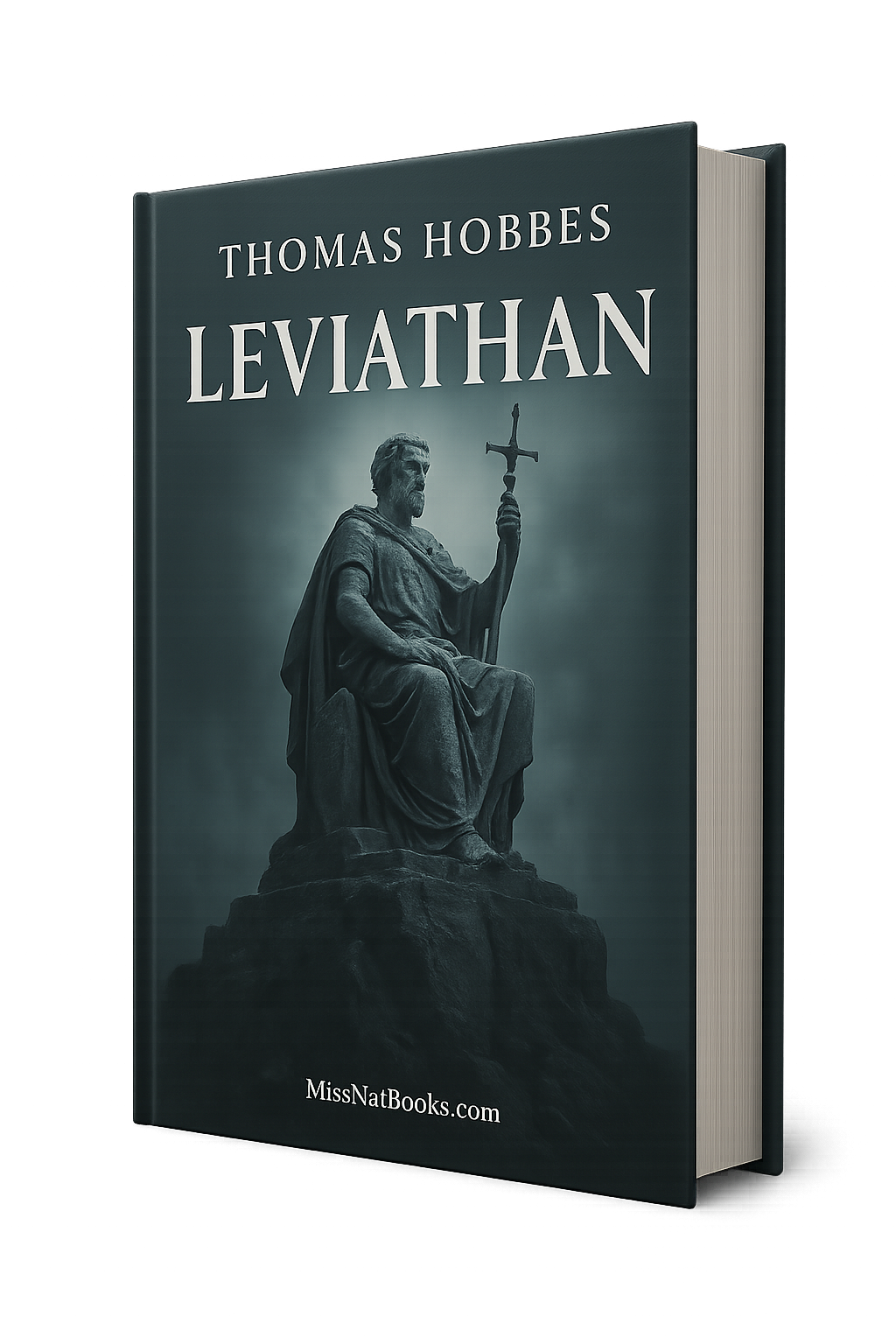
Leviathan
In the realm of political philosophy, few texts have altered the trajectory of thought as significantly as this groundbreaking work. It revolutionized the understanding of human nature and societal constructs, laying the groundwork for modern political theory. By presenting a stark and often disquieting view of humanity's inherent tendencies towards conflict and chaos, it challenged the prevailing notions of governance, authority, and the social contract. This book forced intellectuals to confront uncomfortable truths about the nature of power and the necessity of order in society, thus reshaping debates that endure to this day.
Core Ideas and Main Arguments
- Human Nature: The book posits that humans are driven by self-interest and a desire for self-preservation, which can lead to a "war of all against all" in the absence of authority.
- State of Nature: It vividly describes a hypothetical state of nature characterized by disorder, insecurity, and constant competition, necessitating the establishment of political structures.
- The Social Contract: The author outlines a social contract theory where individuals relinquish certain freedoms in exchange for security, legitimizing the power of the sovereign.
- Sovereignty: The text asserts that a strong, centralized authority is essential to prevent conflict and maintain peace, advocating for absolute sovereignty to ensure compliance and order.
- Religion and Politics: It explores the relationship between religious authority and political power, arguing that civil peace can only be achieved through a secular political framework.
Author’s Intentions and Context
The author set out to provide a compelling argument for absolute authority during a time of tumult—specifically the English Civil War—where questions of governance, authority, and human rights were at the forefront. By dissecting the flawed nature of humanity and the civil discord that ensued from competing powers, he aimed to show the necessity of a strong and unified government to safeguard peace and order. His work was a direct response to the chaotic political landscape of his time, seeking to provide a foundation for a new understanding of political legitimacy and the role of the state.
Structure of the Book
The text is methodically organized into several parts that build upon one another:
- Introduction and Preface: Establishes the foundational concepts and the urgency of the discussion.
- Of Man: Examines human nature, thoughts, and the state of nature that informs the need for society.
- Of Commonwealth: Introduces the concept of the social contract and the formation of the state.
- Of a Christian Commonwealth: Discusses the implications of religion in governance and the necessity of secularism.
- Of Kingdom of Darkness: Critiques the dangers posed by religious zealotry and misinformation.
Each section contributes to an unfolding argument that culminates in the necessity of a strong sovereign to maintain peace and security.
Key Takeaways
- The nature of humanity necessitates a powerful government to prevent chaos.
- Security and order can only arise from a social contract acknowledging the need for authority.
- Understanding the balance between individual rights and societal needs is crucial for modern governance.
Why It’s Important to Read
Engaging with this seminal work is essential for anyone interested in political theory, history, or philosophy. Its ideas continue to resonate in contemporary debates about governance, individual rights, and the role of authority in society. Students of political philosophy, policymakers, and general readers alike will gain invaluable insights into the complexities of human nature and the necessity of structured governance. The text’s exploration of the social contract remains vital in discussions of political legitimacy and ethical authority today.
Impactful Quotes and Analysis
-
"There is no such thing as the state of nature."
This quote encapsulates the author’s view that without established political authority, society cannot function harmoniously, underscoring the need for civilization. -
"The life of man, solitary, poor, nasty, brutish, and short."
This vivid description of the human condition in anarchy serves as a stark warning, highlighting the fundamental need for peace and security offered by a sovereign power. -
"Covenants, without the sword, are but words."
This assertion points to the essential nature of enforcement in upholding agreements, emphasizing that trust in governance is contingent upon the threat of power to ensure compliance.
About the Author
Thomas Hobbes (1588-1679) was an English philosopher, best known for his foundational works in political philosophy. His ideas not only heralded the rise of modern science and secularism but also profoundly influenced subsequent thinkers and political movements. Viewed as a pioneering voice in social contract theory, his legacy endures through the continued relevance of his ideas in contemporary political discourse.
This monumental work is Leviathan by Thomas Hobbes, brought to you for educational purposes by MissNotBooks.com.