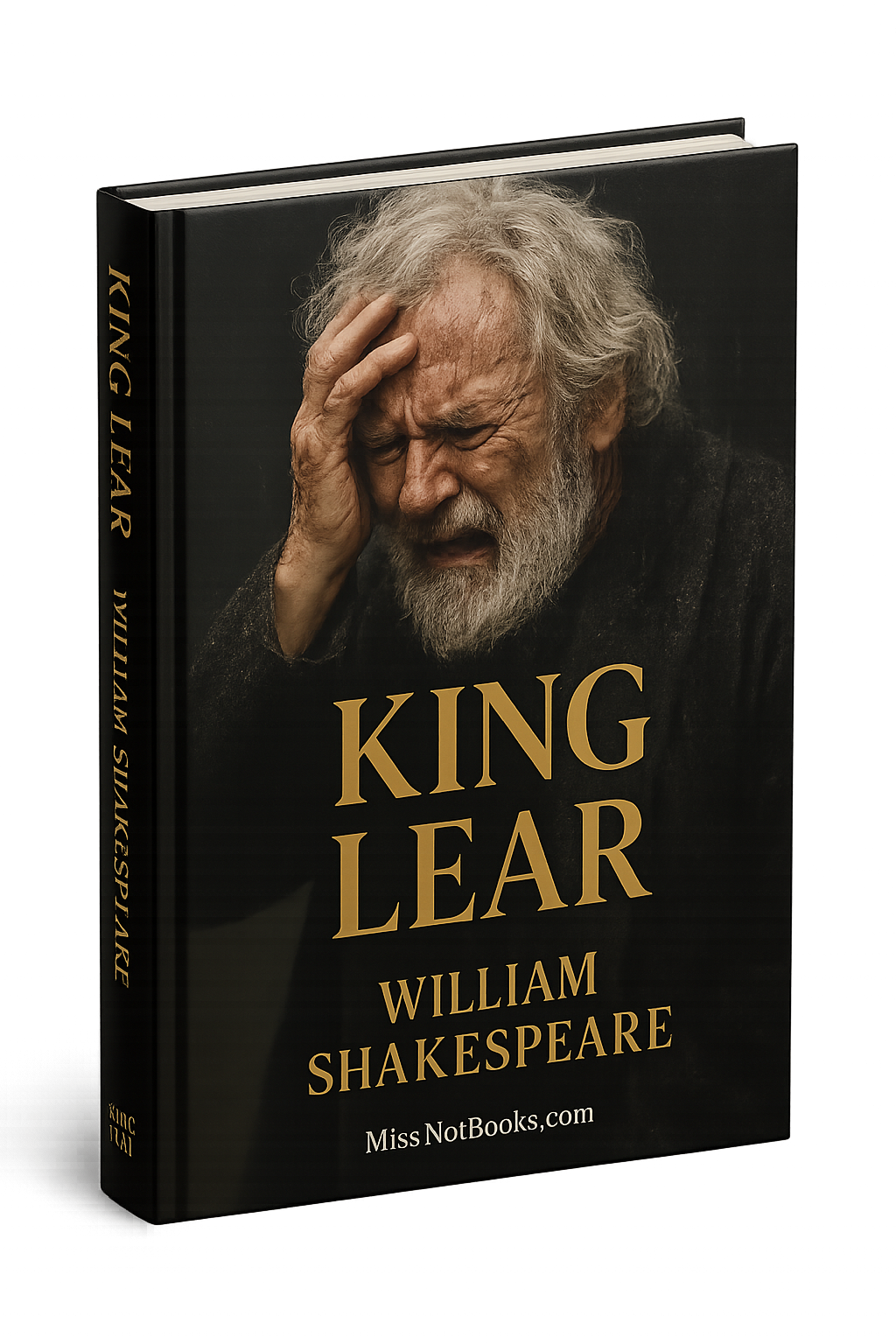
King Lear
The exploration of power, madness, and the human condition has never found a more formidable or incisive expression than in this exceptional literary work. It stands as a monumental voice, revolutionizing our understanding of the complexities of family dynamics and authority. Through its profound character studies and emotional depth, this book challenges the very notions of loyalty, justice, and identity, capturing the tumult of human existence in a way that resonates through the ages. Its themes are not confined to a specific era but speak to the universal struggles of humanity, making it a cornerstone of literary and dramatic art. Don’t miss the opportunity to engage with one of the most influential works of all time. Buy it today and explore the complexities of familial loyalty and the fragility of the human psyche.
Core Ideas and Main Arguments:
- Authority and Its Fragility: The book explores how power can corrupt and render its possessors vulnerable, highlighting the consequences of blind ambition and authority without wisdom.
- Nature of Madness: It delves into the psychological landscape of the mind, particularly through the character's descent into madness and the thin veil separating sanity from insanity.
- Familial Bonds: The work poignantly examines the ties that bind families, the dynamics of love, betrayal, and the tragic consequences of misjudgment.
- Justice and Injustice: It grapples with the themes of moral justice and the often cruel nature of fate, raising questions about the fairness of the world.
- Identity and Self-Perception: The narrative highlights the struggle for self-awareness and the devastating effects of lost identity and recognition.
Author’s Intentions and Context:
The author set out to illuminate the darker aspects of human nature, using the backdrop of a royal tragedy to explore familial relationships and the complexities of human emotion. Written during a period of political turbulence and social upheaval in England, the work responds to the age's existential questions and the uncertainties surrounding authority and governance. It challenges norms and provokes reflection on fundamental human experiences, including loyalty, betrayal, and the quest for love and respect.
Structure of the Book:
The book is primarily structured into several acts that track the disintegration of the protagonist's world. Each act is divided into scenes, meticulously crafted to advance the themes and emotional arcs:
- Act 1: Introduces the central characters and the initial conflict surrounding the division of the kingdom.
- Act 2: Escalates the tensions and sets in motion the tragic downfall of key figures.
- Act 3: Peaks with chaos and the visible effects of madness on the central character.
- Act 4: Explores themes of reconciliation and despair, as loyalties are tested and true character emerges.
- Act 5: Concludes with a resolution that reflects the grave losses sustained, emphasizing the tragic costs of the preceding actions.
Key Takeaways:
- Readers will grasp the profound and often painful realities of human relationships and the impact of authority.
- The exploration of madness provides a lens through which to understand societal expectations and personal despair.
- The narrative serves as a cautionary tale about the consequences of greed and power struggles within families and kingdoms.
- The text challenges readers to reflect on their moral compass and the inherent chaos of life, fostering deeper introspection.
Why It’s Important to Read:
This work remains profoundly relevant today, not only as a pivotal piece of literature but as a mirror reflecting contemporary issues of governance, mental health, and familial discord. Its exploration of deep-rooted themes guarantees a rich experience for scholars, students, and anyone intrigued by the intricate tapestry of human emotions and conflicts. Whether one is studying literature, psychology, or social dynamics, this book offers indispensable insights that transcend time and cultural boundaries.
Impactful Quotes and Analysis:
-
“How sharper than a serpent’s tooth it is to have a thankless child!”
This line encapsulates the profound pain of betrayal and the expectations of familial loyalty, emphasizing the emotional toll such dynamics can impose. -
“When we are born, we cry that we are come to this great stage of fools!”
This quote highlights the tragic nature of existence and the folly inherent in the human experience, drawing attention to the absurdities of life. -
“The wheel is come full circle.”
Reflecting on the cyclical nature of fate and justice, this line reminds readers of the inescapability of consequences and the inevitable return to beginnings, reinforcing the themes of tragic irony.
About the Author:
William Shakespeare (1564-1616) is one of the most renowned playwrights and poets in history, celebrated for his complex characters and keen insights into human nature. His works have profoundly influenced Western literature, drama, and culture, establishing him as a pillar of the literary canon. Shakespeare's contributions include the exploration of themes such as love, power, jealousy, betrayal, and the supernatural, leaving a legacy that continues to resonate and inspire writers and audiences around the globe.
This monumental work is King Lear by William Shakespeare, brought to you for educational purposes by MissNotBooks.com.