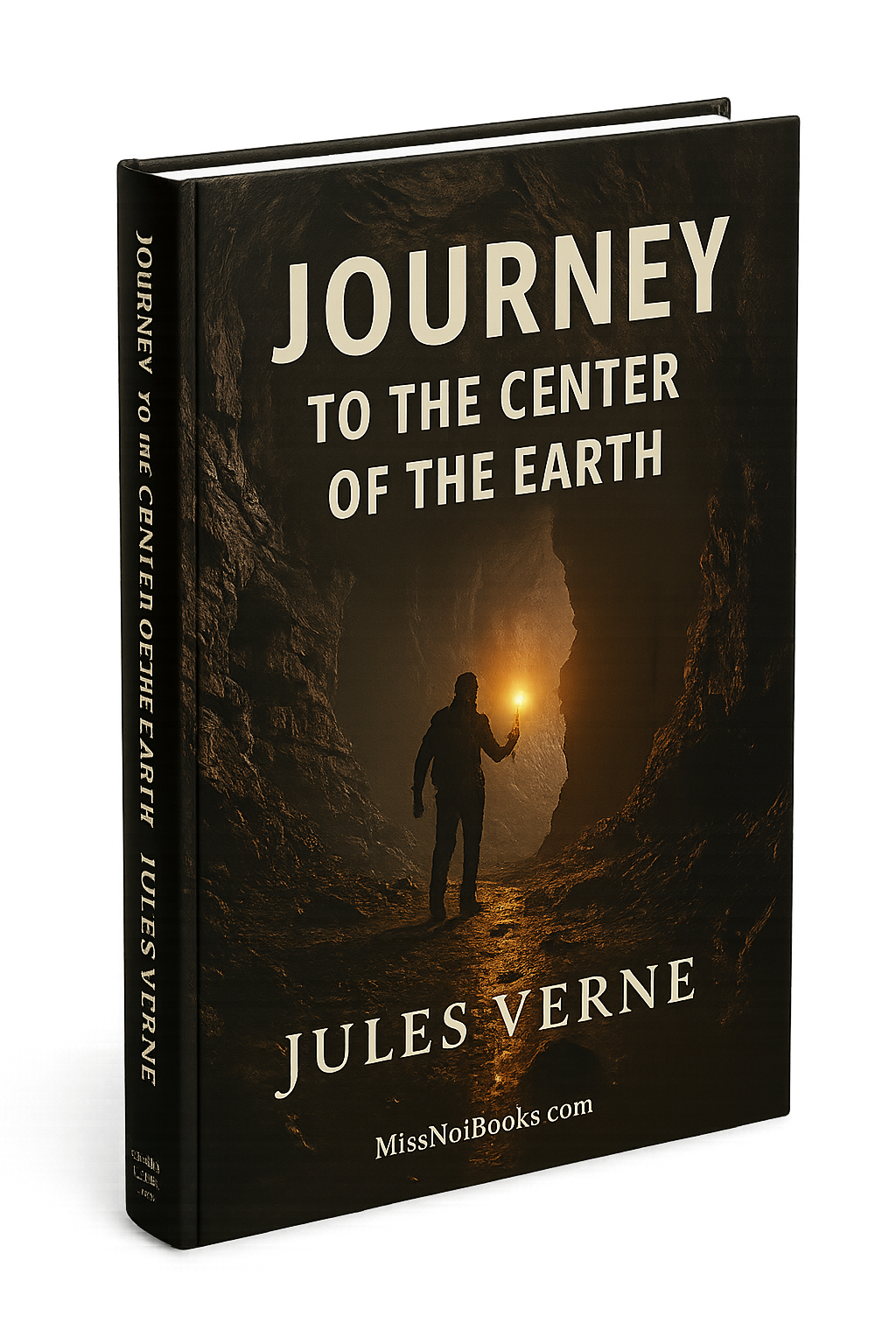
Journey to the Center of the Earth
In an era marked by the exhilarating intersection of scientific curiosity and literary imagination, one work emerged to transcend the boundaries of both. By fusing adventure, speculation, and groundbreaking scientific theories, this book ignited a revolution in the way readers perceive exploration and the vastness of our planet. It challenged conventional narrative forms, weaving complex geological phenomena seamlessly into a thrilling quest, ultimately reshaping the landscape of popular literature and scientific thought alike.
Core Ideas and Main Arguments:
- Exploration as a Doorway to Knowledge: The narrative encourages readers to view exploration not just as physical travel but as a profound quest for understanding the unseen realms of our world.
- Interplay of Science and Fiction: It masterfully combines elements of scientific inquiry with imaginative storytelling, making complex theories accessible and engaging.
- Human Resilience and Curiosity: It highlights the indomitable human spirit in the face of the unknown, showcasing adventure as an intrinsic part of human nature.
- Geological Wonders: The book reveals Earth's complex structure and the wonders hidden beneath its surface, emphasizing the significance of geology and natural sciences.
Author’s Intentions and Context:
Written during the height of the 19th century when scientific discoveries surged and imperial exploration reached new heights, the author sought to both entertain and educate. He responded to a world eager for knowledge and adventure, punctuated by advancements in geology, paleontology, and exploration. The book aims to address the philosophical challenges of the unknown and the human yearning to conquer it, positioning itself as a catalyst for wonderment and intellectual curiosity about Earth’s mysteries.
Structure of the Book:
The work is strategically divided into multiple sections, with each segment building upon the last.
- Introduction and Setup: The initial chapters introduce the protagonist and lay the groundwork for the scientific basis underlying the journey.
- The Descent: The narrative intensifies as the explorers journey into the Earth, incorporating vivid descriptions of geological formations and discoveries.
- Adventures and Discoveries: Midway through, the book foregrounds encounters with prehistoric creatures and natural phenomena, heightening the stakes of the exploration.
- Resolution and Return: The latter chapters wrap up the journey and reflect on the implications of the discoveries made, emphasizing the cyclical nature of exploration.
Key Takeaways:
- The Boundless Spirit of Human Exploration: Readers will come to appreciate the drive to explore the unknown as a fundamental aspect of human existence.
- The Interconnection of Imagined Worlds and Real Science: The relationship between fiction and scientific fact is presented as one that can enlighten and inspire.
- Rich Geological Imagery: The detailed descriptions encourage a deeper fascination with Earth sciences and the wonders lying beneath our feet.
Why It’s Important to Read:
This book remains essential reading in today’s world as it bridges the gap between scientific inquiry and imaginative storytelling. Its themes resonate with contemporary issues, including environmental awareness and our relationship with nature. Students, educators, and anyone with a thirst for adventure will find inspiration and knowledge within its pages, making it a cornerstone for understanding both human exploration and the natural world.
Impactful Quotes and Analysis:
-
“We may brave human laws, but we cannot resist natural ones.”
This quote encapsulates the fundamental theme of respecting the natural world's power and mysteries, a lesson that remains poignant in our modern engagement with the environment. -
“The journey is the destination.”
This phrase highlights the transformative power of adventure itself, suggesting that the experiences and knowledge gained during exploration are just as valuable, if not more so, than the final aims. -
“The wonders of the Earth are too numerous to count.”
This reflects the limitless possibilities for exploration and discovery that continually inspire scientists and adventurers alike, reminding us of the vastness that still awaits us.
About the Author:
Jules Verne (1828–1905) was a French novelist, widely regarded as one of the pioneers of science fiction. His innovative storytelling and incorporation of scientific inventions laid the foundation for modern speculative fiction. Through his imaginative works, Verne inspired generations of readers to dream about exploration and scientific discovery, solidifying his legacy as one of the most important writers of the 19th century.
This monumental work is Journey to the Center of the Earth by Jules Verne, brought to you for educational purposes by MissNotBooks.com.