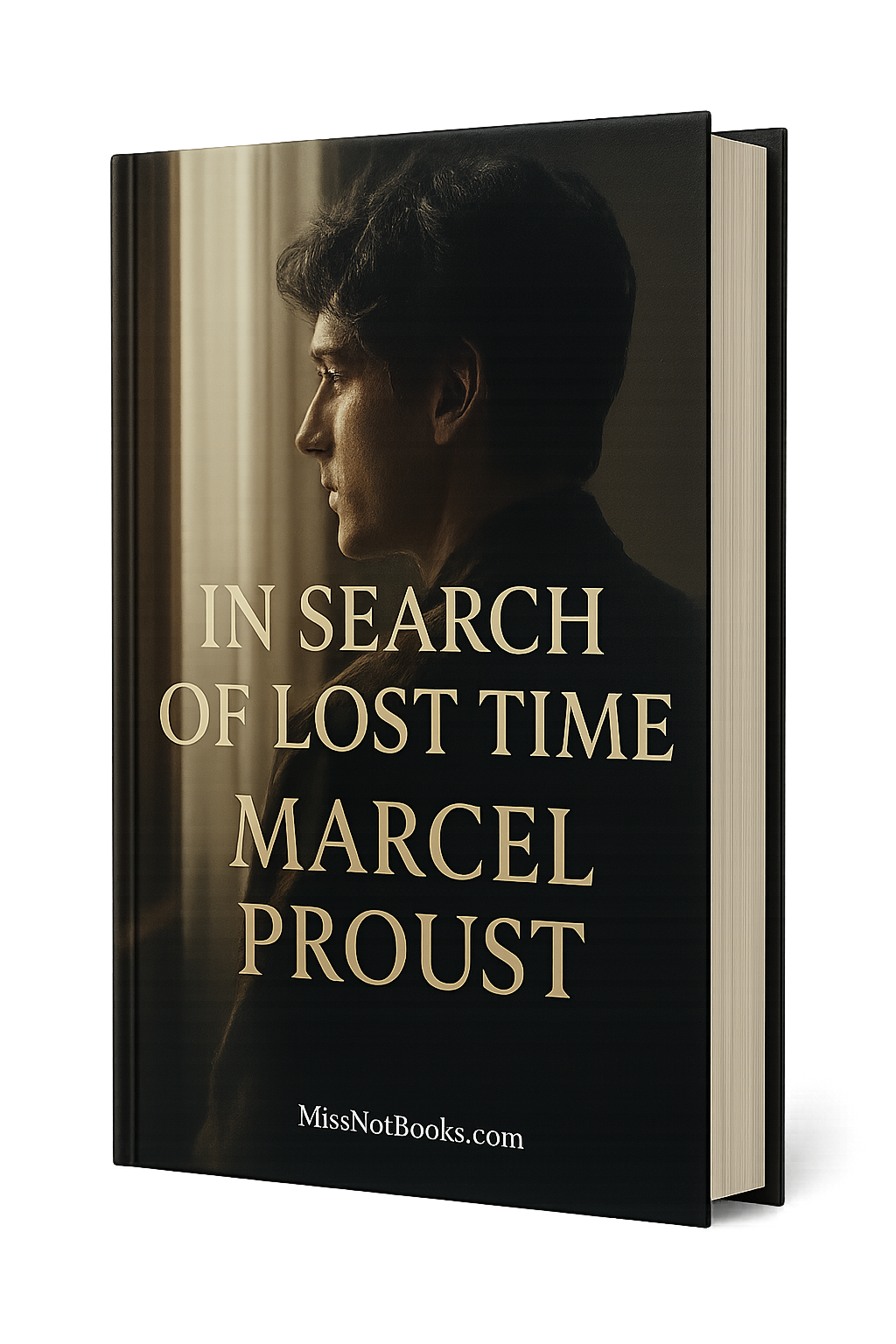
In Search of Lost Time
In a world increasingly driven by the rapid pace of life and the relentless march of technology, one literary masterpiece invites readers to delve deeply into the human experience, transforming how we understand memory, time, and art. This groundbreaking book revolutionized modern literature with its intricate exploration of consciousness, redefining narrative technique and propelling readers into a rich tapestry of personal and collective history. It challenges us to consider the profound interconnectedness of our experiences, urging a reevaluation of how we perceive temporality and identity. This work not only transcends its era but also resonates powerfully with contemporary audiences, inviting us all to reflect on our own lost moments. Don’t miss the opportunity to engage with one of the most influential works of all time. Buy it today and explore the nuances of memory and the depths of human emotion.
Core Ideas and Main Arguments
- Stream of Consciousness: The book masterfully employs a stream-of-consciousness narrative, allowing readers to experience the characters' thoughts and feelings in real time.
- The Nature of Time: It posits that time is not linear; rather, it is subjective and often revisited through memory, emphasizing the fluidity of human experience.
- Art and Creation: The exploration of art as a means to capture and convey timeless experiences remains a profound inquiry into the significance of creativity.
- Social Commentary: The book provides intricate observations on the social dynamics of early 20th-century France, challenging the societal norms and class structures of its time.
- Memory and Identity: It underscores the thesis that identity is closely tied to our memories, framing the act of recollection as fundamental to understanding oneself and one’s place in the world.
Author’s Intentions and Context
The author set out to achieve an introspective examination of life, memory, and art during a time when Europe was grappling with profound changes—social, political, and existential. Against the backdrop of a rapidly modernizing society, the author sought to articulate the inner workings of consciousness and the ephemeral nature of human experience. This endeavor was not merely personal but aimed at capturing a universal truth, reflecting the philosophical inquiries of the time that questioned the essence of reality and subjective experience.
Structure of the Book
The narrative is divided into multiple volumes, each serving as a unique stage in a comprehensive journey through time and introspection. Each part begins with seemingly mundane details that gradually lead to deeper philosophical reflections and emotional revelations. This deliberate structure mirrors the ebb and flow of memory itself, inviting readers to savor the slow unfolding of thought and feeling. The organization enhances the thematic exploration, aligning personal anecdotes with broader societal observations and artistic reflections.
Key Takeaways
- The interplay between memory and identity shapes our understanding of self and others.
- The subjective nature of time influences how we experience our lives and relationships.
- Art, especially literature, plays a crucial role in capturing and expressing the nuances of the human condition.
- Social intricacies and interpersonal dynamics highlight the complexities of human interactions in a changing world.
- The power of recollection serves as both a blessing and a curse, offering insight while also evoking nostalgia and loss.
Why It’s Important to Read
This monumental work remains profoundly relevant today as it challenges readers to reflect on their own experiences of time and memory. Its cultural and intellectual value transcends boundaries, appealing to those interested in psychology, literature, philosophy, and history. Whether you are a casual reader or a scholar, engaging with this book will deepen your understanding of how our past informs our present and future, enriching your appreciation for the intricacies of human life.
Impactful Quotes and Analysis
-
"The real voyage of discovery consists not in seeking new landscapes, but in having new eyes."
- This quote encapsulates the core theme of reinventing one's understanding of reality through the lens of personal experience, advocating for a transformative approach to perception.
-
"Time, which sees all things as they are, has no need of a mirror."
- Here, the author elegantly reflects on the nature of time as an entity that shapes existence without the reliance on external validation, prompting readers to contemplate their relationship with time.
-
"In search of lost time, I have found that what is most worthwhile is the journey itself."
- This poignant remark emphasizes that value lies not only in memories but in the process of reflection and growth—a sentiment that resonates deeply in our fast-paced world.
About the Author
Marcel Proust (1871–1922) was a French novelist and essayist, renowned for his seminal contributions to modern literature. His pioneering narrative techniques and profound psychological insights have earned him a foundational place in literary criticism and study. Proust's legacy endures through his exploration of memory, time, and the inner workings of the human mind, influencing countless writers and thinkers across generations.
This monumental work is In Search of Lost Time by Marcel Proust, brought to you for educational purposes by MissNotBooks.com.