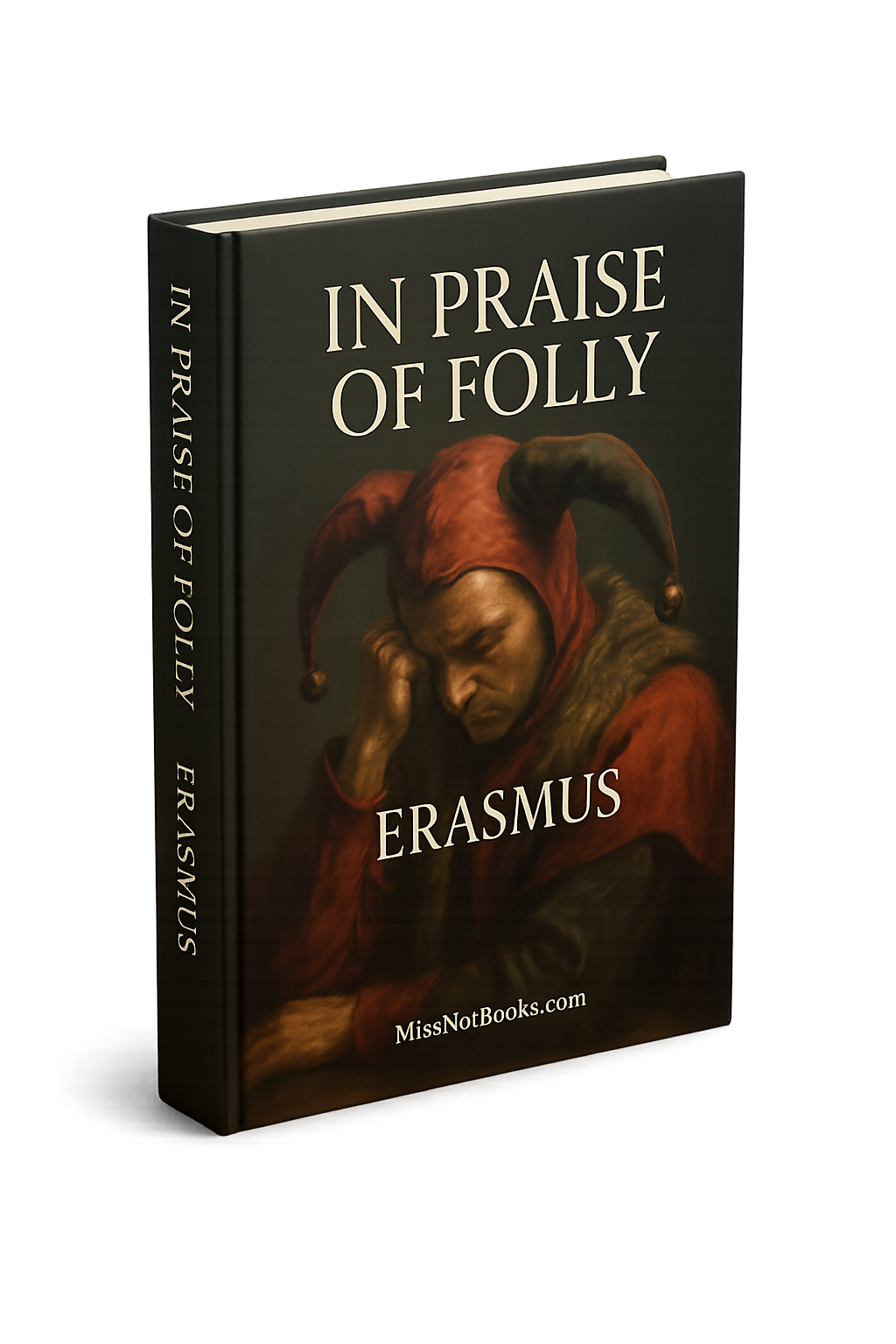
In Praise of Folly
In the annals of human thought, few works have wielded the power to challenge prevailing norms and illuminate the folly inherent in human behavior quite like this transformative text. Emerging during a tumultuous period characterized by social upheaval, religious strife, and the ascent of humanism, the book introduced a searing critique of society's pretensions, inviting readers to take a hard look at their beliefs and practices. Its audacity to blend humor with serious philosophical inquiry revolutionized the way individuals engage with critical thought, laying the groundwork for the Enlightenment and reshaping cultural discourse.
Core Ideas and Main Arguments:
- Critique of Human Vanity: The text boldly addresses the foolishness that pervades both individuals and institutions, arguing that self-deception is a universal human condition.
- Irony and Satire: Through a humorous lens, the author exposes the absurdities of societal norms, effectively using wit to challenge the status quo.
- Call for Self-Reflection: It emphasizes the importance of introspection and humility, urging readers to recognize their own follies before casting judgment on others.
- Role of Knowledge and Education: The narrative highlights the often misplaced values surrounding learning and piety, questioning whether they genuinely serve humanity.
- Cultural Commentary: The work critiques contemporary religious practices, suggesting that true piety is often overshadowed by ritualistic trivialities.
Author’s Intentions and Context: The author embarked on a mission to confront the contradictions and excesses of his time – a period marked by rigid dogma and growing skepticism towards established institutions. Rooted in the humanist tradition, he aimed to revive classical ideas while invoking a spirit of inquiry that challenged the complacency of both the Church and society. In a world where ignorance was prevalent and blind faith often ruled, he sought to provoke thought and inspire change by highlighting the folly of humanity.
Structure of the Book: The book is masterfully structured into a series of dialogues and monologues, each addressing different facets of folly. Starting with an introduction that sets the tone, it progresses through various themes:
- Introduction: The author's preface outlines his objectives and sets the stage for the themes of folly to follow.
- Personification of Folly: Folly herself takes center stage, personified as a character who deftly critiques societal norms and expectations.
- Categories of Folly: Each section delves into specific areas—politics, religion, education—where folly is prevalent, making potent observations that resonate even today.
- Conclusion: Concludes with a call to embrace folly with wisdom, suggesting that recognizing one's own limitations is the first step to enlightenment.
Key Takeaways:
- The absurdity of human vanity is universal and impacts individuals at all societal levels.
- The importance of skepticism and humor in analyzing and understanding our lives and institutions.
- True knowledge and virtue often require a willingness to confront uncomfortable truths about oneself and others.
- The role of society and tradition in facilitating or hindering personal growth and enlightenment.
Why It’s Important to Read: This work remains profoundly relevant, offering timeless wisdom that transcends historical bounds. In an age fraught with misinformation, social media echo chambers, and political rhetoric, its insights into human nature compel us to critically examine our beliefs and motives. Scholars, students, and anyone seeking deeper understanding of societal dynamics will find invaluable lessons within its pages, encouraging personal reflection and fostering a spirit of thoughtful skepticism.
Impactful Quotes and Analysis:
-
"The greatest folly is to think that we can be wise about everything without first acknowledging our own ignorance."
This quote encapsulates the essence of the author's message: wisdom begins with recognizing our limitations, a truth that remains crucial in today’s complex world. -
"We are all foolish in our own ways, but the wise acknowledge their folly and learn to laugh at themselves."
Here, the author highlights how self-awareness and humor serve as important tools for personal growth and resilience, suggesting that embracing our imperfections can lead to greater wisdom. -
"In the pursuit of piety, the ridiculous often overshadows the divine."
This poignant observation critiques the rituals and traditions that can distract from sincere spiritual growth, inviting readers to reconsider the essence of their beliefs.
About the Author: Desiderius Erasmus, born in 1466 and passing in 1536, was a Dutch philosopher and humanist who played a crucial role in the intellectual developments of the Renaissance. His works laid the foundation for biblical scholarship and contributed to the Reformation, positioning him as a pivotal figure in the transition from medieval to modern thought. Erasmus's commitment to education and his advocacy for rational inquiry left an indelible mark on Western intellectual history.
Don’t miss the opportunity to engage with one of the most influential works of all time. Buy it today and explore the profound insights into human nature and society. This monumental work is In Praise of Folly by Erasmus, brought to you for educational purposes by MissNotBooks.com.