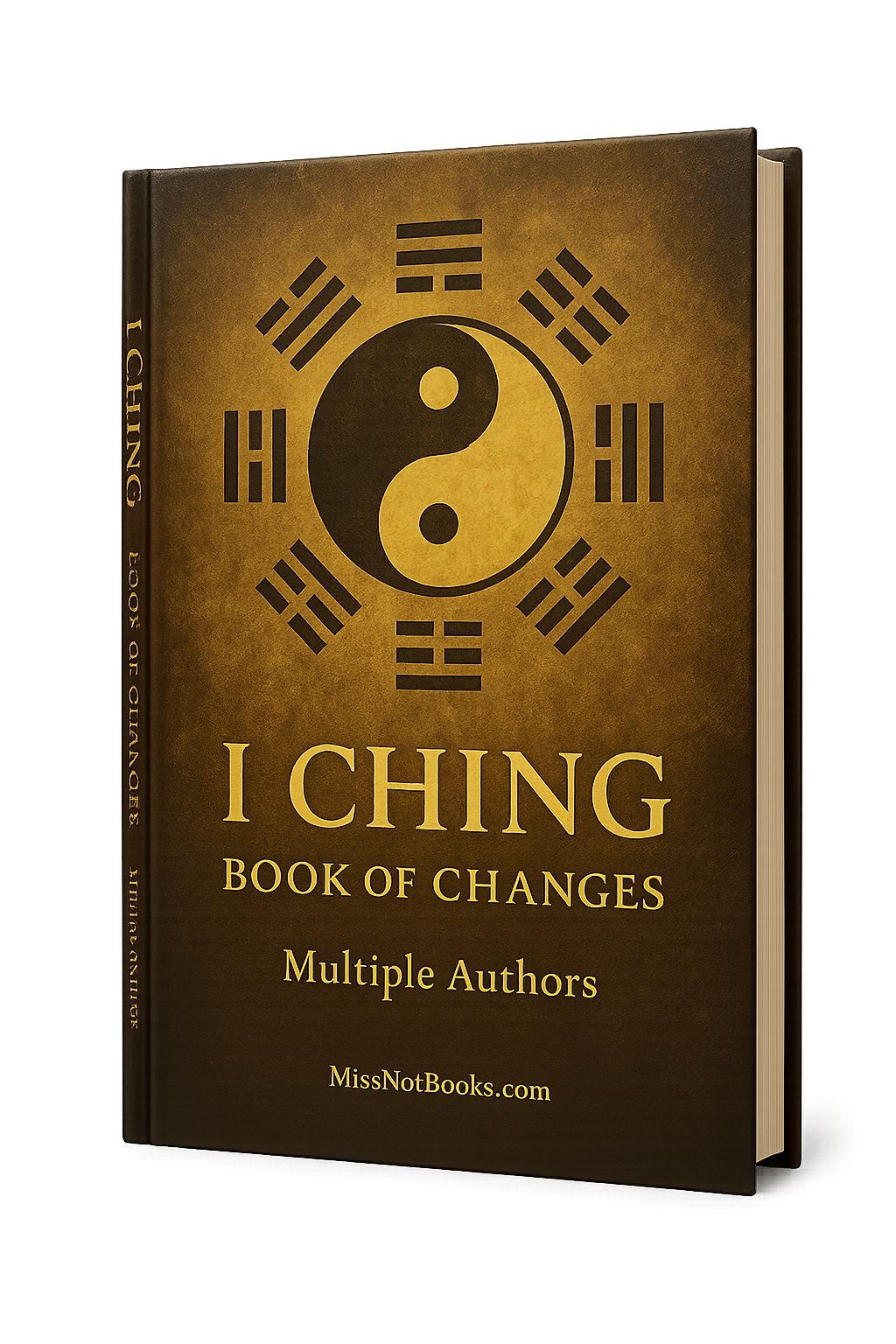
I Ching (Book of Changes)
In an era where the understanding of the world was heavily dictated by myth and superstition, one work emerged to reshape humanity’s interaction with fate, choice, and the cosmos itself. This transformational text introduced a framework not just for foreseeing the future but for a holistic understanding of the present, asserting that reality is a fluid interplay of opposites. It revolutionized how individuals approach life's uncertainties, offering profound insights that bridge the gap between philosophy and practical decision-making. Its influence extends beyond the spiritual and philosophical realms, penetrating the fabric of various disciplines, thus challenging the rigid boundaries of thought.
Core Ideas and Main Arguments
- Change as Constant: The central thesis explores the notion that change is the only constant, and understanding it is crucial to navigating life’s complexities.
- Interconnectedness of Opposites: The work employs the concept of yin and yang, illustrating how oppositional forces are interconnected and how they coexist within every situation.
- Practical Wisdom: It combines philosophical insights with practical advice, enabling readers to apply its wisdom directly to their daily lives.
- Intuition and Decision-Making: The text highlights the importance of intuition in decision-making, emphasizing that true understanding often transcends mere logic.
Author’s Intentions and Context
The compilation of this work arose during the late Zhou Dynasty in ancient China, a time marked by social upheaval and philosophical inquiry. The author(s) aimed to provide clarity and guidance amidst societal chaos by articulating principles that govern not just human behavior, but the very nature of reality. The text directly responds to the existential questions faced by individuals seeking to understand their place in a rapidly changing world.
Structure of the Book
The work is organized into hexagrams, each composed of six lines, forming a unique symbol that encapsulates specific philosophical meanings. These hexagrams are accompanied by interpretations and commentaries that explore their implications in various situations. This structure allows readers to engage dynamically with the text, interpreting its wisdom in a personalized manner.
Key Takeaways
- Understanding the nature of change can empower individuals to make more informed and intuitive decisions.
- The balance of yin and yang offers a profound lens through which to view conflict and harmony in life.
- Readers gain insight into the interconnectedness of events, encouraging a holistic view of their experiences.
Why It’s Important to Read
This work remains a touchstone for those seeking deeper insights into the nature of existence and decision-making. Its relevance spans across cultures and disciplines, offering wisdom applicable to modern challenges in personal growth, leadership, and strategic thinking. Anyone from philosophers to business leaders will benefit from its teachings, as it allows for a richer understanding of complexity in both human relations and the natural world.
Impactful Quotes and Analysis
-
“The wheel of life is ever turning; heed its turning, and one may find fortune.”
This quote captures the essence of adaptability, reminding readers that engagement with change is key to success and fulfillment. -
“In the depths of reflection, clarity emerges; trust your instincts.”
Here, the work emphasizes the faculty of intuition, encouraging individuals to listen to their inner voice amidst chaos. -
“All things exist in relationship; understanding blooms when one sees the connections.”
This encapsulates the holistic approach of the text, advocating for awareness of interdependence in all aspects of life.
About the Author
The authorship of this ancient text is attributed to multiple sages and thinkers, evolving over several centuries, with its roots tracing back to approximately 1000 BCE in China. The I Ching has played a significant role in shaping Chinese philosophy, influencing various schools of thought and providing a foundational text for Confucianism and Taoism. Its enduring legacy lies in its profound insights into the human condition and the ever-changing nature of life, continuing to inspire countless individuals throughout history.
Don’t miss the opportunity to engage with one of the most influential works of all time. Buy it today and explore the foundation of modern philosophy and decision-making. This monumental work is the I Ching (Book of Changes) by multiple authors, brought to you for educational purposes by MissNotBooks.com.