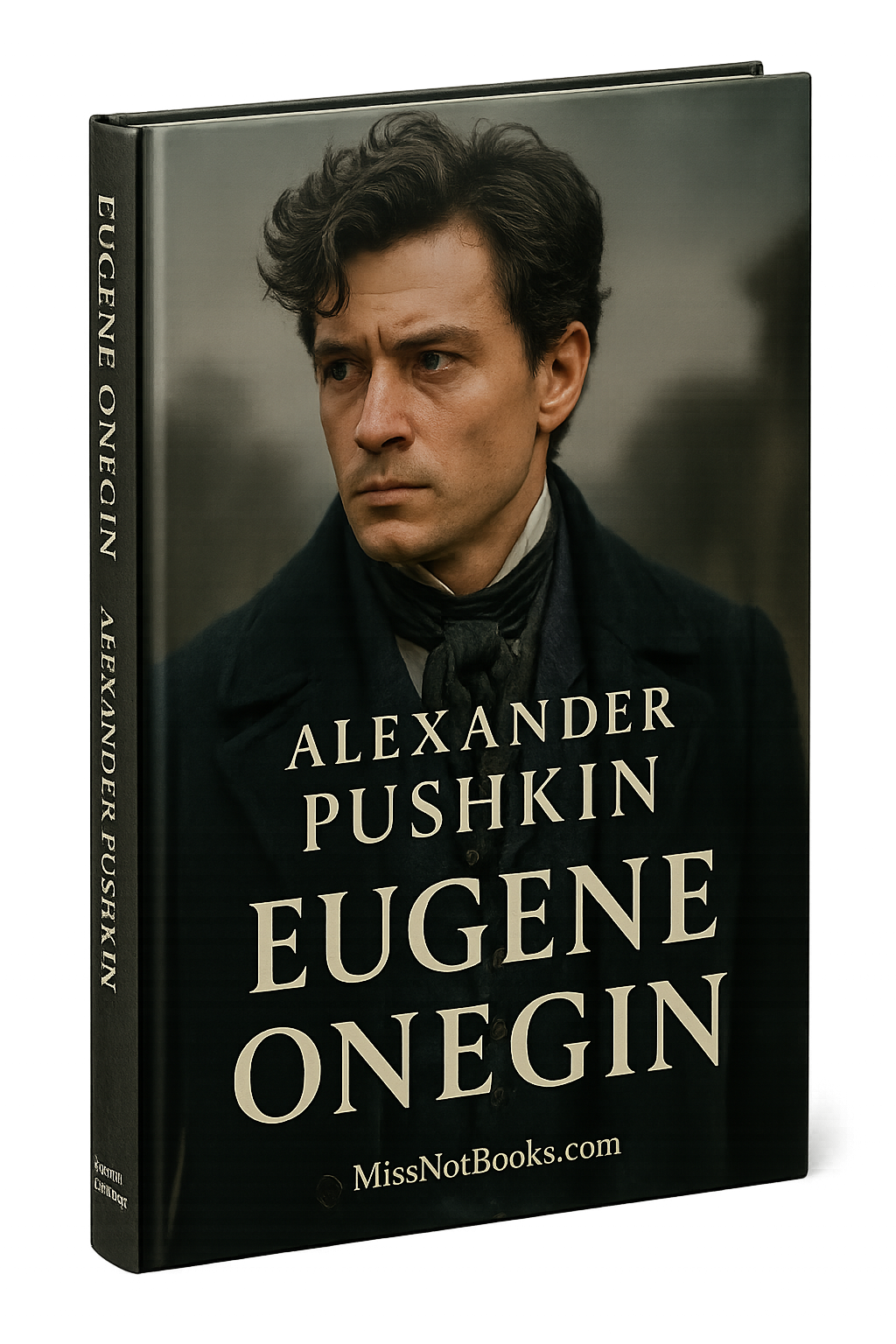
Eugene Onegin
In the annals of literature, few works possess the transformative power to redefine a genre and capture the complexities of societal and personal dynamics as profoundly as this remarkable novel in verse. Through its intricate narrative and poetic brilliance, this book revolutionized the representation of life, love, and longing in the Russian literary canon. It challenges readers to contemplate the interplay of fate and free will, while also offering a poignant critique of the societal norms of its time. Its legacy continues to resonate, inviting readers to reflect on their own experiences and the universal truths of the human condition.
Core Ideas and Main Arguments
- The Duality of Human Nature: The protagonist embodies the conflict between emotional depth and social obligation, challenging the notion of romantic idealism.
- Cultural Critique: The narrative unveils the superficiality of aristocratic society and the ennui that accompanies privilege, emphasizing the search for genuine connection.
- Time and Regret: The exploration of time as a relentless force, with characters often reflecting on past decisions and their irreversible impacts is central to the book’s depth.
- Love and Longing: The complexities of unrequited love and the bittersweet nature of desire are articulated through rich imagery and poignant exchanges.
- Narrative Form and Style: Utilizing the fluidity of the verse form, the book intertwines storytelling with lyrical beauty, enhancing its thematic resonance.
Author’s Intentions and Context
Written during a period of significant social and political change in early 19th-century Russia, the author aimed to capture the essence of contemporary life while addressing the tensions between individual desires and societal expectations. Pushkin responded to a growing discontent among the intelligentsia, who grappled with issues of identity, morality, and existential reflection. His intention was not merely to entertain but to provoke thought, questioning the foundations of love, honor, and the fleeting nature of life itself.
Structure of the Book
The narrative unfolds through a series of chapters that alternate between descriptive character studies, poignant dialogues, and reflective monologues. Key sections include:
- Introduction of Characters: The initial chapters set the stage, introducing Onegin and Tatiana, which establishes the emotional landscapes that will evolve throughout the story.
- Thematic Development: Subsequent sections delve into themes of love, jealousy, and societal constraints, illustrating the poignant contrasts between aspiration and reality.
- Climax and Resolution: The later chapters reveal the pivotal moments of crisis and realization, culminating in a deep exploration of regret and resignation that lingers after the final lines.
Key Takeaways
- Self-Reflection: Readers are encouraged to reflect on their own choices and the impact of societal expectations on personal happiness.
- Cultural Insights: The book provides a vivid portrait of 19th-century Russian aristocracy and its moral complexities, enriching our understanding of historical social dynamics.
- Universal Themes: The exploration of love, loss, and the passage of time resonates across cultures and eras, making it a timeless piece of literature.
Why It’s Important to Read
This book remains a vital part of the literary canon, not only for its artistic merit but also for its penetrating insights into the human condition. Students of literature, history, and philosophy will find its themes of personal and societal conflict particularly enlightening, as it highlights the intricacies of human relationships and the consequences of our actions. Every reader will walk away with a deeper understanding of love and the inevitability of time.
Impactful Quotes and Analysis
-
“A moment’s pleasure, a lifetime of pain.”
This quote encapsulates the essence of the book’s exploration of romantic idealism versus harsh reality, revealing the delicate balance between fleeting joy and enduring sorrow. -
“We are all indifferent, but why?”
Here, Pushkin provokes readers to consider their own emotional detachment in a complex world, questioning the underlying causes of apathy in a society steeped in materialism. -
“How often does the heart sing with joy, only to be silenced by fate.”
This line poignantly expresses the central tension of the work: the struggle between human desires and the capricious nature of fate, a theme that resonates across time.
About the Author
Alexander Pushkin (1799–1837) is widely regarded as the father of Russian literature and a forerunner to modern literature. He was a poet, playwright, and novelist whose works introduced new forms and liberated the Russian literary language from the constraints of classical tradition. His legacy is seen in the myriad of writers who followed, and his influence remains evident in the fabric of contemporary literature and culture.
Don’t miss the opportunity to engage with one of the most influential works of all time. Buy it today and explore the beauty of human language and emotion. This monumental work is Eugene Onegin by Alexander Pushkin, brought to you for educational purposes by MissNotBooks.com.