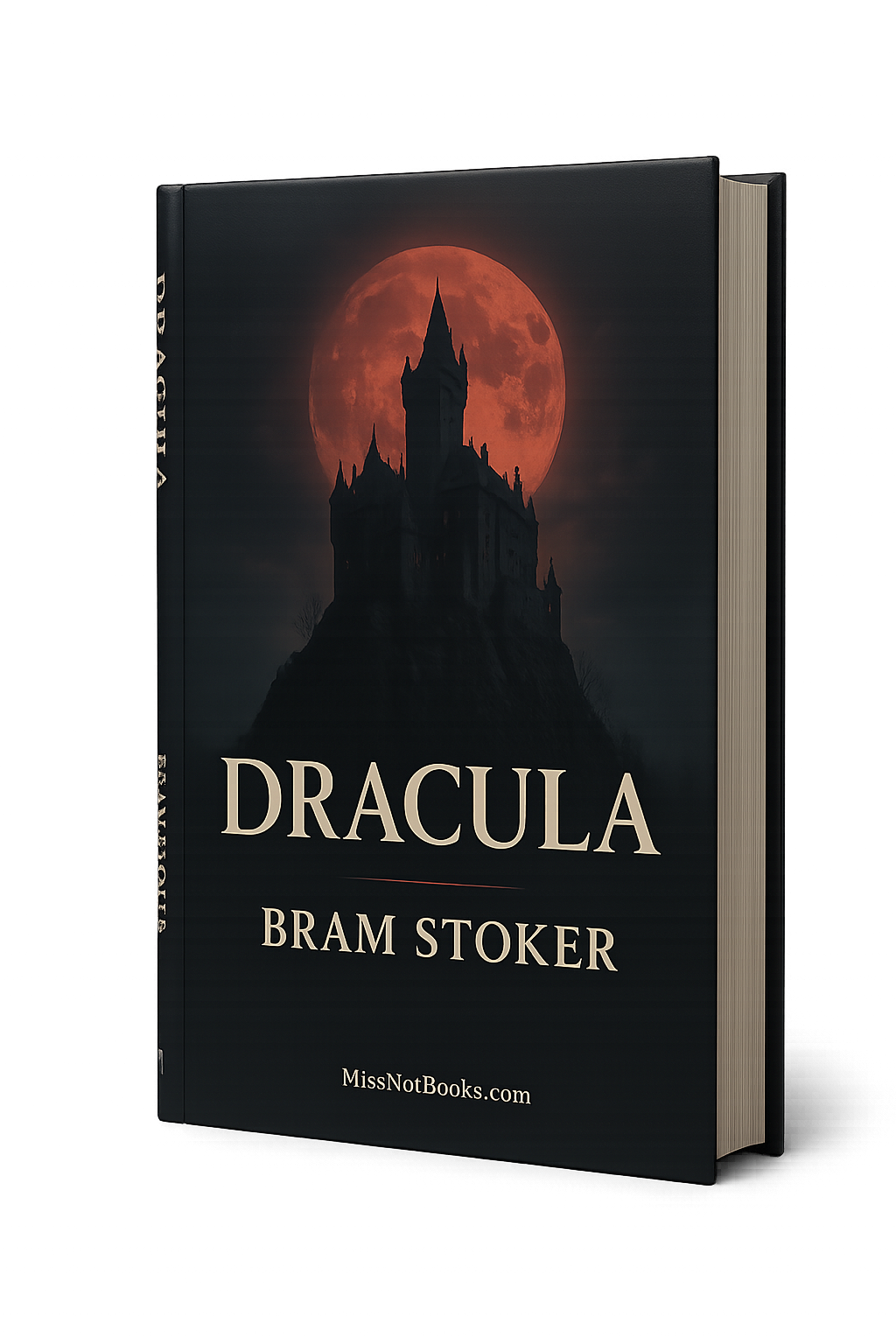
Dracula
The landscape of literature and the horror genre was forever changed by a single, transformative narrative that brought the uncanny into the realm of the everyday. This work has not only captured the imagination of countless readers but also revolutionized our cultural conception of fear, desire, and the supernatural. Its profound impact can be felt across a multitude of disciplines, from psychology to gothic literature, and even into modern cinema. By exploring the liminal space between reality and the mysterious unknown, it challenged societal norms and reevaluated the boundaries of morality and sexuality within the Victorian context. Don’t miss the opportunity to engage with one of the most influential works of all time. Buy it today and explore the intermingling of myth and humanity.
Core Ideas and Main Arguments
- The Duality of Humanity: The text explores the struggle between civilization and primal instincts, embodied in the character of Dracula, who represents unbridled desire and the fears of the era.
- Fear of the Other: It challenges the readers' comfort zones by presenting the idea of the outsider, illustrating societal anxieties surrounding immigration and the dissolution of established norms.
- Themes of Sexuality and Repression: The book boldly confronts Victorian prejudices regarding sexuality, highlighting the tension between repression and desire.
- Epistolary Form: The narrative structure, composed of letters, journal entries, and newspaper articles, lends an immediacy and authenticity to the story while inviting multiple perspectives.
- The Power of Science and Technology: In an age of rapid scientific discovery, it critiques the limits of rationality by juxtaposing modernity with the supernatural.
Author’s Intentions and Context
Bram Stoker penned this groundbreaking narrative during the late 19th century, a time marked by great social and scientific upheaval. Stoker sought to explore the burgeoning fears and fascinations surrounding the unknown, particularly in relation to psychological and sexual identities. The fin-de-siècle anxiety concerning race, gender, and morality forms the backdrop of this narrative, providing a rich canvas for Stoker to challenge prevailing societal norms. His work navigates the stormy waters of a changing world, where the allure of the dark and mysterious beckoned against a backdrop of rigid Victorian values.
Structure of the Book
The narrative unfolds in a non-linear fashion, organically piecing together the lives of various characters caught in an existential conflict:
- Jonathan Harker's Encounter: The story begins with Harker’s visit to Dracula's castle, establishing the foreboding tone and introducing themes of entrapment.
- Mina and Lucy's Perspective: The juxtaposition of Mina’s progressive character and Lucy’s vulnerability highlights the gender dynamics of the era.
- The Pursuit of Dracula: A collective effort to understand and combat Dracula culminates in the formation of a diverse group dedicated to facing the titular antagonist.
- Climactic Confrontation: The narrative builds towards a tense showdown, juxtaposing human ingenuity against supernatural forces.
Key Takeaways
- The Representation of Fear: Readers gain insight into the complexities of fear—instigated not just by monsters, but within the human psyche itself.
- Complex Characters: It delivers deep character studies, revealing the multifaceted nature of morality, vulnerability, and strength.
- Historical Reflection: The story serves as a mirror to the cultural anxieties of the era, urging contemporary readers to reflect on their own societal constructs.
Why It’s Important to Read
This novel remains a cornerstone of gothic fiction and a profound exploration of the human psyche, making it a perennial study for students of literature, psychology, and cultural studies. Its themes resonate with contemporary discussions on identity, otherness, and the intersection of science and superstition, making it relevant for anyone grappling with the complexities of modern existence. Scholars, writers, and casual readers alike will find value in its rich narrative and profound insights, ensuring its place as a must-read for generations to come.
Impactful Quotes and Analysis
-
"I am Dracula; and I bid you welcome."
This chilling introduction encapsulates the duality of terror and charm inherent in Dracula's character. It emphasizes the seductive nature of fear, making him both a villain and a magnetic figure. -
"There are darknesses in life and there are lights; you are one of the lights."
This quote strikes at the heart of the struggle between good and evil, illustrating the hope that exists even in the face of overwhelming darkness. -
"The blood is the life!"
This phrase resonates through the narrative, symbolizing the vital essence of life and the insatiable hunger that drives both Dracula and humanity itself. It speaks to deeper existential truths about survival and desire.
About the Author
Bram Stoker (1847-1912) was an Irish author, best known for his seminal work in the horror genre. His experiences as a theater manager and his extensive research into folklore and superstition informed his writing. Stoker's enduring legacy lies not only in his creation of Count Dracula but also in his influence on countless writers and filmmakers throughout the ages, establishing the foundation for modern vampire lore and horror storytelling.
This monumental work is Dracula by Bram Stoker, brought to you for educational purposes by MissNotBooks.com.