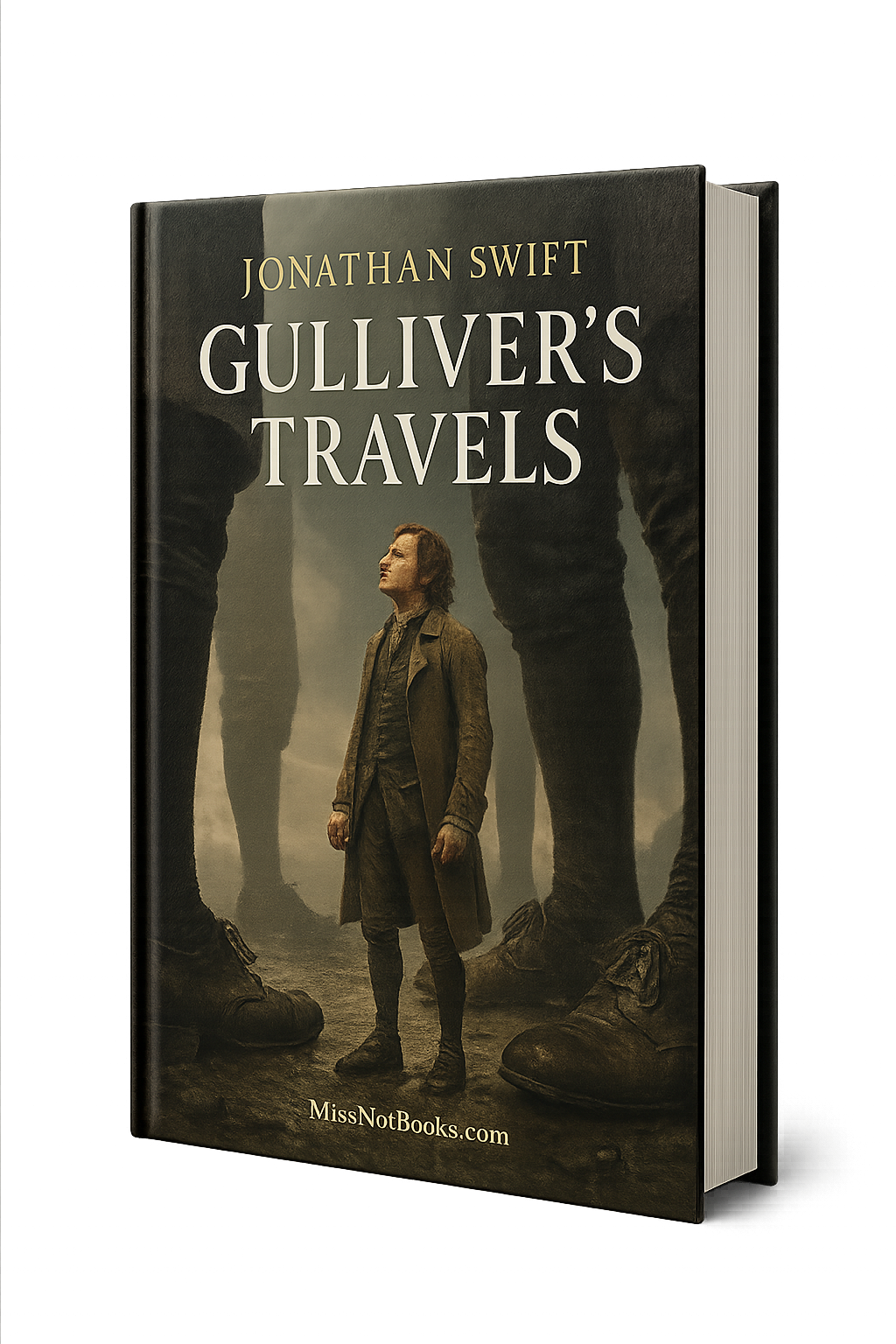
Gulliver’s Travels
In a world often overshadowed by the absurdities of human nature, one seminal work emerged to challenge the fabric of society, politics, and human understanding. This book, with its sharp wit, incisive satire, and vivid imagination, revolutionized the landscape of literature and philosophy. It served not only as a fantastical adventure but also as a scathing critique of contemporary politics, social norms, and the human condition itself. It prompted readers to rethink their values and beliefs, inviting them to explore themes of power, morality, and the very essence of humanity. The transformative impact of this work continues to resonate, making it essential reading for anyone eager to engage with the depths of human experience.
Core Ideas and Main Arguments:
- Satire of Human Folly: The book employs absurdities and exaggerations to hold a mirror to the vices and follies of society, exposing the ridiculousness of human pride and ambition.
- Political Critique: It challenges the nature of power, governance, and the absurdities of political rivalry, prompting readers to question the legitimacy of authority and the moral compass of leaders.
- Relativity of Perspective: Through encounters with diverse civilizations, it underscores the idea that perspective is essential in understanding the world, highlighting cultural relativism.
- Exploration of Identity: The narrative delves into the complexities of identity, illustrating how experiences shape who we are and how we relate to others.
Author’s Intentions and Context: Written during a period of great political turmoil and intellectual ferment in early 18th-century England, the author sought to use satire as a means of enlightenment. Responding to the political corruption, scientific debates, and philosophical inquiries of his time, he challenged prevailing views and sought to provoke thought and discussion among readers. His goal was to illustrate the absurdities of human behavior and the often arbitrary nature of social conventions, prompting a deeper exploration of what it means to be human.
Structure of the Book: The book is structured as a series of voyages, each leading to a different land that embodies unique societal structures and cultural practices:
- Voyage to Lilliput: Critiques the trivialities of political conflict through the lens of miniature beings.
- Voyage to Brobdingnag: Offers a perspective where giants reveal the weaknesses of humanity, emphasizing moral and ethical reflections.
- Voyage to Laputa: Satirizes the obsession with science and reason at the expense of practicality.
- Voyage to the Houyhnhnms: Conveys a poignant contrast between the rational horse culture and the brutish Yahoos, prompting a reexamination of civilized behavior.
Key Takeaways:
- The exploration of human nature reveals intrinsic absurdities and inconsistencies.
- Authority figures often lack the moral grounding necessary for effective leadership.
- Perspective shapes understanding, and cultural differences can provide critical insights into human behavior.
- Ultimate truths about humanity may often lie within the strands of reason deeply interwoven with absurdity.
Why It’s Important to Read: This book’s ongoing relevance lies in its ability to illuminate current societal issues through the lens of satire and allegory. Readers from all walks of life—be they scholars of literature, political theorists, or casual readers seeking a deeper understanding of human nature—will benefit from its layered complexities. It remains a vital commentary on the human experience, urging readers to question prevailing norms and engage critically with the world around them.
Impactful Quotes and Analysis:
-
“When I saw the manual of my own life, how little I could bring to existence by my own efforts, I saw a world full of being, and yet I remained invisible.”
- This quote encapsulates the struggle of individual agency versus the greater forces at play in society, revealing a poignant reflection on humanity's place in the universe.
-
“I could not but conclude the bulk of mankind was wholly governed by a narrow view of things.”
- Here, the author incisively critiques how limited perspectives hinder true understanding and progress, inviting readers to broaden their own horizons.
About the Author: Born in Dublin in 1667, Jonathan Swift was a noted satirist, essayist, political pamphleteer, and philosopher. His literary career flourished amid the sociopolitical turmoil of his time, making him a central figure in the literary canon. Swift's legacy is one of deep intellectual rigor, unmatched wit, and an unwavering commitment to truth, earning him a prominent place among the great satirical writers of history.
This monumental work is Gulliver’s Travels by Jonathan Swift, brought to you for educational purposes by MissNotBooks.com.