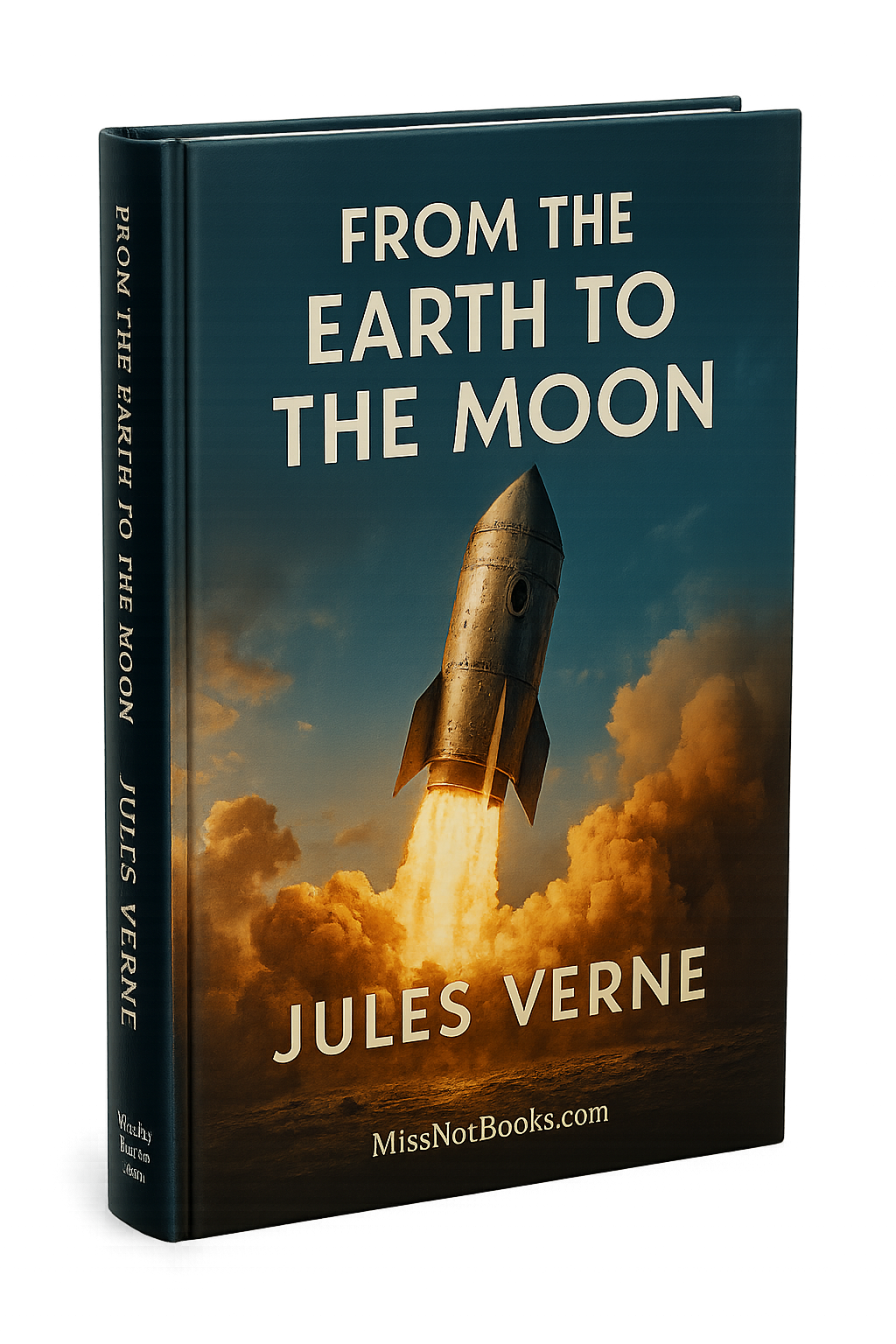
From the Earth to the Moon
In a world teetering on the brink of unprecedented technological advancement and scientific inquiry, one seminal book emerged in the late 19th century that would ignite imaginations and challenge the very limits of human potential. This transformative work not only introduced readers to the thrilling possibilities of space travel but also encapsulated the spirit of ambition and ingenuity that defines the modern era. By intertwining intricate scientific details with rich storytelling, the text revolutionized the genre of science fiction and laid the groundwork for future explorations beyond our atmosphere. Its impact resonates profoundly today, reminding us of our innate desire to explore—both the world around us and the cosmos beyond.
Core Ideas and Main Arguments
- Innovation Through Technology: The book posits that human ingenuity can conquer the barrier of gravity, emphasizing the role of science and engineering in advancing civilization.
- Ambition and Human Spirit: It explores themes of ambition, determination, and the relentless pursuit of dreams, which inspire readers to push boundaries in their own lives.
- Scientific Accuracy and Imagination: By incorporating detailed technical descriptions of the proposed lunar projectile and its journey, the text marries scientific thought with imaginative narrative.
- Societal Reflection: The novel critiques contemporary societal norms—examining patriotism, competition, and the role of the individual versus the collective.
Author’s Intentions and Context
The author aimed to capture the zeitgeist of an era marked by rapid advancements in technology and exploration. In the aftermath of the Industrial Revolution, there was a burgeoning belief in human progress and the power of rational thought. The author responded to the excitement surrounding scientific discovery and exploration, challenging the readers to envision a future where space travel was conceivable. The book grapples with the philosophical quandaries of human aspiration and the moral implications of venturing into the unknown.
Structure of the Book
The narrative unfolds in several key sections:
- Conceptualization of the Journey: Introduces the central theme of space travel, featuring the discussions and debates among the protagonists.
- Design and Preparation: Details the technical specifications, planning, and construction of the projectile, demonstrating the fusion of imagination with scientific inquiry.
- The Launch: Captures the tension and excitement as the protagonists embark on their journey, showcasing their courage and aspirations.
- Journey Into Space: Chronicles the travelers’ experiences in the lunar environment, addressing philosophical reflections on existence and humanity’s place in the universe.
Key Takeaways
- Imagination fuels innovation, and ambition is a key driver of progress.
- Scientific inquiry must be balanced with ethical considerations and community implications.
- The pursuit of knowledge and the challenges inherent to exploration are fundamental aspects of the human condition.
Why It’s Important to Read
This book remains a crucial touchstone for anyone interested in the frontiers of science, technology, or literature. Its exploration of human ambition has inspired generations of scientists, dreamers, and explorers. Readers ranging from students of literature and history to technology enthusiasts will find profound insights that remain applicable today. The ideas presented not only reflect the challenges of the time but also serve as a beacon of inspiration for future innovations.
Impactful Quotes and Analysis
-
“We may brave human laws, but we cannot resist natural ones.”
This quote encapsulates the tensions between human ambition and the invariable laws of nature, reminding readers of our ultimate limitations despite our drives for exploration. -
“To go! To go! That is the aim of all our sciences.”
Here, the author conveys a powerful, driving philosophy underlying the human pursuit of knowledge, emphasizing that the quest for understanding is inherently a journey toward the unknown. -
“We do not know what we do not know.”
This statement reflects the humble acknowledgment of the vastness of the universe, underscoring the ongoing quest for knowledge and the importance of curiosity in human endeavor.
About the Author
Jules Verne (1828-1905) was a French novelist and playwright, often credited as one of the founding fathers of science fiction. His imaginative works combined adventure with scientific concepts, leading him to explore themes of exploration, innovation, and the human spirit. Verne’s legacy endures, as his visionary storytelling laid the groundwork for countless narratives in literature and film, shaping the perception of the potential of science and exploration well into the future.
Don’t miss the opportunity to engage with one of the most influential works of all time. Buy it today and explore the roots of human ambition, ingenuity, and the timeless desire to venture beyond our earthly confines. This monumental work is From the Earth to the Moon by Jules Verne, brought to you for educational purposes by MissNotBooks.com.