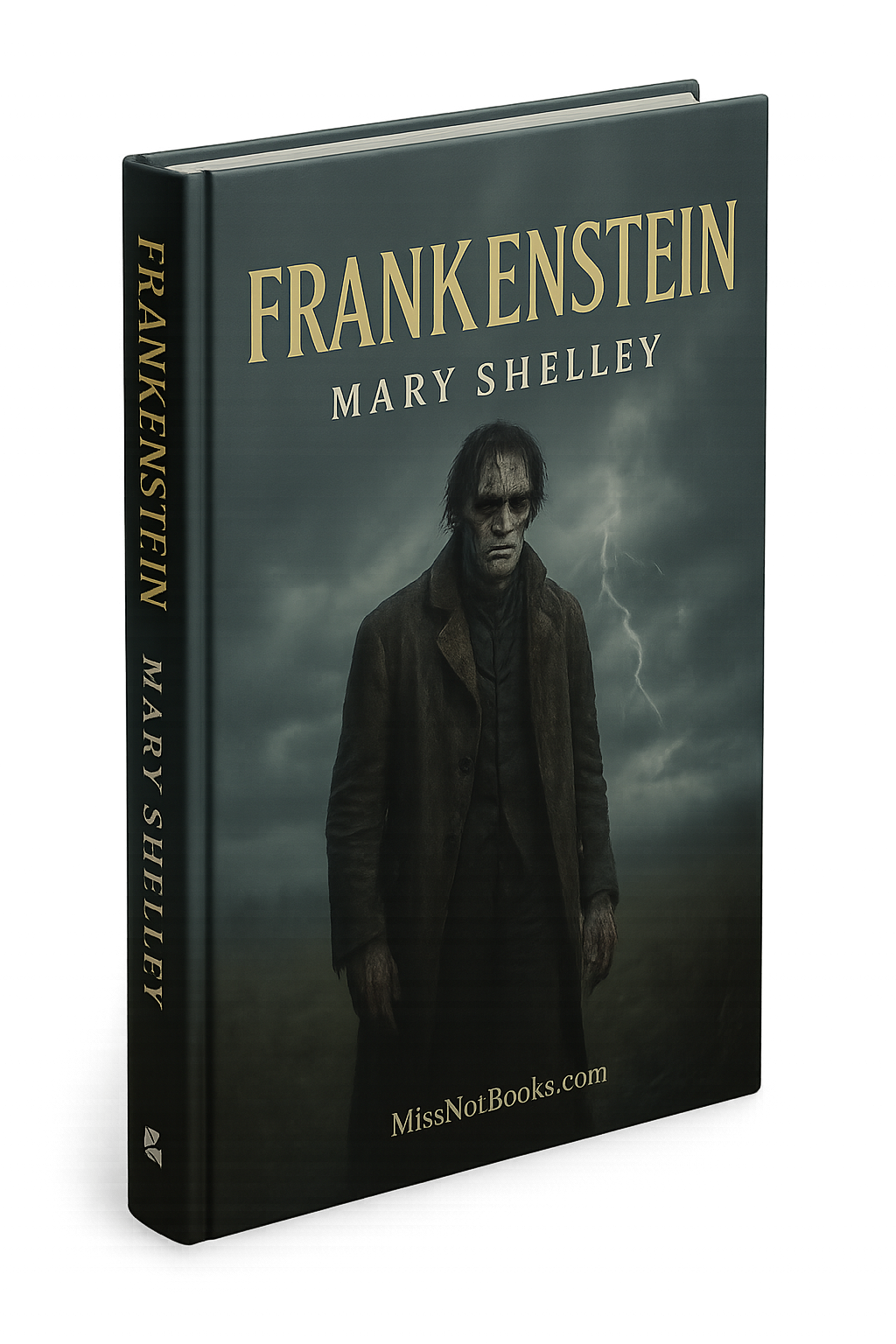
Frankenstein
In an age of scientific curiosity and philosophical upheaval, a singular work emerged that would force society to reckon with the ethical implications of creation, ambition, and the quest for knowledge. This groundbreaking text revolutionized the way we understand the relationship between humankind and its creations, prompting profound questions about responsibility, morality, and the definition of humanity itself. By weaving together elements of Gothic horror, romanticism, and an early exploration of science fiction, it shattered the boundaries of conventional literary genres and ignited debates that resonate to this day. Don’t miss the opportunity to engage with one of the most influential works of all time. Buy it today and explore the foundations of ethical considerations in science and the complex nature of human existence.
Core Ideas and Main Arguments
-
The Dangers of Unchecked Ambition: The narrative warns against the insatiable drive for knowledge and power, illustrating how Victor Frankenstein's quest leads to his and others’ destruction.
-
The Nature of Humanity: The text challenges the definition of humanity, asking whether the capacity for empathy, struggle, and moral reasoning defines a person, rather than their origin or appearance.
-
Isolation versus Connection: Shelley explores the profound effects of isolation on both the creator and the creature, revealing how their separations lead to despair and violence.
-
Responsibility of the Creator: The author emphasizes the obligation of creators to nurture and protect their creations, paralleling the relationship between parents and children.
Author’s Intentions and Context
Mary Shelley was writing during a time of significant scientific advancement and societal change, particularly in response to the Industrial Revolution and the Enlightenment's ideals. Her intention was to question the ethics of scientific experimentation and the moral obligations of the creator to their creation, tackling issues that arose with progress in areas such as biology and technology. In a world rapidly moving towards unprecedented technological capabilities, the book serves as a cautionary tale, forcing readers to confront the disturbing implications of their ambitions and innovations.
Structure of the Book
The work is structured in a multi-layered format, using a series of letters, narratives, and first-person accounts to deepen the reader's engagement with its themes.
-
Letters (Walton's Journals): They set the stage for the narrative and frame Victor's story, establishing the themes of exploration and ambition.
-
Victor Frankenstein's Narrative: This central portion details Victor's ambition, the act of creation, and the subsequent consequences, focusing on his internal conflict and guilt.
-
The Creature's Perspective: Through the creature's voice, the narrative delves into themes of alienation and the need for acceptance, highlighting its tragic plight and moral development.
-
Resolution: The culmination of Victor and the creature’s intertwined fates reinforces the book's cautionary message about the repercussions of one's actions.
Key Takeaways
-
The consequences of scientific progress are deeply intertwined with ethical considerations.
-
Human connection and societal acceptance are essential to one's identity and mental well-being.
-
The act of creation comes with profound responsibilities that cannot be overlooked.
Why It’s Important to Read
This work remains relevant not just for its rich storytelling but for its exploration of themes that echo through contemporary debates in science, ethics, and society. Readers, especially those interested in the intersection of humanity and technology—scientists, ethicists, philosophers, and literature enthusiasts—will find themselves challenged and inspired by its timeless ideas. The moral quandaries it presents serve as a mirror reflecting today’s dilemmas regarding artificial intelligence, genetic engineering, and the potential consequences of human innovation.
Impactful Quotes and Analysis
-
"I ought to be thy Adam, but I am rather the fallen angel."
This poignant quote encapsulates the creature’s profound desire for companionship and acceptance, highlighting its tragic existence as a misunderstood being. It evokes sympathy not just for the creature but also points to the failures of its creator, Victor Frankenstein. -
"Beware; for I am fearless, and therefore powerful."
This declaration signifies the creature's transformation from victim to a being capable of vengeance. It underscores the book’s message that neglect and isolation can lead to devastating consequences, portraying the duality of fear and power in the human experience. -
"Nothing is so painful to the human mind as a great and sudden change."
Here, Shelley captures the essence of personal and societal upheaval through emotions of fear and uncertainty. It serves as a reminder of the human struggle when confronted with transformation, whether personal or technological.
About the Author
Mary Shelley (1797-1851) was an English novelist renowned for her pioneering role in the genre of science fiction, alongside her engagement with themes of romanticism, ethics, and human emotion. Born in a family of intellectuals, her legacy is that of a visionary who foresaw the implications of scientific discovery long before they became pressing social issues. Her contributions have established her as a key figure in literature, whose works continue to challenge and inspire generations.
This monumental work is Frankenstein by Mary Shelley, brought to you for educational purposes by MissNotBooks.com.