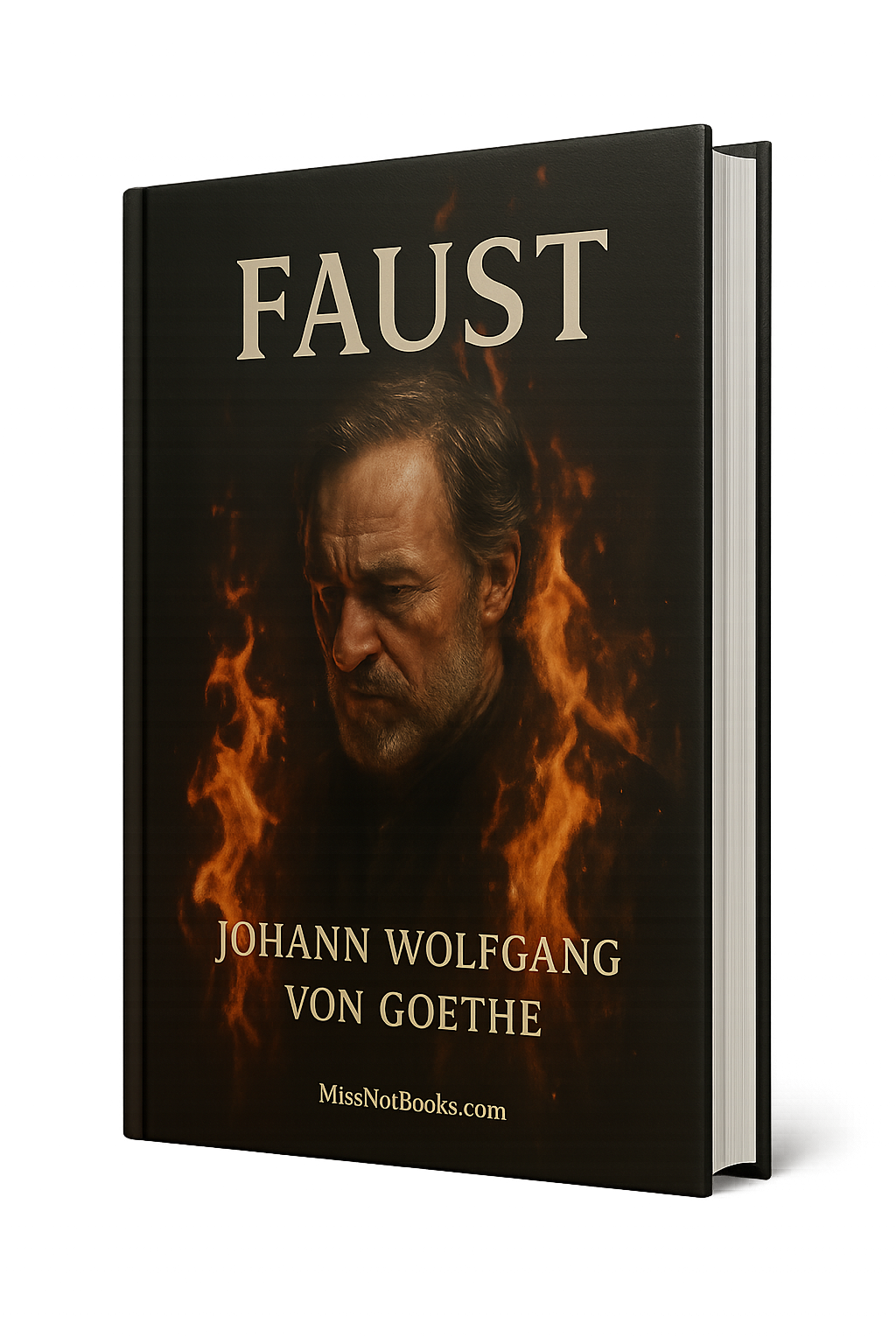
Faust
From the moment it was penned, this groundbreaking literary masterpiece has profoundly reshaped the landscape of Western thought, diving deep into the complexities of the human condition and the eternal struggle between ambition and consequence. It challenges conventional morality, explores the depths of desire, and encapsulates the relentless pursuit of knowledge and fulfillment. Not merely a story of personal ambition, this work serves as a reflection on the dualities of existence, ultimately leading readers to contemplate the profound implications of their choices. Its revolutionary blend of philosophy and poetry has woven itself into the fabric of multiple disciplines, making it an essential text for anyone seeking to understand the intricacies of life and human ambition.
Core Ideas and Main Arguments:
- The Dichotomy of Good and Evil: The text intricately presents the conflict between moral integrity and the unyielding pursuit of desire, showcasing the eternal human struggle.
- The Quest for Knowledge: A fierce advocacy for intellectual exploration and understanding, suggesting that the thirst for knowledge can lead to both enlightenment and peril.
- The Nature of Redemption: It delves into themes of salvation and damnation, exploring whether one can reclaim their soul from the depths of despair.
- The Transience of Life: Through its narrative, it emphasizes the fleeting nature of human experiences, prompting reflections on legacy and meaning.
Author’s Intentions and Context:
Johann Wolfgang von Goethe crafted this monumental work during a time of significant cultural transformation in Europe, as the Enlightenment began to give way to Romanticism. He sought to confront the evolving challenges of a rapidly changing society—where scientific rationality clashed with deep-seated human emotions and desires. Goethe’s objective was not only to weave a captivating narrative but to grapple with profound philosophical questions that remain relevant to this day. This pivotal text stands as a challenge to the reader, encouraging them to engage with their own aspirations and the ramifications of their moral choices.
Structure of the Book:
The work is structured in two parts that unfold in a dialogue-driven format, mirroring a classical tragedy.
- Part One: Introduces Faust’s character and his pact with the devil, framing his ensuing journey through love, despair, and ultimate self-discovery.
- Part Two: Expands on Faust's quest for significance, examining broader societal themes and integrating elements of dramatic performance, poetry, and philosophical exploration.
This structure allows a deep engagement with both the personal and collective human experience, progressing from a focus on individual desire to a universal commentary on existence.
Key Takeaways:
- Emphasizes the importance of personal decision-making in shaping one’s destiny.
- Illustrates the complexity of human emotions and desires.
- Encourages critical reflection on the morality of ambition and the choices we make in pursuit of our goals.
- Suggests that true fulfillment may lie beyond mere knowledge and wealth.
Why It’s Important to Read:
Despite being written over two centuries ago, this text continues to resonate powerfully across cultures and generations. Its exploration of the human psyche, ambition, and ethical dilemmas remains profoundly relevant in a world that often grapples with similar questions. Students of literature, philosophy, and psychology, as well as those intrigued by the moral implications of ambition, will find insightful reflections that challenge their perspectives and deepen their understanding of the human condition.
Impactful Quotes and Analysis:
-
“Two souls, alas! are housed within my breast, and each will wrestle for the mastery there.”
This quote reflects the inner conflict faced by Faust—symbolizing the universal tension between desires, emotions, and rationality. It encapsulates the human experience of grappling with competing motivations. -
“I am part of that power which eternally wills good and eternally does evil.”
Here, the author philosophically probes the nature of existence itself, suggesting a duality in all aspects of life, leading readers to ponder the complexities of morality and the consequences of their own actions. -
“The mind is the only thing that really matters.”
This assertion highlights the power of thought and intellect, serving as a reminder that our mental landscape shapes our reality and influences our interactions with the world.
About the Author:
Johann Wolfgang von Goethe (1749–1832) was a German writer, statesman, and polymath whose contributions spanned literature, philosophy, and natural sciences. He is considered one of the foremost figures in German literature and a key representative of the Sturm und Drang movement. His legacy endures through his deep exploratory works, which present timeless insights into emotion, ethics, and the human experience. Goethe’s influence extends beyond the literary world, impacting philosophy, art, and psychology.
Don’t miss the opportunity to engage with one of the most influential works of all time. Buy it today and explore the depths of ambition and morality. This monumental work is Faust by Johann Wolfgang von Goethe, brought to you for educational purposes by MissNotBooks.com.