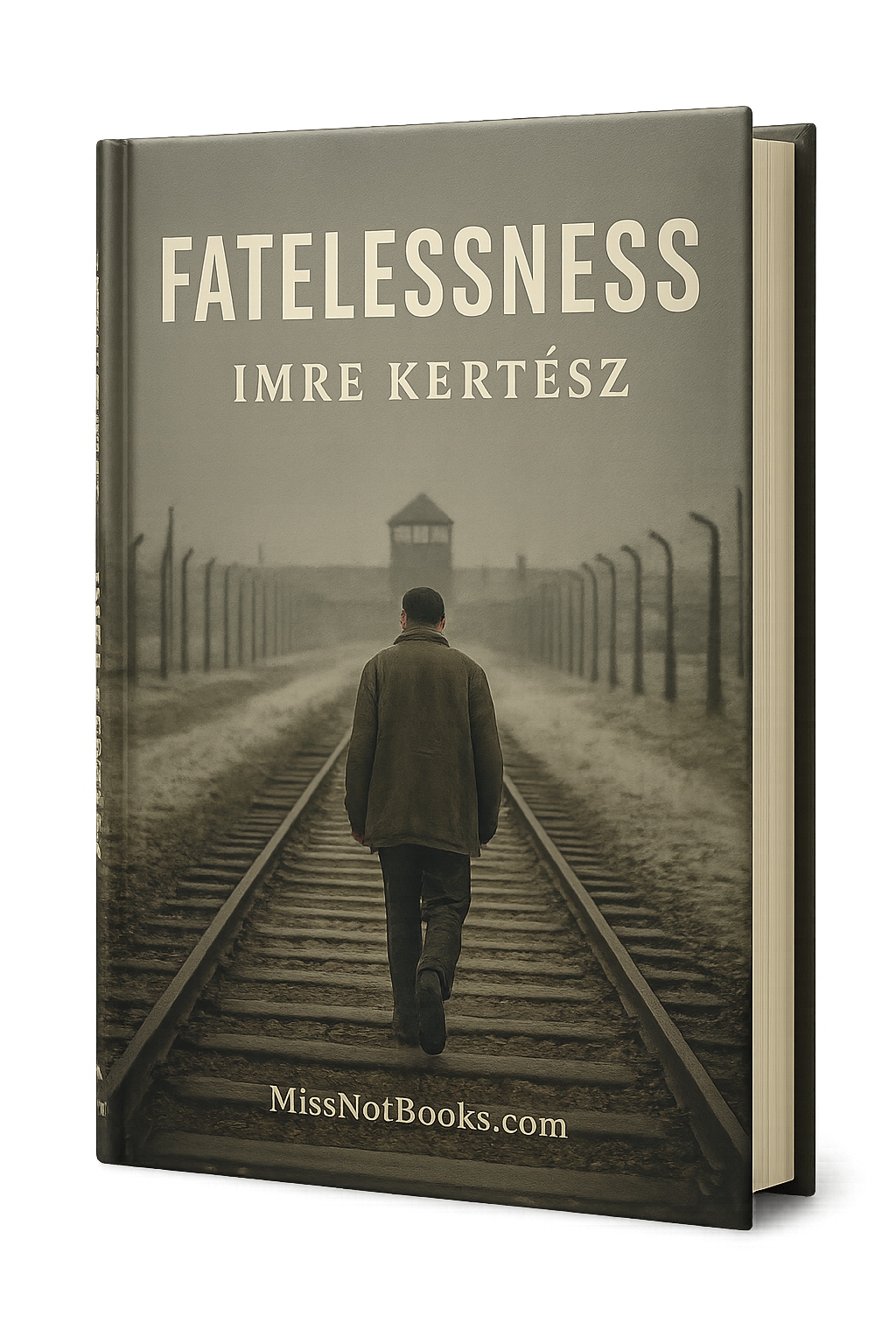
Fatelessness (Sorstalanság)
In a world often dominated by narratives of despair and trauma, there exists a remarkable exploration of the human experience that challenges perceptions of suffering, identity, and the meaning of existence itself. This influential work redefined literature's capacity to confront the inhumanity of the Holocaust, blending the personal with the philosophical, and in doing so, it invites readers to reflect on the complexities of fate and free will. Its powerful message continues to resonate, urging us to look deeper into the intricacies of our own lives and the historical contexts that shape them. Don’t miss the opportunity to engage with one of the most influential works of all time. Buy it today and explore the depths of human resilience in the face of unimaginable adversity.
Core Ideas and Main Arguments
- Resilience Amidst Suffering: The narrative emphasizes the strength of the human spirit, even when confronted with the abyss of suffering and loss.
- Existential Inquiry: At its core, the text pushes readers to grapple with profound questions about fate and free will, interrogating the nature of existence in a world that often seems devoid of meaning.
- The Illusion of Normalcy: It grapples with the concept of normality, showing how the horrors of the Holocaust distort human experience and perception.
- Identity and Alienation: The protagonist's journey highlights the dislocation of identity and the struggle for personal agency amidst systematic dehumanization.
Author’s Intentions and Context
Written during a time when Holocaust narratives were beginning to emerge in literature, the author sought not only to recount personal experiences but also to provoke thought about the broader human condition under oppressive regimes. Responding to an era marked by both collective trauma and an urgent need for introspection, this work addresses the philosophical questions of identity, morality, and the nature of evil. Kertész aimed to challenge audiences to confront uncomfortable truths about history and the often-violent intersection of individual lives with societal forces.
Structure of the Book
The book unfolds in a series of reflective episodes that mirror the protagonist’s evolution from innocence to a profound understanding of his circumstances. Each section delves deeper into themes of existentialism, gradually revealing the psychological ramifications of the Holocaust experience. The progression not only serves to narrate events but also to intricately examine the philosophical underpinnings of fate and choice.
Key Takeaways
- Readers will gain insight into the complexities of human resilience and the struggle for identity amidst trauma.
- The work prompts critical reflection on the nature of evil and the moral responsibilities of individuals within society.
- It encourages an understanding of historical events not merely as abstract concepts, but as profound experiences with lasting emotional and philosophical implications.
Why It’s Important to Read
This book remains a seminal text not only for those interested in Holocaust literature but also for anyone grappling with existential questions about meaning, purpose, and moral responsibility. It speaks to readers across generations, providing a lens through which to examine personal and collective history with compassion and critical thought. The unique ability of the narrative to intertwine personal stories with broader philosophical inquiries makes it essential for scholars, students, and anyone seeking to understand the depths of human experience.
Impactful Quotes and Analysis
-
“The only thing I had was my faith in my own life.”
- This powerful statement underscores the protagonist's struggle to maintain a sense of self against overwhelming darkness. It speaks to the inherent human desire for agency and meaning, even when confronted by fate's cruelty.
-
“What was left of me was nothing more than a reflection of what they had made of me.”
- This profound commentary illuminates the theme of identity in the context of societal and historical trauma. It challenges readers to consider how external forces can shape one's self-perception and reality.
-
“To be free is to be a burden.”
- Here, the text intricately weaves freedom with responsibility, suggesting that true autonomy is often accompanied by discomfort and moral imperatives, pushing readers to reflect on the weight of their choices.
About the Author
Imre Kertész (1929-2016) was a Hungarian author and Nobel laureate, best known for his poignant explorations of identity and trauma in the context of the Holocaust. A survivor of Auschwitz, Kertész's works grapple with the loss of individuality and the search for meaning in a fragmented world. His literary legacy extends far beyond his own experiences, influencing contemporary discussions about trauma, memory, and the nature of existence.
This monumental work is Fatelessness by Imre Kertész, brought to you for educational purposes by MissNotBooks.com.