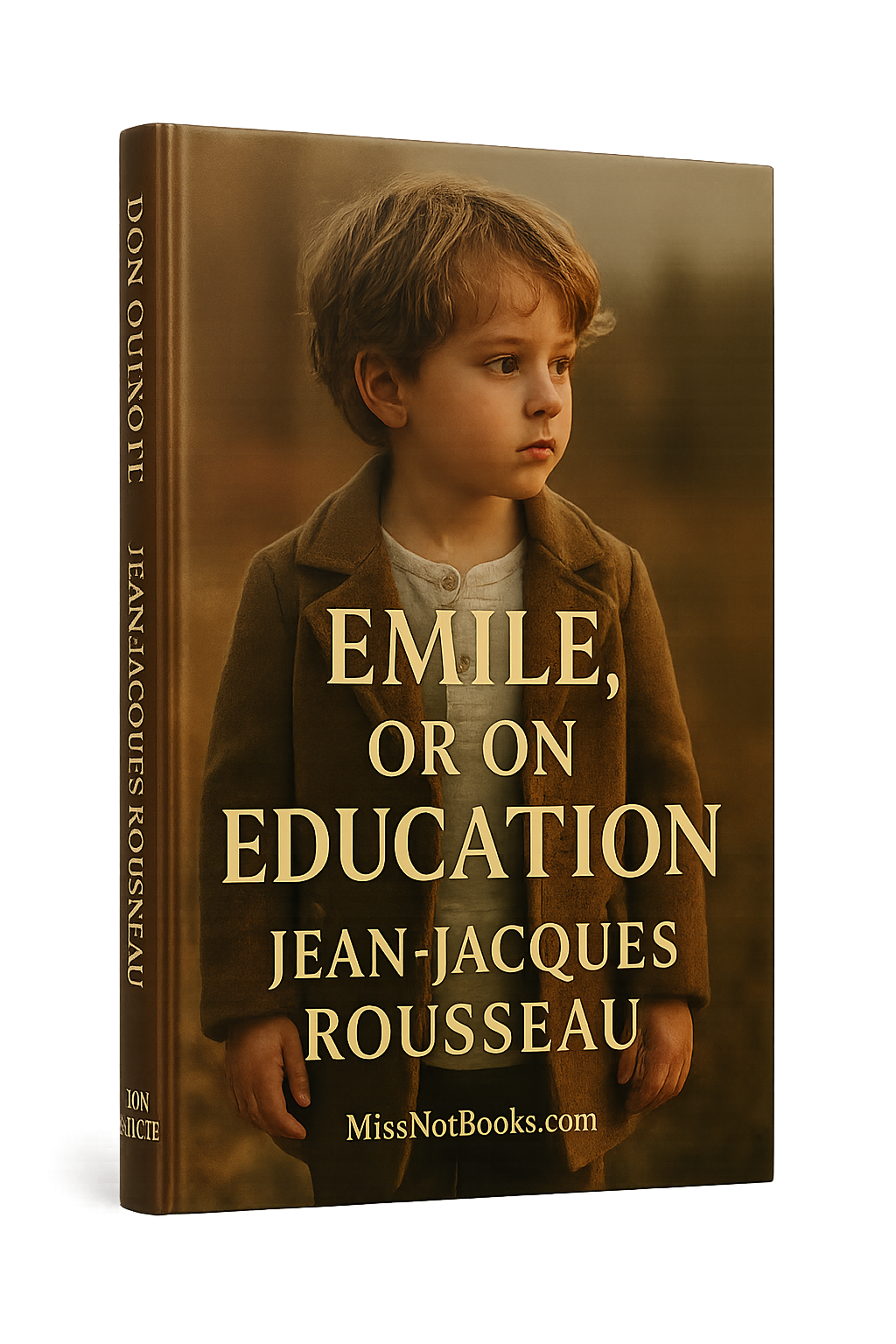
Emile, or On Education
In an era defined by rigid traditions and stagnant educational practices, a groundbreaking book emerged that forever transformed the landscape of childhood education and philosophical thought. This remarkable work challenged established norms, questioned authority, and introduced a revolutionary way of thinking about the cultivation of human potential. By emphasizing the importance of nature, freedom, and individuality, it redefined what it means to educate a child, laying the foundation for modern educational theory and practice. Delve into these rich insights, and explore how a fresh perspective on education can empower the next generation.
Core Ideas and Main Arguments:
- Education must be aligned with a child's natural development, respecting the stages of growth and learning.
- The concept of nurturing a “noble savage,” where innocence is viewed as a source of goodness and virtue, suggests that society corrupts inherently pure individuals.
- Experience and the natural world should be the primary teachers, emphasizing hands-on learning and curiosity over rote memorization.
- The importance of emotional development is underscored, highlighting the role of feelings in shaping character and moral understanding.
- Autonomy and freedom are crucial; children should be allowed to think for themselves and develop personal convictions.
Author’s Intentions and Context: The author sought to redefine education during a time when the Enlightenment was shifting the paradigms of thought and human understanding. Responding to the constraints of traditional schooling and societal expectations, the intention was to awaken a sense of freedom and individuality within education, opposing the authoritarian models that dominated. The challenges of his time, including inequality and a lack of critical thought, drove him to advocate for a philosophical approach to teaching that encouraged personal growth and ethical understanding.
Structure of the Book: The text is organized into five books, each addressing a distinct phase in the education of a young child into adulthood:
- Book One focuses on the development of an infant, emphasizing the role of nature and experiences.
- Book Two centers on childhood, discussing play and moral learning.
- Book Three outlines the education of a boy, advocating for physical education and the importance of outdoor learning.
- Book Four delves into the education of a man, exploring the formative years of adolescence and the acquisition of social virtues.
- Book Five culminates with reflections on education's purpose and the cultivation of the citizen in society. Each section artistically contributes to a cohesive vision of a progressive educational system.
Key Takeaways:
- Understanding the child’s developmental phases is essential for effective teaching.
- The conflict between society and individual nature can be navigated through education.
- Critical thinking and emotional engagement are as vital as intellectual knowledge.
- Constructing one's character is a lifelong journey that begins in childhood.
Why It’s Important to Read: This profound exploration of education remains relevant today as educators, parents, and policymakers grapple with the effects of standardized testing and one-size-fits-all curricula. By studying its insights, readers can discover strategies for fostering creativity, respect for individuality, and the importance of holistic educational practices. Anyone invested in child development, philosophy, or education will find invaluable lessons within its pages.
Impactful Quotes and Analysis:
-
“Man is born free, and everywhere he is in chains.” This famous opening line resonates deeply, highlighting the innate freedom of individuals and the societal constraints that inhibit authentic development.
-
“The only way to establish a peaceful character is to instill one through education.” Here, Rousseau poignantly illustrates the impact of formative experiences on morality, advocating for schooling that molds virtuous citizens.
-
“To be governed is to be at a distance from oneself.” This statement critiques social structures that distance individuals from their true nature, urging a return to self-awareness through education.
About the Author: Jean-Jacques Rousseau (1712–1778) was a French philosopher, writer, and composer whose work greatly influenced the Enlightenment and the development of modern political thought. His writings not only reshaped views on education but also laid the groundwork for future discourse on democracy, equality, and individual rights, securing his legacy as one of the most significant figures in Western philosophy.
Don’t miss the opportunity to engage with one of the most influential works of all time. Buy it today and explore the foundations of modern education. This monumental work is Emile, or On Education by Jean-Jacques Rousseau, brought to you for educational purposes by MissNotBooks.com.