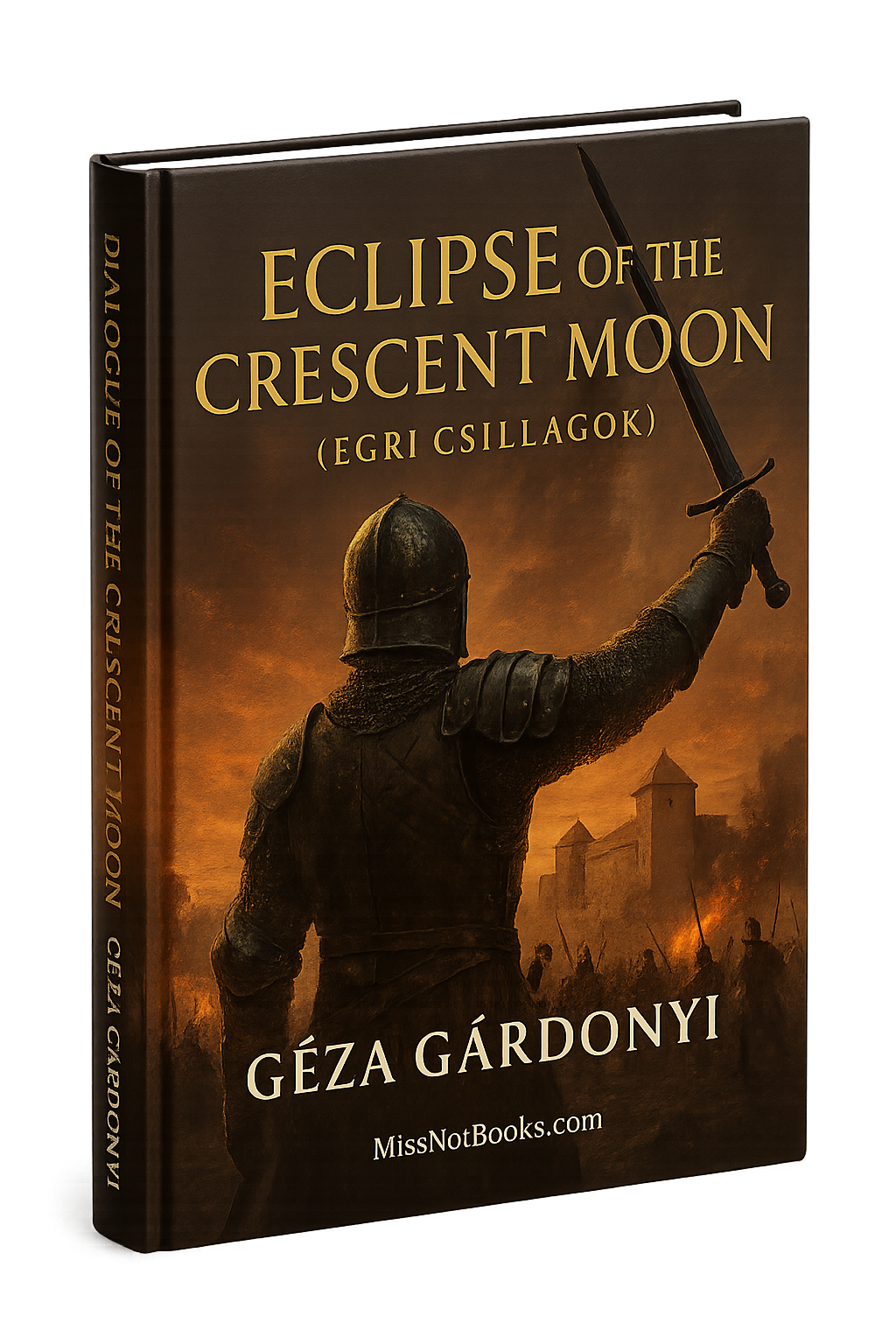
Eclipse of the Crescent Moon (Egri csillagok)
In the grand tapestry of literary history, few works possess the power to reshape national consciousness and evoke profound emotional landscapes as profoundly as this seminal book. With its poignant narrative and vivid historical portrayal, it not only captivated the imaginations of its readers but also served as a rallying point for cultural identity and pride. This remarkable work has fundamentally transformed the way we perceive national tales, family legacies, and the struggles for sovereignty amidst the complexities of identity and faith.
Core Ideas and Main Arguments
- Historical Resonance: The narrative weaves a rich tapestry of Hungary’s past, focusing on the heroic yet tragic elements of its history and how they inform modern identity.
- Faith and Loyalty: Central themes explore the intersection of personal faith and communal loyalty, illustrating how individual beliefs impact collective destiny.
- Heroism and Sacrifice: It emphasizes the noble struggle of individuals against oppressive forces, showcasing both physical and moral courage.
- Cultural Identity: Challenges the reader to reflect on national identity, drawing parallels between the past and contemporary society.
Author’s Intentions and Context
The author penned this work during a time of great uncertainty and political transformation in Hungary. At the turn of the 20th century, as new ideologies began to emerge and redefine societal norms, he aimed to instill a sense of pride and unity among Hungarians. By recounting a pivotal historical struggle, the author sought to illuminate the values of bravery, faith, and resilience. His intention was not merely to narrate events but to galvanize his audience into cherishing their heritage, thereby addressing the existential crises of identity and continuity amid rapidly changing times.
Structure of the Book
The book is organized into several thematic parts, each unfolding a narrative arc that builds upon the key historical events and personal stories of the characters:
- Introduction of Characters and Setting: The initial chapters set the stage, introducing protagonists whose lives will intertwine with larger historical movements.
- Climactic Conflicts: Subsequent sections delve into the heart of the conflict, where personal and collective struggles gain momentum against oppressive forces.
- Resolution and Reflections: The latter part of the book reflects on the aftermath of the struggle, allowing characters and readers alike to ponder the implications of bravery and sacrifice.
Key Takeaways
- Readers will gain insight into the profound connections between individual choices and greater historical truths.
- The narrative encourages a deeper understanding of cultural heritage and pride, fostering a renewed appreciation for one’s roots.
- The exploration of loyalty—both to faith and nation—leads to universal lessons on the human condition and the enduring quest for meaning.
Why It’s Important to Read
In today's ever-evolving world, this work resonates with ongoing discussions about identity, belonging, and the collective memory of nations. It holds immense cultural and intellectual value, especially for those interested in history, literature, and the complexities of national identity. Readers from diverse backgrounds will find relevance in its themes, making it an essential read for scholars, casual readers, and anyone seeking deeper insights into the human experience.
Impactful Quotes and Analysis
-
"In the shadow of the crescent moon, the heart finds its true courage."
This quote encapsulates the book’s exploration of faith acting as a beacon of strength amid adversity. It inspires readers to recognize their inner resilience. -
"Sacrifice is not merely giving up one’s life; it is the offering of one’s soul to a cause greater than oneself."
This profound statement challenges readers to consider the essence of true heroism and the multiple dimensions of sacrifice.
About the Author
Géza Gárdonyi (1863-1922) was a Hungarian novelist and playwright whose literary contributions have left an indelible mark on Hungarian literature. His ability to intertwine historical events with rich storytelling not only captured the spirit of his nation but also inspired generations to reflect on their heritage. Gárdonyi’s legacy lies in his skillful narrative craft that evokes both emotional and intellectual responses, making his works timeless and relevant.
Don’t miss the opportunity to engage with one of the most influential works of all time. Buy it today and explore the roots of Hungarian cultural identity and heroic legacy. This monumental work is Eclipse of the Crescent Moon by Géza Gárdonyi, brought to you for educational purposes by MissNotBooks.com.