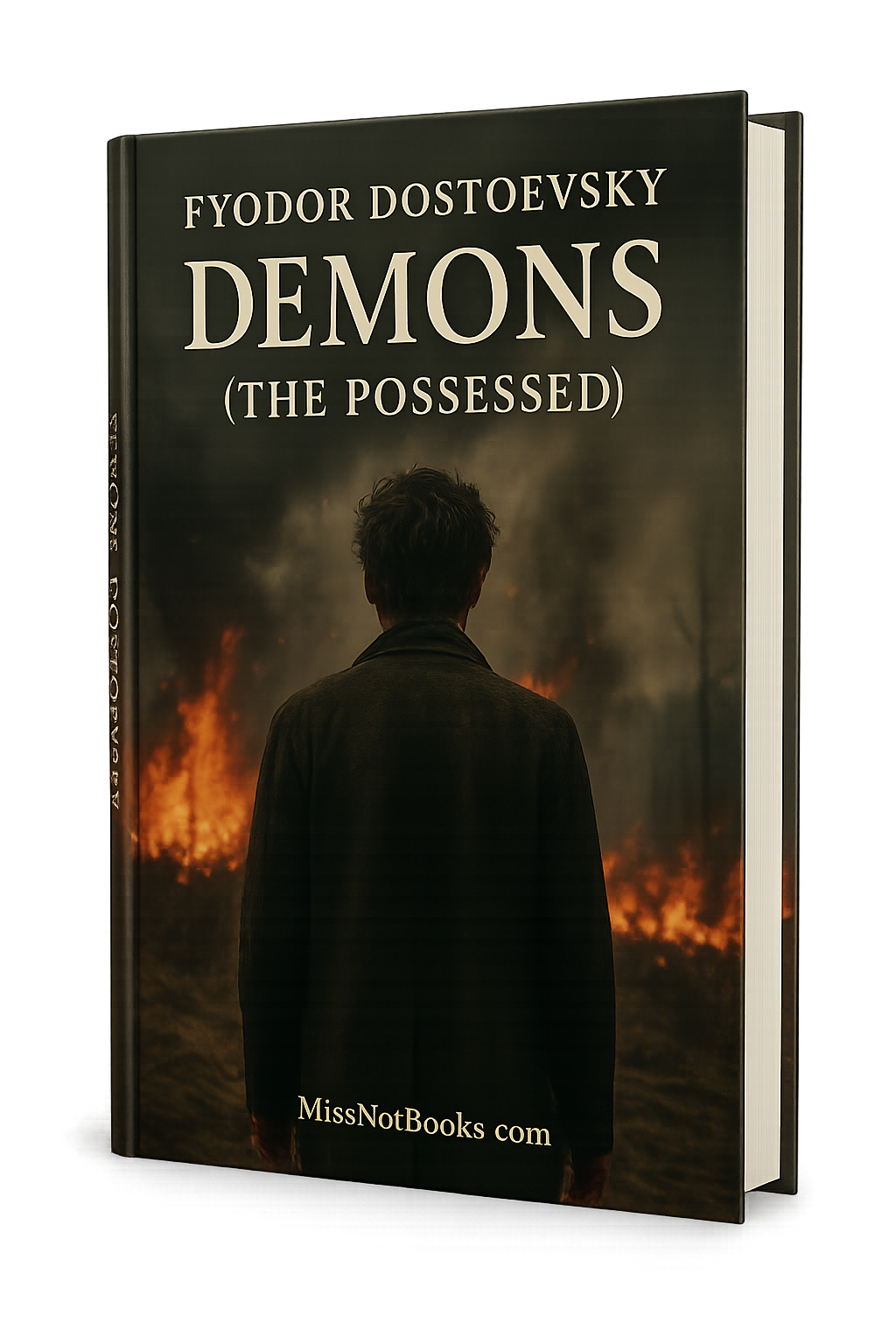
Demons (The Possessed)
In the pantheon of literary masterpieces, few works resonate with the profound complexities of the human condition as strikingly as this monumental novel. Its release marked a pivotal moment in the literary landscape, challenging the moral certitudes of its time while dissecting the tumultuous interplay of ideology, politics, and personal conviction. By delving deeply into the darkest corners of human philosophy and societal upheaval, this book not only revolutionizes narrative structure but also serves as a harbinger for existential inquiry, making it a cornerstone of modern literature and thought.
Core Ideas and Main Arguments:
- Ideological Extremism: The book explores the dangers of radical ideologies and the potential they hold for societal destruction, particularly in the context of 19th-century Russia's political climate.
- Psychological Depth: It delves into the minds of its characters, examining their motivations, fears, and moral dilemmas, thus laying the groundwork for subsequent psychological literature.
- Faith and Doubt: A persistent theme throughout the narrative is the struggle between belief and skepticism, illustrating the individual's search for meaning in a chaotic world.
- The Nature of Evil: The text presents a complex view of evil, suggesting it is often born from disillusionment and despair, rather than inherent malevolence.
- Revolution and Responsibility: The characters' revolutionary fervor raises questions about moral responsibility and the consequences of political action, compelling readers to confront the implications of their beliefs.
Author’s Intentions and Context: Written in a time of great social upheaval and intellectual ferment in Russia, the author aimed to grapple with the revolutionary movements that were beginning to permeate society. He was deeply concerned about the moral implications of these political changes and the philosophical questions they raised about freedom, authority, and the human spirit. The book serves as both a critique and a reflection of the tumultuous ideologies of its era, presenting a nuanced view that bore witness to the complexity of a society on the brink of transformation.
Structure of the Book: The novel is structured into multiple parts, each exploring different facets of the characters and their interactions with the spreading revolutionary ideas. Throughout these sections, readers experience alternating perspectives that share insights into both personal crises and broader societal issues. Key thematic threads emerge, oscillating between discussions of faith, nihilism, and the psychological turmoil of the protagonists, ultimately building towards a tense and dramatic conclusion that encapsulates the conflicts introduced throughout the narrative.
Key Takeaways:
- The exploration of ideological extremism provides crucial insight into contemporary political discourse.
- The character development offers a profound look at personal morality amidst societal pressures.
- The tension between faith and skepticism invites readers to reflect on their beliefs and values.
- Questions of agency and responsibility prompt critical thinking about the impact of individual actions within society.
Why It’s Important to Read: This work remains vitally relevant today, as it reflects ongoing debates about the nature of good and evil, the impact of ideologies, and the search for meaning in an increasingly complex world. Scholars, students, and general readers alike will benefit from engaging with its themes, as they continue to resonate across various contexts—from political theory to personal existential reflection. Engaging with this text is essential for those who wish to understand the roots of modern thought and the intricate web of human motivations.
Impactful Quotes and Analysis:
-
“We are all guilty of the sins we commit, but we are also guilty of the sins we tolerate in others.”
- This salient reflection encapsulates the moral complexities within the community, prompting readers to consider the broader implications of societal complicity.
-
“The man who has a conscience suffers whilst acknowledging his sin.”
- This quote speaks powerfully to the emotional torment of self-awareness, emphasizing the inner conflict that defines humanity’s struggle with morality.
-
“There is no greatness where there is not simplicity.”
- This assertion challenges readers to reconsider the nature of virtue and the elegance inherent in a life lived with authenticity and clarity.
About the Author: Fyodor Dostoevsky (1821-1881) was a Russian novelist, philosopher, and essayist whose works have profoundly shaped literature and philosophical discourse. Known for his exploration of psychology, morality, and the human condition, Dostoevsky is often celebrated as a precursor to existentialism. His literary legacy includes a rich array of characters who grapple with the ultimate questions of life, faith, and the essence of humanity. Through his writing, he has influenced generations of thinkers and artists, cementing his place as one of the titans of world literature.
Don’t miss the opportunity to engage with one of the most influential works of all time. Buy it today and explore the depths of human nature as it grapples with ideology, morality, and existential inquiry. This monumental work is Demons (The Possessed) by Fyodor Dostoevsky, brought to you for educational purposes by MissNotBooks.com.