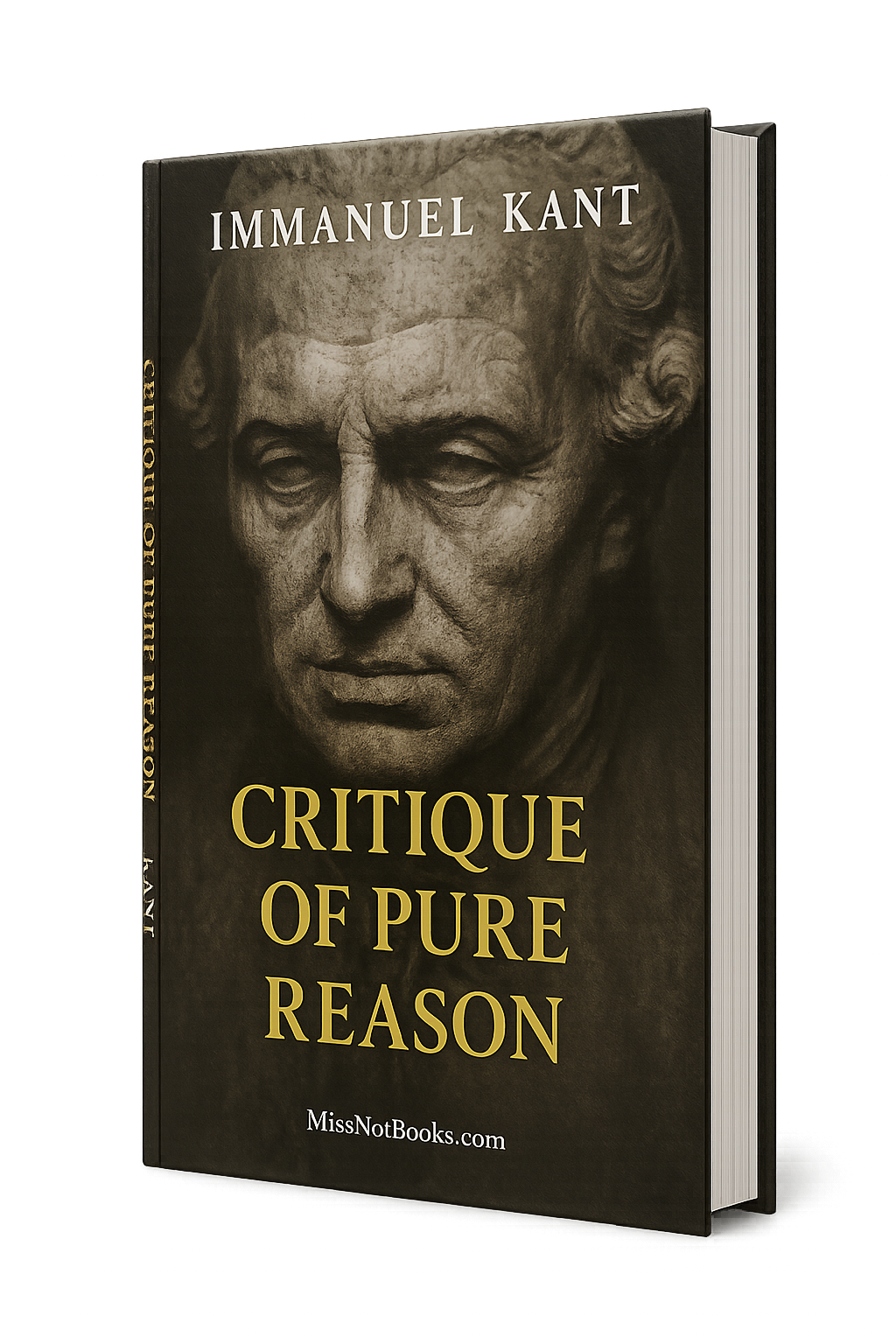
Critique of Pure Reason
In the landscape of philosophical inquiry, one monumental work stands out for its profound influence on the foundations of modern thought. This groundbreaking text revolutionized the way we perceive knowledge, reality, and the very act of understanding itself. By intertwining metaphysics with epistemology, it challenged the assumptions of previous philosophical doctrines and set the stage for contemporary discourse in a multitude of fields, including logic, ethics, and the natural sciences. It invites readers to reconsider the limits of human understanding and the relationship between experiences and the concepts that shape them.
Don’t miss the opportunity to engage with one of the most influential works of all time. Buy it today and explore the foundations of modern epistemology.
Core Ideas and Main Arguments
- Distinction Between A Priori and A Posteriori Knowledge: The text meticulously argues that some knowledge is independent of experience (a priori), while others depend on experience (a posteriori). This distinction reshapes our understanding of how we know what we know.
- Transcendental Idealism: It posits that our experiences are shaped by the ways our minds structure the world, proposing a revolutionary perspective that blends the subjective with the objective.
- Categories of Understanding: The delineation of categories—such as quantity, quality, relation, and modality—explains how we impose order on our sensory experiences, emphasizing the active role of the observer in knowledge formation.
- Noumena vs. Phenomena: The exploration of the limits of human understanding, contrasting things as they are (noumena) with things as they appear (phenomena), engages critical reflection on the nature of reality and our perceptions of it.
Author’s Intentions and Context
In crafting this work, the author aimed to address the intellectual upheaval of the 18th century, marked by the rise of rationalism and empiricism. Philosophers like Descartes and Hume had carved paths for enlightenment, yet their conclusions often left unanswered questions about the nature of knowledge and existence. The author sought to reconcile these divergent viewpoints and establish a coherent framework for understanding human cognition’s role within the context of reality, ultimately driving the enlightenment project toward a more cohesive and systematic philosophy.
Structure of the Book
The work is systematically organized into two main sections:
- The Transcendental Aesthetic: This part deals with the nature of space and time, laying the groundwork for how we perceive objects.
- The Transcendental Logic: This section is further divided into the analytic and dialectic components, capturing the framework whereby our understanding operates and the limitations it encounters.
Each division meticulously builds upon the last, culminating in a comprehensive examination of the interplay between human intuition, perception, and the structure of understanding itself.
Key Takeaways
- Knowledge is not a mirror reflecting reality but an active interplay between the mind and the external world.
- Human cognition shapes and limits our experiences; thus, to inquire into truth requires an understanding of these boundaries.
- The quest for knowledge is not merely an accumulation of facts but necessitates a profound philosophical underpinning that considers the role of human perception.
Why It’s Important to Read
This work remains an essential cornerstone for anyone interested in philosophy, cognitive sciences, and human understanding. Its insights continue to echo in discussions about the nature of reality, ethics, and the limits of scientific inquiry. Students, academics, and curious minds alike will find value in Kant’s enduring legacy as they grapple with the questions he meticulously unearths regarding truth and the human condition.
Impactful Quotes and Analysis
-
“Thoughts without content are empty, intuitions without concepts are blind.”
- This quote highlights the indispensable relationship between sensory experience and intellectual understanding, underscoring that both aspects need to coalesce for meaningful cognition.
-
“Science is organized knowledge.”
- Here, the author emphasizes the necessity of structured thought—an assertion that remains relevant today in scientific and educational frameworks, underscoring the importance of methodology.
-
“We are not rich by what we possess but by what we can do without.”
- This quote reflects on the deeper philosophical foundations of value beyond materialism, inviting reflections on what constitutes true wealth in intellectual and existential terms.
About the Author
Immanuel Kant (1724–1804) was a German philosopher whose work laid the foundation for much of modern Western philosophy. With his innovative ideas on metaphysics, ethics, and aesthetics, Kant has left an indelible mark, influencing countless spheres of inquiry and future philosophers. His legacy continues to shape discussions across disciplines, providing essential insights into the nature of knowledge, morality, and the limits of human understanding.
This monumental work is Critique of Pure Reason by Immanuel Kant, brought to you for educational purposes by MissNotBooks.com.