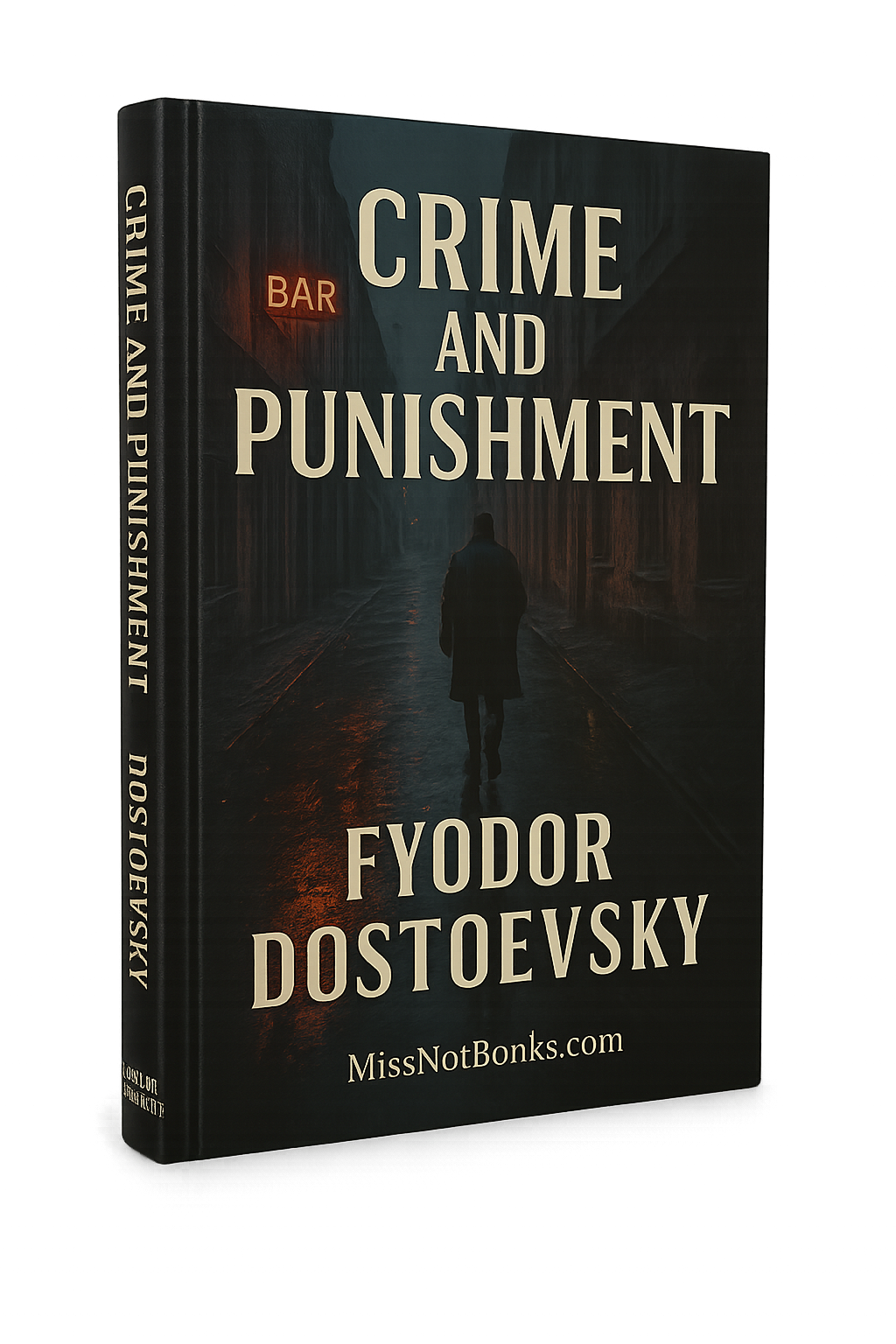
Crime and Punishment
In an age marked by rapid social upheaval and profound moral questioning, one literary work emerged as a powerful catalyst for introspection and debate, reshaping perceptions of morality, conscience, and the human psyche. This transformative text challenges readers to confront the darkest recesses of the human condition, questioning the very foundations of ethics and justice. Through its rich narrative and complex characters, the work has revolutionized not only literature but also the realms of psychological and philosophical thought. Don’t miss the opportunity to engage with one of the most influential works of all time. Buy it today and explore the depths of moral philosophy and the intricacies of human suffering.
Core Ideas and Main Arguments
- Moral Ambiguity: The text explores the gray areas of morality, posing questions about good and evil and the justification of one's actions.
- Existentialism: It delves into human existence and the quest for meaning amid suffering, emphasizing the burden of choice and responsibility.
- Societal Critique: The narrative critiques the socio-economic conditions of 19th-century Russia, highlighting issues of poverty, alienation, and the struggle for identity.
- Psychological Depth: The exploration of the protagonist's psyche offers insight into guilt, redemption, and the psychological turmoil associated with crime and punishment.
- Redemption and Suffering: The themes of suffering and the possibility of redemption resonate deeply, suggesting that pain can lead to enlightenment and self-discovery.
Author’s Intentions and Context
The author, grappling with the turmoil of a society in transition, set out to create a narrative that was as much a reflection of his personal philosophical struggles as it was a commentary on the world around him. Responding to the nihilistic tendencies prevalent among intellectual circles of his time, the author aimed to confront the moral implications of atheism and the quest for meaning in an indifferent universe. By placing his characters in extreme moral dilemmas, he sought to illustrate the consequences of ideological rigidity and the potential for personal transformation through suffering.
Structure of the Book
The work is meticulously structured into multiple parts, each contributing to a comprehensive examination of its central themes:
- Introduction of Characters: Early chapters introduce the protagonist and his complex internal world, setting the stage for the moral conflicts to come.
- The Crime: A pivotal section where the act of murder occurs, igniting the subsequent exploration of guilt and existential despair.
- Consequences and Pursuit: Chronicling the protagonist’s psychological deterioration, this section highlights the inescapable nature of guilt and societal repercussions.
- Rediscovery and Redemption: The later chapters provide a pathway to redemption, addressing the possibility of moral recovery through love and compassion.
Key Takeaways
- The exploration of moral complexity reflects the human condition and the challenges of ethical decision-making.
- It encourages readers to reconsider their preconceptions of justice and retribution.
- Readers will gain insights into how personal suffering can lead to growth and understanding.
- The narrative serves as a powerful warning about the isolating effects of alienation and the need for human connection.
Why It’s Important to Read
This book remains deeply relevant in today’s world, where moral dilemmas persist in every facet of life, from personal decisions to global politics. It serves as an essential philosophical text for anyone interested in ethics, psychology, or literature, opening up discussions about morality, fate, and free will. Students, philosophers, and general readers alike will find value in its profound explorations of human experience and conscience, fostering a deeper understanding of themselves and society.
Impactful Quotes and Analysis
-
“The man who has a conscience suffers whilst acknowledging his sin.”
This poignant reflection speaks to the shared human experience of guilt and the internal struggle between one's actions and moral compass. -
“To live without Hope is to Cease to live.”
This statement encapsulates the essence of despair and the necessity of hope as a driving force for change and redemption. -
“Every existing thing is born without reason, prolongs itself out of weakness, and dies by chance.”
Here, the author highlights existential themes, provoking readers to reflect on the randomness of life and the search for meaning amid chaos.
About the Author
Fyodor Dostoevsky (1821-1881) was a Russian novelist, essayist, and philosopher, regarded as one of the greatest writers in world literature. His works delve deeply into the psychological and moral questions that shape human behavior, exploring themes of existential angst, faith, and ethics. Dostoevsky’s legacy continues to influence writers, philosophers, and thinkers, earning him a central place in the canon of Western literature.
This monumental work is Crime and Punishment by Fyodor Dostoevsky, brought to you for educational purposes by MissNotBooks.com.