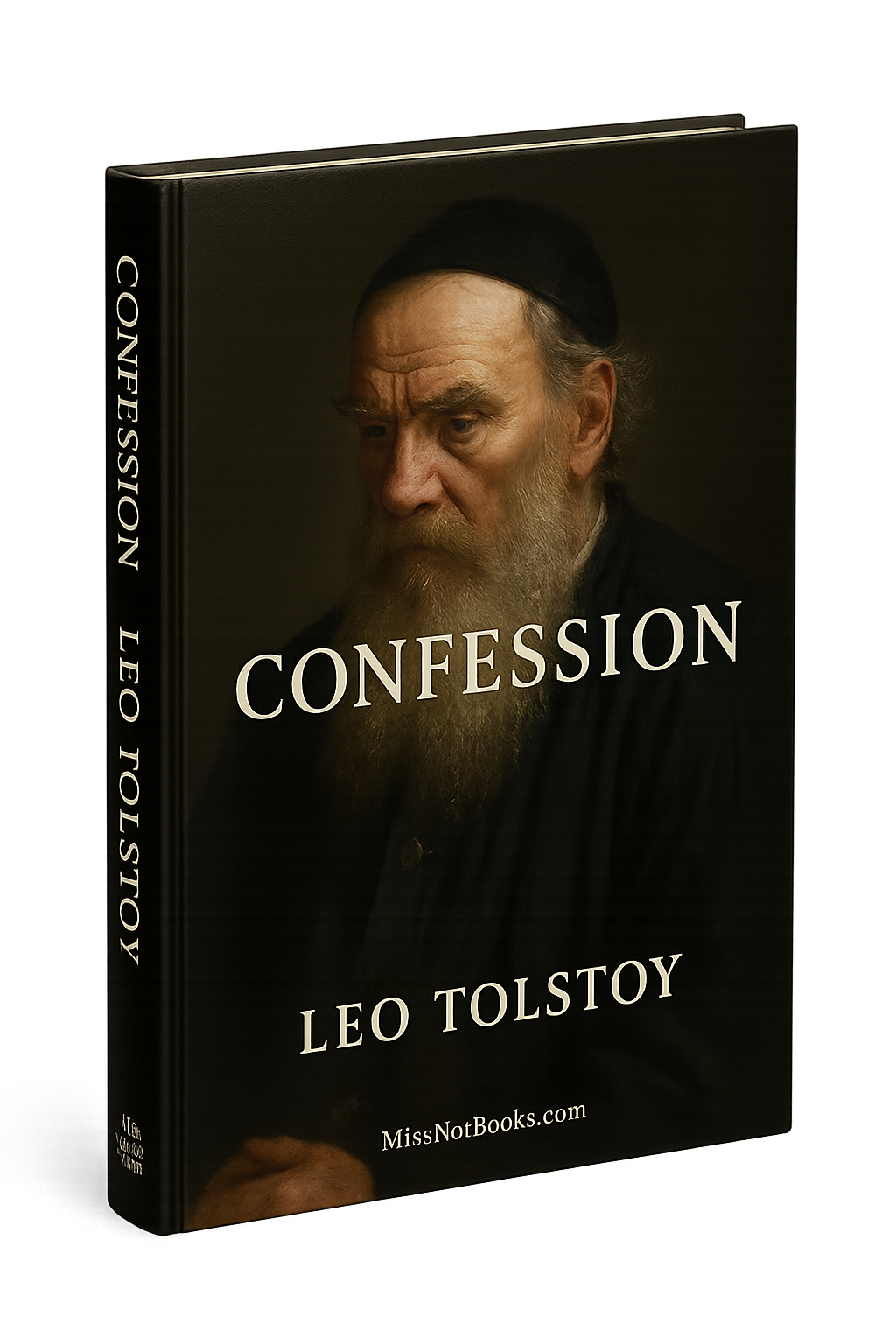
Confession
In an era marked by existential crisis and philosophical inquiry, a groundbreaking text emerged that forever changed the landscape of spirituality and self-examination. This extraordinary work challenges readers to confront their innermost beliefs and the morality of their existence, promoting a radical transformation in how we understand the journey of life and the pursuit of meaning. Its revolutionary approach to introspection and ethical living resonated deeply within the societal turmoil of the time, providing a compassionate voice for those grappling with faith, doubt, and the search for authenticity. The urgency to reflect upon personal convictions and societal constructs makes this work indispensable for contemporary readers. Don’t miss the opportunity to engage with one of the most influential works of all time. Buy it today and explore the depths of human conscience and the quest for truth.
Core Ideas and Main Arguments:
- Authentic Self-Reflection: The text advocates for a profound examination of one’s life, urging readers to question their motivations, beliefs, and the societal norms that shape their actions.
- Transformation Through Suffering: It posits that through suffering and moral struggle, individuals can achieve a deeper understanding of themselves and their place in the world.
- The Nature of Faith: A critical exploration of faith and spirituality, this work calls into question conventional religious practices and encourages a personal connection to the divine.
- Ethics and Morality: It presents a daring critique of social ethics, urging individuals to align their lives with a higher moral compass rather than societal expectations.
Author’s Intentions and Context:
The author sought to explore the fabric of his own life experiences, aiming to provide insight into the struggles that accompany true self-realization. Written during a tumultuous time in the late 19th century, marked by moral disillusionment and shifting social values, this work responds to the crisis of faith that many faced. The author not only infused his autobiographical experiences but also articulated the universal quest for meaning in a world fraught with chaos and conflict, making the philosophical discourse both personal and profound.
Structure of the Book:
- Introduction: The author presents the concept of self-examination, setting the tone for the journey of introspection.
- Life Journey: A narrative recounting pivotal moments and crises that shaped the author’s spiritual and ethical evolution.
- Philosophical Inquiry: This section engages with deep philosophical questions about existence, morality, and the search for meaning.
- Conclusion: The culmination of insights, leading the reader towards a personal reckoning with faith and morality.
Key Takeaways:
- Self-examination is essential for achieving a meaningful life.
- Suffering is not merely a hardship but a pathway to enlightenment and understanding.
- True faith transcends rigid dogma and invites personal connection and authenticity.
- Living ethically requires alignment between personal beliefs and actions.
Why It’s Important to Read:
This work retains its relevance in today’s fast-paced, often superficial culture. It invites readers from all walks of life—be they seekers of spiritual truth, ethical philosophers, or those grappling with personal crises—to engage in the transformative process of self-reflection. Its insights into morality and the essence of human existence resonate with contemporary dilemmas, making it invaluable for students, scholars, and anyone longing to deepen their understanding of life’s persistent questions.
Impactful Quotes and Analysis:
-
“I had to abandon the faith that had been handed to me and strive to find the truth for myself.”
This quote encapsulates the essence of the author's journey: the shift from inherited beliefs to personal convictions, echoing a universal struggle faced by many in their quest for authenticity and truth. -
“The sole meaning of life is to serve humanity.”
This powerful proclamation serves as a call to action, emphasizing the importance of compassion and service in a world often preoccupied with self-interest and materialism. -
“What will happen to me is unimportant; what will happen to others is what matters.”
This assertion reflects a profound ethical shift, encouraging readers to look beyond their self-interests and consider the welfare of the collective, a poignant reminder of our shared humanity.
About the Author:
Leo Tolstoy (1828–1910) was a renowned Russian author and philosopher, best known for his epic novels "War and Peace" and "Anna Karenina." A remarkable figure in literature and moral philosophy, Tolstoy's later life was marked by a profound spiritual awakening and a commitment to nonviolence and social reform. His legacy as a literary giant and a deep thinker continues to inspire countless individuals worldwide, emphasizing the enduring relevance of his thoughts on ethics, faith, and humanity's collective journey.
This monumental work is Confession by Leo Tolstoy, brought to you for educational purposes by MissNotBooks.com.