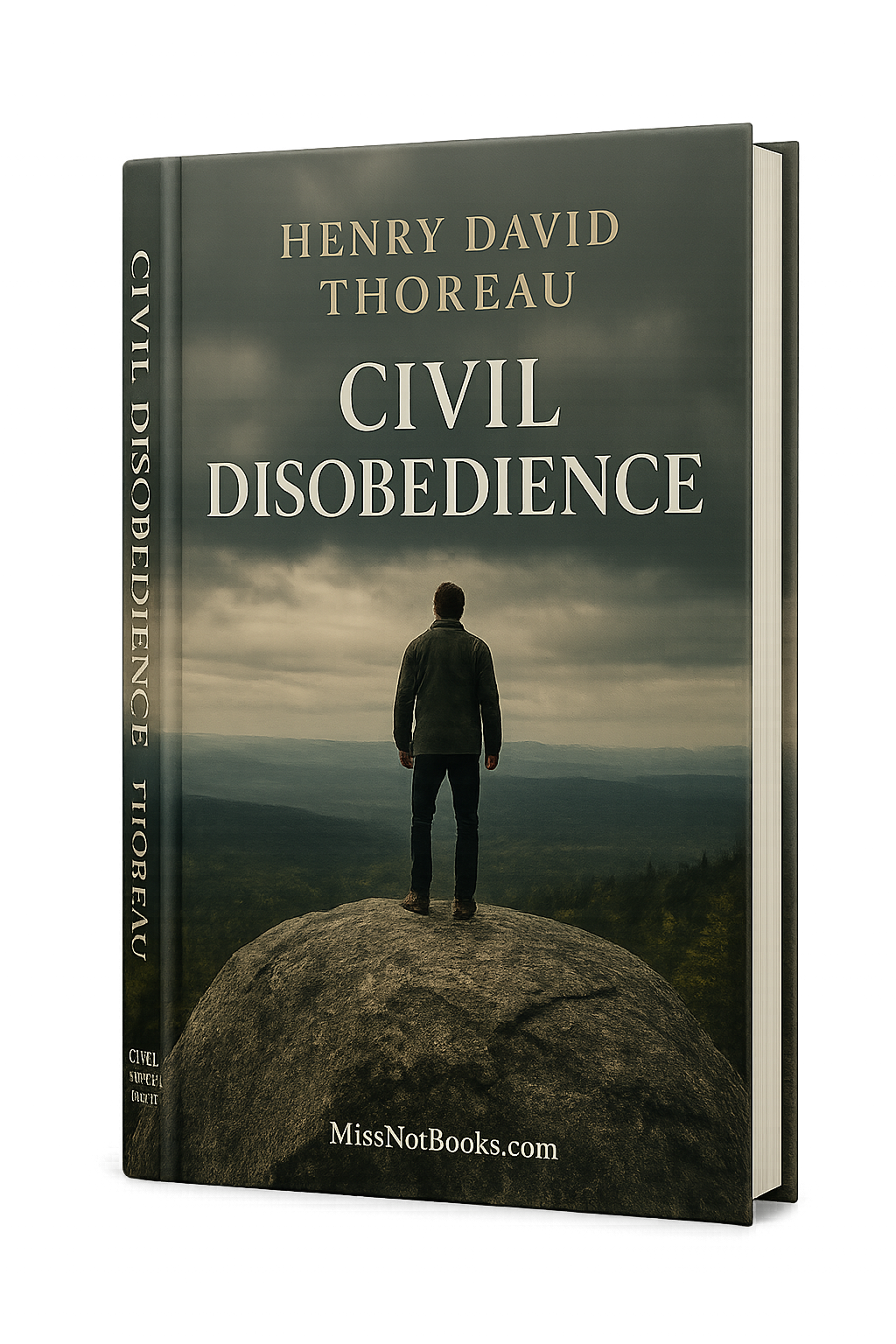
Civil Disobedience
In an era defined by the struggle for justice and personal integrity, a seminal text emerged that would radically transform the landscape of political and social thought. This book courageously challenged the status quo, advocating for the moral imperatives of individual conscience over entrenched laws. By introducing the concept of nonviolent resistance as a legitimate response to unjust governance, it ignited a passion for civil rights movements and inspired generations of activists across the globe. The work's persuasive call for personal responsibility in the face of systemic injustice has become a rallying cry for those who dare to question authority. Don’t miss the opportunity to engage with one of the most influential works of all time. Buy it today and explore the deep ethical foundations of resistance against oppression.
Core Ideas and Main Arguments
- Individual Conscience: The importance of personal morality and individual judgment as a guiding principle for civil action.
- Civil Disobedience: The notion that it is not only a right but a duty to disobey unjust laws peacefully.
- Critique of Government: A bold criticism of governmental authority, questioning its legitimacy when it violates individual rights.
- Social Responsibility: An appeal for citizens to take an active role in shaping society and holding their government accountable.
Author’s Intentions and Context
The author sought not only to express his discontent with unjust government practices but also to ignite a broader discourse on ethical resistance during a time when America was grappling with slavery and imperial expansion. Responding to the political and moral crises of his time, he aimed to inspire a movement of civil disobedience that would encourage individuals to assert their beliefs and instigate change. In a rapidly modernizing society increasingly focused on materialism, the author positioned individual ethics as foundational in the fight for social justice and equality.
Structure of the Book
The book is structured into concise, powerful sections, each building upon the last:
- Introduction: Lays the philosophical groundwork for civil disobedience.
- The Duty of Civil Disobedience: Discusses the moral responsibility to resist unjust laws.
- Historical Context: Provides examples from history that illustrate the consequences of blind obedience to authority.
- Practical Implications: Outlines the methods and ethics of engaging in nonviolent protest.
Key Takeaways
- Moral Authority vs. Legal Authority: Laws are not inherently just; individuals must evaluate them critically.
- The Power of the Individual: A single person's resolve can challenge and change unjust systems.
- Role of Nonviolence: Effective resistance does not necessitate violence and can lead to profound societal change.
Why It’s Important to Read
This work resonates powerfully in our contemporary world, where issues of justice, representation, and the moral responsibilities of citizens are at the forefront of societal debates. Its relevance extends beyond the historical context of American governance, informing discussions on global human rights and civil liberties today. Activists, students of philosophy, political science enthusiasts, and anyone compelled to engage in social change will find invaluable insights within its pages.
Impactful Quotes and Analysis
-
“Government is best which governs least.”
This quote epitomizes the author’s belief in minimal government interference, suggesting that personal freedom thrives when individual interaction with government is limited. -
“I cannot consent to pay taxes that support a government which carries on its operations with such senseless cruelty.”
Here, the author powerfully communicates the ethical implications of complicity; how the actions of a government can transform individuals into agents of injustice when they choose to comply.
About the Author
Henry David Thoreau (1817-1862) was an American essayist, poet, and transcendentalist, whose thoughts on nature, society, and individualism have positioned him as a foundational figure in American literature and philosophy. His influential ideas on civil disobedience and personal responsibility have inspired movements for social justice and environmental stewardship, marking him as a pivotal thinker whose legacy endures in contemporary discourse.
This monumental work is Civil Disobedience by Henry David Thoreau, brought to you for educational purposes by MissNotBooks.com.