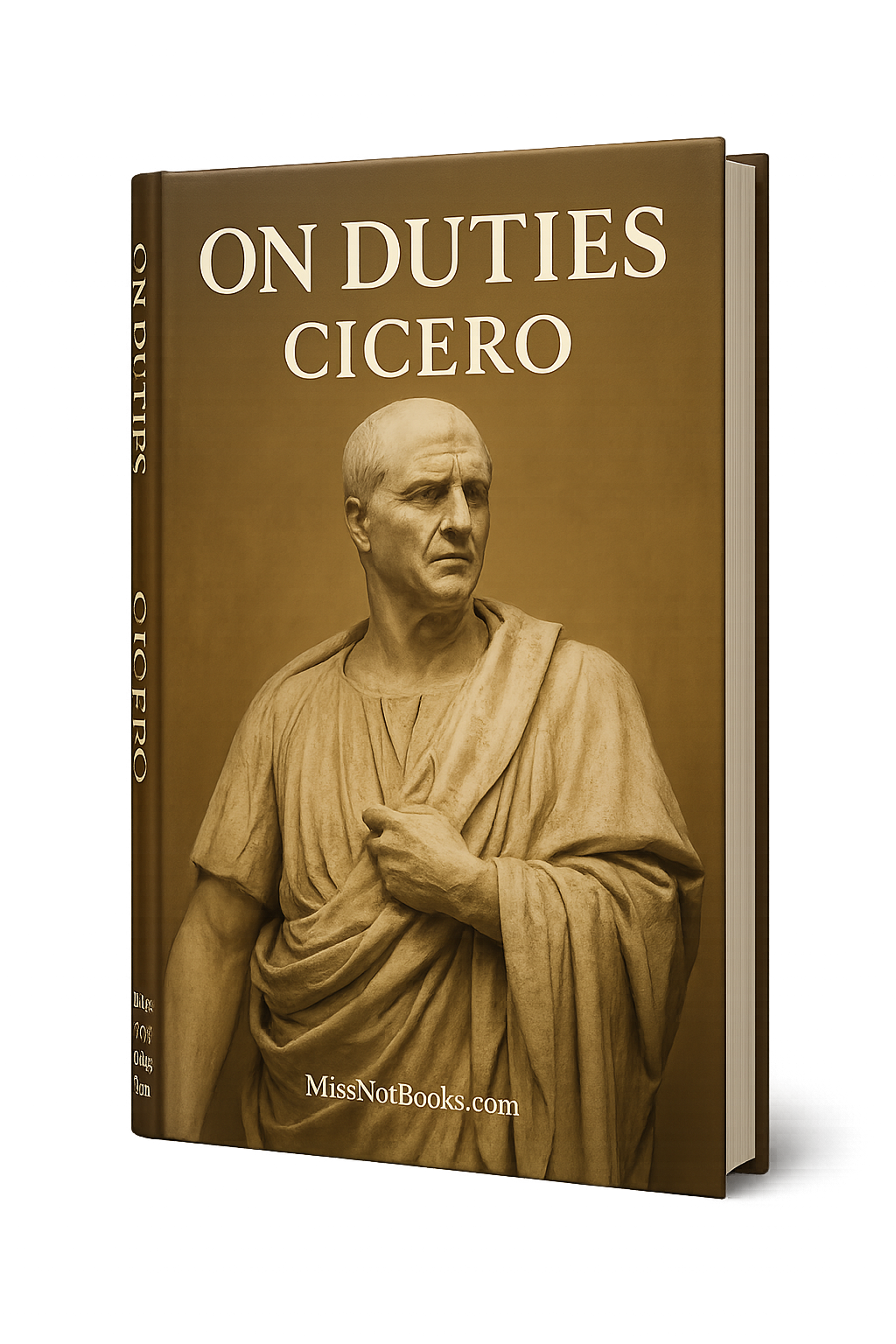
On Duties
In the annals of Western thought, few works have wielded as profound an influence on the interplay of ethics, philosophy, and political theory as the book we explore today. This transformative masterpiece revolutionized the intellectual landscape by poignantly articulating the relationship between moral obligations, social duty, and personal conduct. It challenged its readers to grapple with fundamental questions of ethics amid the complexities of public and private life, laying the groundwork for future discourse on human rights, governance, and the essence of duty.
Don’t miss the opportunity to engage with one of the most influential works of all time. Buy it today and explore the roots of political theory.
Core Ideas and Main Arguments
- Moral Responsibility: The text articulates the necessity of upholding moral duties, advocating that personal virtue is crucial for societal harmony.
- Roles and Relationships: It emphasizes the interconnectedness of family, society, and state, exploring how our obligations are shaped by these relationships.
- Pragmatic Ethical Framework: The work presents a practical approach to ethics, suggesting that morality should guide both personal choices and political actions.
- Universal Principles: The author posits that certain ethical principles are universal, transcending cultures and times, thus advocating for a universal moral law.
Author’s Intentions and Context
The author crafted this work during a tumultuous period of Roman politics, where moral decay and political ambition often clashed. Cicero sought to offer a guiding philosophy that could anchor individuals amid these challenges. He aimed to revive Stoic ethical principles and rebuff the rising intellectual trends that detested traditional values. By articulating a vision of duty and virtue, he positioned himself in a conversation about leadership and civic responsibility, responding directly to the moral crises of his time.
Structure of the Book
The work is structured thematically into sections that systematically explore the notion of duty:
- Introduction to Duty: Laying the foundation of ethical thought and its importance.
- The Nature of Goodness: Delving into what constitutes the good life and moral excellence.
- Duties to Others: Exploring social obligations, focusing on family and community.
- Public Duties: Discussing the responsibilities of citizenship and governance.
- Conclusion: Synthesizing the ideas presented and emphasizing the role of virtue in fulfilling one's duties.
Each section builds upon the last, culminating in a comprehensive view of how duty intertwines with personal conduct and public life.
Key Takeaways
- Duty as Central to Ethics: Readers will understand that a cohesive society relies on individuals honoring their obligations.
- Self versus Society: The tension between personal desires and societal expectations becomes clear, guiding readers to consider their own roles within their communities.
- Legacy of Virtue: The importance of virtuous living emerges as a timeless principle essential for both personal integrity and social order.
Why It’s Important to Read
The relevance of these philosophical inquiries endures, particularly in a world grappling with ethical dilemmas and political discord. Modern leaders, students of philosophy, and individuals seeking personal growth will find insights that resonate with their experiences. The discussion of duties invites rigorous reflection on moral choices, rendering this work an indispensable read for anyone interested in ethics, politics, and human relationships.
Impactful Quotes and Analysis
-
“The safety of the people shall be the highest law.”
- This declaration articulates the idea that governance should prioritize the well-being of citizens, a principle that remains essential in contemporary political discourse.
-
“Not for ourselves alone are we born.”
- Here, the author underscores the significance of social responsibility, reminding readers that personal fulfillment is inextricably linked to our obligations to others.
-
“The greatest blessings are those which are the most difficult to obtain.”
- This observation highlights the intrinsic value of virtues such as courage and integrity, suggesting that true rewards arise from facing challenges head-on.
About the Author
Marcus Tullius Cicero (106–43 BC) was a renowned Roman statesman, orator, and philosopher, whose works have profoundly influenced both the Latin literary tradition and the philosophy of the West. As a statesman, Cicero played a critical role in the political landscape of the Roman Republic, championing the principles of justice and governance. His writings on rhetoric, ethics, and philosophy continue to be studied, marking him as a pivotal figure whose legacy endures in the realm of political thought and ethical inquiry.
This monumental work is On Duties by Cicero, brought to you for educational purposes by MissNotBooks.com.