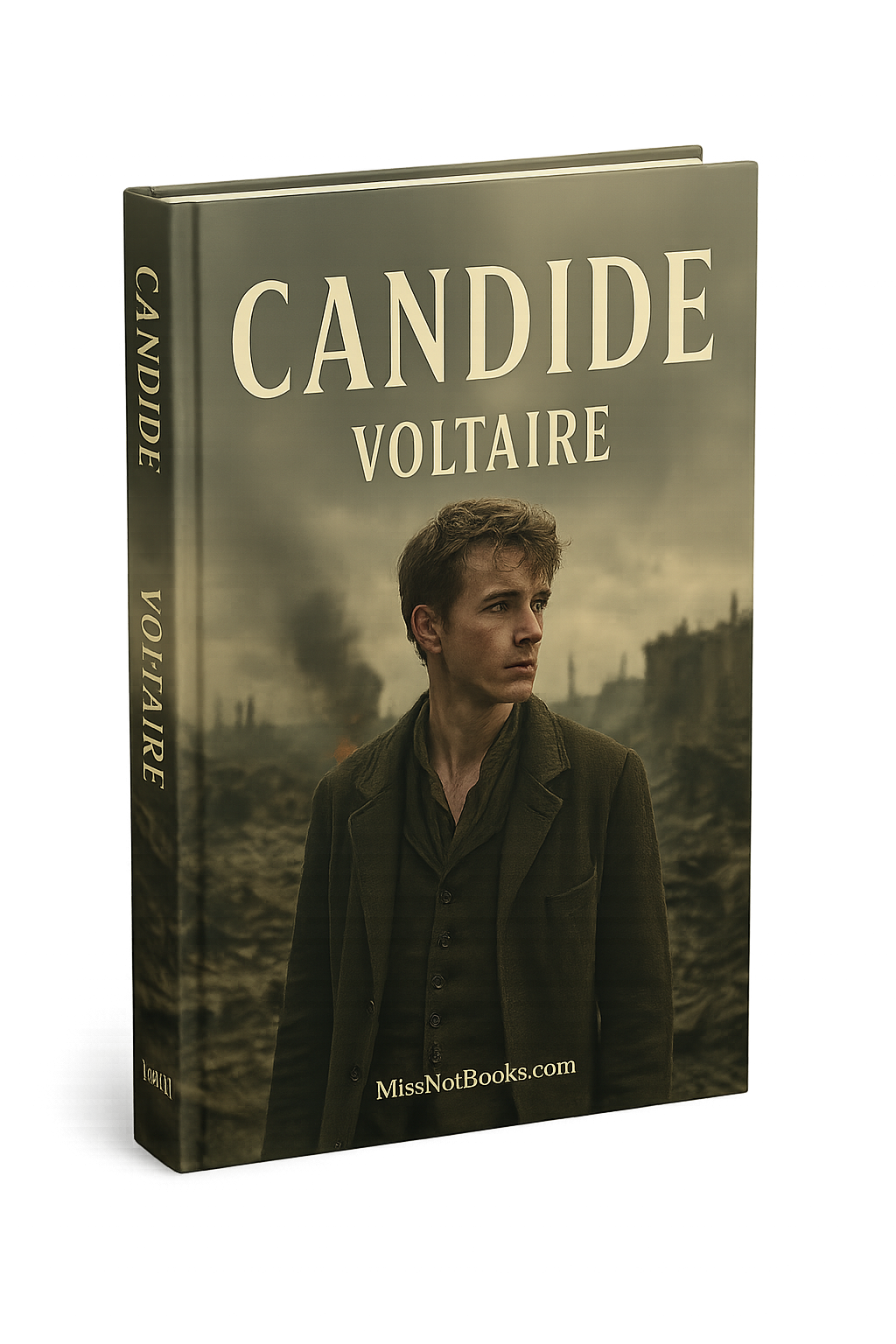
Candide
In an age defined by optimism and the philosophical belief that we inhabit the best of all possible worlds, one groundbreaking work emerged to challenge this naivety, revealing the darker undercurrents of human existence and societal failings. This text ignited intellectual debates about the nature of happiness, suffering, and the role of Providence in a tumultuous world, inviting readers to reassess their understanding of optimism. Its audacious critique of contemporary society and philosophy reshaped literary landscapes and offered a timeless reflection on the human condition. Don’t miss the opportunity to engage with one of the most influential works of all time. Buy it today and explore the roots of human resilience in the face of absurdity.
Core Ideas and Main Arguments
- The Critique of Optimism: The narrative presents a sharp and satirical attack on the optimistic philosophy that claims every event, no matter how dire, contributes to the greater good.
- The Nature of Suffering: Through a series of misadventures, the protagonist encounters relentless suffering that questions the plausibility of a benevolent universe.
- Irony and Satire: The author employs humor and irony to expose the hypocrisy and incompetence of institutions, from religion to government.
- Human Agency: By juxtaposing philosophical ideals with lived experiences, the text argues for the importance of personal agency and the ability to cultivate one's own happiness.
- Reality vs. Idealism: It highlights the conflict between high-minded philosophical ideals and the harsh realities of life, advocating for pragmatism rather than unfounded optimism.
Author’s Intentions and Context
The author aimed to critique the prevailing optimistic philosophies, particularly those of Leibniz, during the Enlightenment, a period marked by tremendous intellectual upheaval and societal re-evaluation. In response to the complacency engendered by philosophical optimism, particularly in light of the brutality of wars, natural disasters, and human suffering, he sought to highlight the absurdity surrounding claims of an inherently benevolent universe. This work emerged not only as a critique of optimistic thought but also as a reflection of the anxieties and disillusionments experienced by individuals in the face of global atrocities.
Structure of the Book
The narrative unfolds through a series of episodic adventures that form a picaresque tale, allowing for a varied exploration of different societal functions and philosophical ideals. Key sections include:
- The Journey Begins: Introducing the protagonist and his naïve optimism.
- Trials and Tribulations: Each subsequent adventure serves to dismantle the notion of a just and orderly world, with encounters revealing stark realities.
- Final Reflections: Concludes with the protagonist’s realization that contentment is found in cultivating one's own garden, symbolizing self-determination in the chaos of life.
Key Takeaways
- The Fragility of Happiness: Readers will learn that joy is often fleeting and overshadowed by suffering.
- The Illusion of Optimism: This work illustrates how blindly optimistic philosophies can perpetuate passivity in the face of injustice.
- The Power of Personal Agency: It encourages readers to take control of their destiny instead of relying on external forces for happiness.
Why It’s Important to Read
This text remains profoundly relevant as contemporary society continues to grapple with issues of inequality, suffering, and the search for meaning. It serves as a reminder of the importance of critical thought in the face of dogma, appealing to philosophers, students, and anyone seeking to understand the depth of human experience. The blunt honesty woven throughout the narrative encourages readers to confront uncomfortable truths and develop a pragmatic approach to life's challenges.
Impactful Quotes and Analysis
-
“All is for the best in the best of all possible worlds.”
This notorious line encapsulates the naïve optimism that the book relentlessly critiques, demonstrating the folly in believing that all suffering has a purpose within a grand scheme. -
“We must cultivate our garden.”
A powerful conclusion that underscores the philosophy of self-determination and the pragmatic pursuit of happiness through personal effort rather than reliance on external validation. -
“It is not enough to win a war; it is more important to organize the peace.”
This reflects the author's deep understanding of human nature and societal structures, urging readers to consider the long-term implications of their beliefs and actions beyond immediate victories.
About the Author
François-Marie Arouet, known by his pen name Voltaire (1694-1778), was a French writer, historian, and philosopher, prominent during the Age of Enlightenment. Renowned for his wit and advocacy for civil liberties, Voltaire’s works have left an indelible mark on literature and philosophy, shaping modern concepts of freedom of speech, separation of church and state, and the critique of institutional power. His legacy endures as a champion of human rights and a tireless critic of injustice and dogma.
This monumental work is Candide by Voltaire, brought to you for educational purposes by MissNotBooks.com.