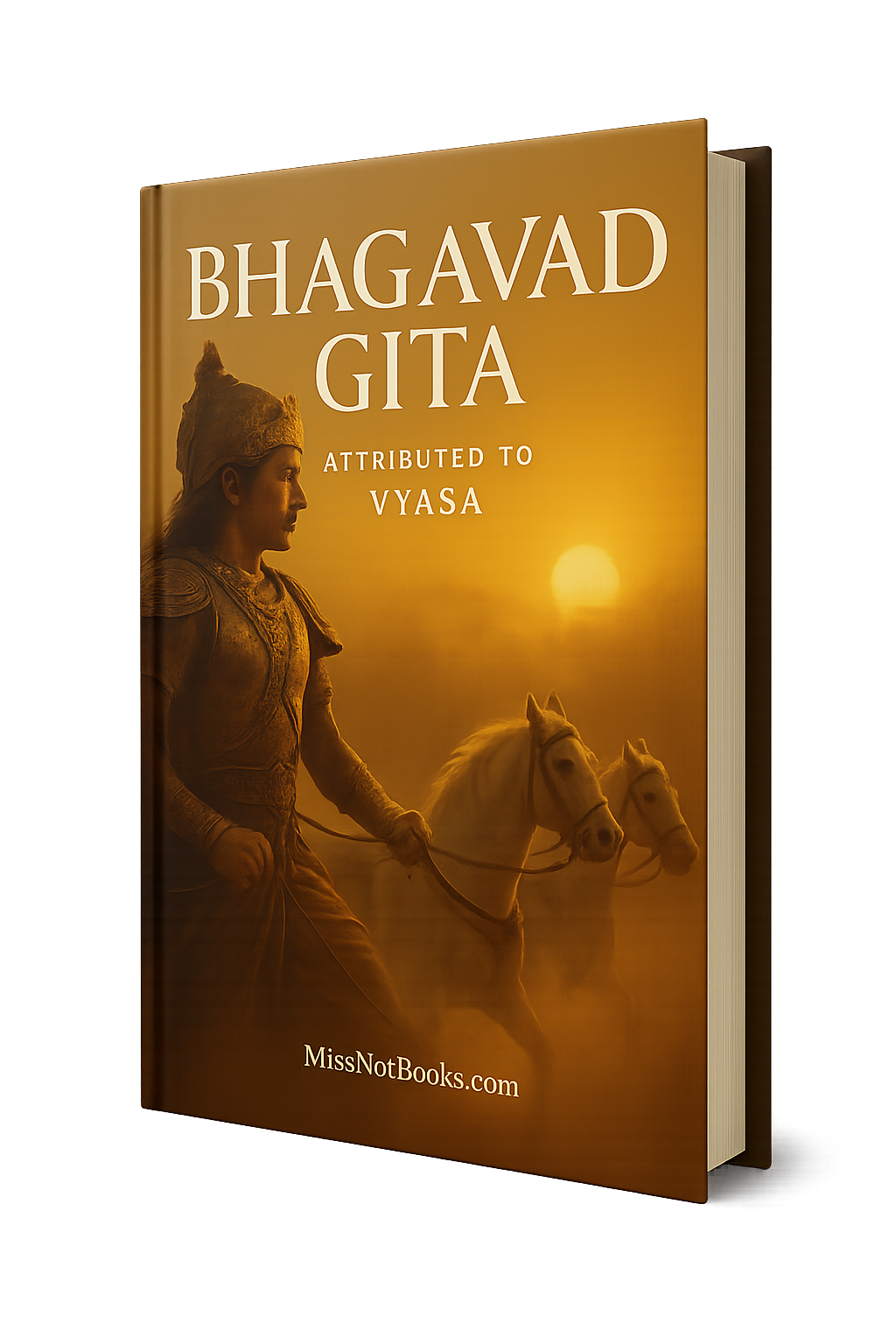
Bhagavad Gita
The timeless text serves as a profound source of wisdom and insight that has reshaped spiritual, philosophical, and ethical discourse across millennia. This remarkable work delves into the complexities of duty, righteousness, and the eternal struggle between good and evil. Its teachings transcend cultural and religious boundaries, presenting a holistic approach to life that emphasizes the balance between action and reflection. By integrating practical philosophy with a spiritual framework, this book has transformed the way individuals perceive their purpose and responsibilities in the world.
Core Ideas and Main Arguments
- Dharma (Duty): The central concept of duty, or 'dharma,' illustrates the importance of one's responsibility to society and oneself, emphasizing that true fulfillment arises from righteous action.
- The Nature of Reality: The text presents a nuanced understanding of reality, distinguishing between the eternal soul (Atman) and the temporal physical world, providing a lens through which to understand life's impermanence.
- Paths to Liberation: It outlines multiple spiritual paths (Karma Yoga, Bhakti Yoga, Jnana Yoga) that lead individuals to liberation, recognizing the diversity of human experiences and inclinations.
- The Unity of All Existence: The vision of interconnectedness expounded upon emphasizes the unity of all beings, challenging readers to act with compassion and understanding.
Author’s Intentions and Context
The author, writing during a time of significant social and political upheaval in ancient India, aimed to address the moral dilemmas faced by individuals caught in conflict. Specifically, the historical context reflects a society grappling with the consequences of war and the duties of warriors. The author intended to provide guidance not only for leaders and warriors but for all individuals searching for meaning in a chaotic world. The text responds to the philosophical challenges posed by competing schools of thought, providing a cohesive framework for understanding existence and ethical governance.
Structure of the Book
The book is traditionally divided into 18 chapters, each addressing different aspects of life, duty, and spirituality.
- Chapters 1-6: Introduce the dilemma of action versus inaction and explore the concept of selfless action and devotion.
- Chapters 7-12: Delve into the nature of knowledge, reality, and the divine, presenting multiple paths to understanding the ultimate truth.
- Chapters 13-18: Discuss the self, the material world, and the characteristics of those who are enlightened, culminating in a synthesis of previous teachings.
Key Takeaways
- The concept of dharma reminds readers of the importance of fulfilling one's responsibilities with integrity, even in the face of adversity.
- Understanding the distinction between the physical self and the eternal soul fosters resilience and inner peace amidst life's challenges.
- The multifaceted approach to spirituality encourages seekers to find their unique path to the divine, acknowledging the importance of personal experience and understanding.
Why It’s Important to Read
This work remains a crucial text for anyone seeking deeper insight into the human experience. Its teachings are not confined to a single tradition; rather, they resonate with seekers of truth in various spiritual pursuits. Scholars, practitioners of yoga, and those engaged in ethical leadership will find that the foundational ideas presented here continue to inform contemporary discussions in morality, philosophy, and spirituality. Engaging with this text allows readers to confront their own life challenges with renewed perspective and strength.
Impactful Quotes and Analysis
-
"You have the right to work, but never to the fruit of work."
This powerful assertion challenges readers to focus on their intentions and actions rather than the anticipated outcomes, encouraging a mindset of selflessness and dedication. -
"A person is said to be established in self-realization when he is fully satisfied by virtue of his own intellect."
This quote underscores the significance of inner wisdom and the importance of self-awareness in the pursuit of peace and fulfillment.
About the Author
Vyasa, also known as Vedavyasa, lived around 1500 BCE to 1000 BCE, though the exact dates remain uncertain. He is revered as a sage and a key figure in Hindu tradition, credited with compiling and authoring many texts, including the Mahabharata and Puranas. His contributions to literature and philosophy have shaped spiritual thought in India and beyond, establishing him as a foundational figure in the historical and cultural legacy of the region.
Don’t miss the opportunity to engage with one of the most influential works of all time. Buy it today and explore the beauty of human purpose and the complexities of moral duty. This monumental work is the Bhagavad Gita by Vyasa, brought to you for educational purposes by MissNotBooks.com.