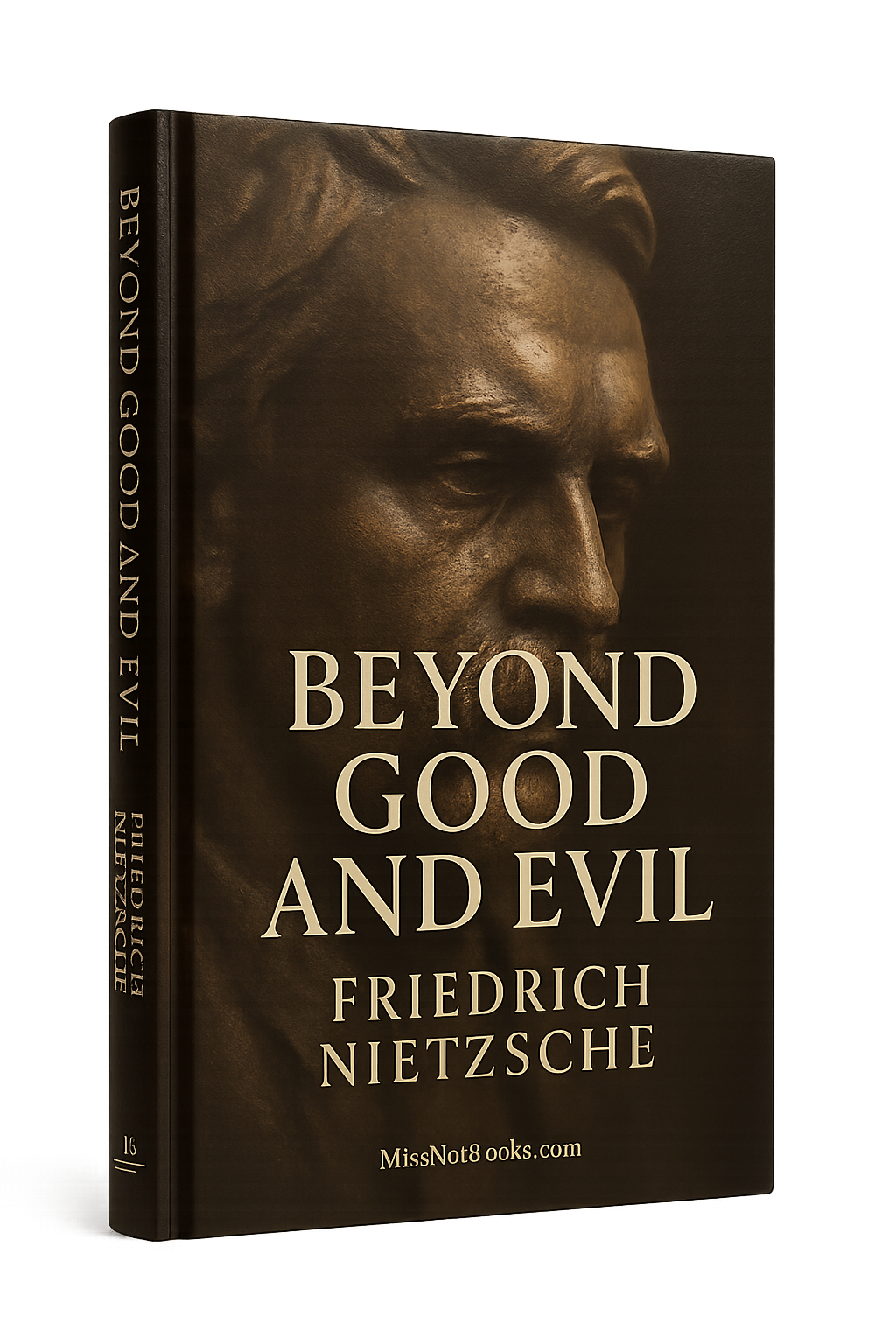
Beyond Good and Evil
In the pantheon of transformative literature, few works possess the capacity to fundamentally reshape our understanding of morality, truth, and the very essence of human existence. This particular book emerged from the intellectual turmoil of the late 19th century, boldly challenging prevailing dogmas and introducing a revolutionary framework for interpreting the complexities of life. By rejecting simplistic binaries and embracing the multifaceted nature of truth, the book has left an indelible mark on philosophical thought, encouraging readers to confront their own beliefs and the foundational assumptions of culture itself.
Don’t miss the opportunity to engage with one of the most influential works of all time. Buy it today and explore the nuanced dance of morality and power.
Core Ideas and Main Arguments
- Critique of Traditional Morality: The book asserts that conventional moral frameworks are often rooted in systems of power, which manipulate societal norms for control, rather than for the elevation of the individual.
- Perspectivism: It introduces the idea that truth is not absolute but rather shaped by individual perspectives and cultural contexts, urging readers to consider the diversity of viewpoints.
- Will to Power: Central to the philosophical inquiries is the concept of the "will to power," positing that the fundamental driving force in humans is not merely survival or reproduction, but the pursuit of influence and mastery.
- Beyond Good and Evil: The title itself encapsulates the major theme of transcending simplistic moral dichotomies, inviting readers to explore deeper, more complex ethical landscapes.
Author’s Intentions and Context
In crafting this seminal work, the author sought to provoke thought in a Western society increasingly reliant on established moral structures and philosophical doctrines. Writing against the backdrop of a rapidly changing world, marked by the rise of industrialization and the questioning of metaphysical certainties, the author's intention was to inspire a reevaluation of dominant beliefs. He challenged not only the moralistic tendencies of the time but also the philosophical underpinnings that contributed to them, aiming to liberate individuals from the constraints of dogma.
Structure of the Book
The book is organized into several key sections, each of which builds upon the last to create a rich tapestry of ideas:
- Preface: Establishing the context and laying the groundwork for the discussions to follow.
- Aphorisms and Reflections: A series of provocative statements and reflections that challenge the reader's preconceived notions about morality and philosophy.
- Themes of Religion and Culture: Engaging with the influence of religion on moral values and the cultural constructs that shape human behavior.
- Concluding Thoughts: A summation that invites readers to forge their own path beyond traditional moral frameworks.
Key Takeaways
- Embrace the complexity of morality without succumbing to oversimplification.
- Recognize the influence of power dynamics on moral beliefs and societal norms.
- Understand that every perspective holds value, and truth is a fluid construct.
- Cultivate personal responsibility in the creation and interpretation of one's moral compass.
Why It’s Important to Read
The ongoing relevance of this book cannot be overstated. It remains a crucial text for anyone grappling with questions of ethics, identity, and societal structure. Students of philosophy, sociology, and psychology will find immense value, as will anyone interested in understanding the roots of contemporary thought on morality and power. Its rich insights continue to inspire critical thinking and self-reflection, making it an essential read for an enlightened society.
Impactful Quotes and Analysis
-
"He who fights with monsters should look to it that he himself does not become a monster."
This cautionary statement exposes the dangers of engaging in moral battles without self-reflection, underscoring the book's exploration of power and ethics. -
"There are no facts, only interpretations."
This powerful assertion underscores the theme of perspectivism, highlighting that our understanding of the world is always mediated through personal and cultural lenses. -
"The most perfidious way of harming a cause consists of defending it deliberately with faulty arguments."
This quote encapsulates the challenge of engaging in ideological battles authentically, warning against the dangers of compromising integrity in the pursuit of ideological goals.
About the Author
Friedrich Nietzsche (1844–1900) was a German philosopher, cultural critic, poet, and philologist whose works have had a profound influence on Western philosophy, art, and literature. His thoughts on morality, religion, and existentialism have positioned him as a key thinker in the development of modern philosophical discourse. Nietzsche's legacy continues to resonate in contemporary discussions surrounding power, ethics, and the human condition.
This monumental work is Beyond Good and Evil by Friedrich Nietzsche, brought to you for educational purposes by MissNotBooks.com.