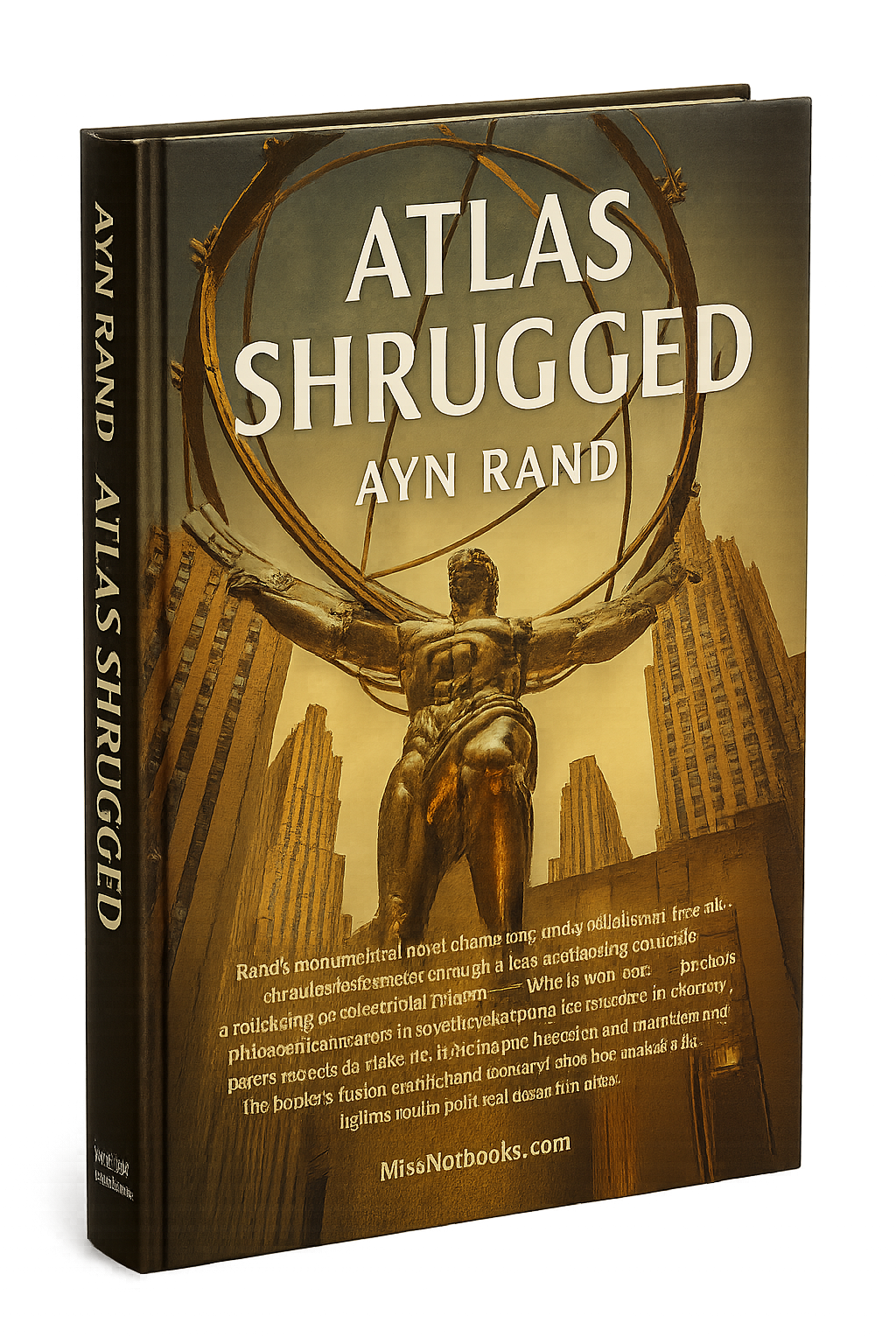
Atlas Shrugged
In the annals of philosophical literature, few works have transformed the fabric of cultural thought as profoundly as this monumental offering. It interviews the very essence of individualism and capitalism, challenging readers to reflect on the nature of human achievement and the role of government in their lives. Rooted in the tumultuous socio-economic climate of the mid-20th century, this book boldly argues for a paradigm shift in how we perceive the interplay between individual rights and societal obligations, igniting conversations that have reverberated through generations. Its revolutionary ideas continue to inspire and provoke thought among advocates of freedom, innovation, and personal responsibility. Don’t miss the opportunity to engage with one of the most influential works of all time. Buy it today and explore the foundations of modern philosophy.
Core Ideas and Main Arguments:
- The primacy of the individual: The text posits that individualism is the bedrock of progress and human flourishing, championing the rights of the self without subjugation to collective dictates.
- The moral defense of capitalism: In a daring stance, it argues that capitalism is not merely an economic system but a moral imperative that recognizes and incentivizes human creativity and agency.
- The dangers of collectivism: It critiques the growing trend towards collectivism, highlighting its consequences on innovation and personal liberty, and warns against the sacrificing of the individual for the sake of the group.
- Productive achievement as a virtue: The narrative elevates the role of productive individuals as the heroes of society, asserting that their contributions deserve recognition and celebration.
Author’s Intentions and Context: Written during a period marked by the expansion of government power and a pervasive skepticism towards free market ideologies, the author sought to address the challenges faced by creative and ambitious individuals stifled by bureaucratic regulations and altruistic morality. This work was intended to galvanize a movement towards a society that reveres individual achievement as the pathway to prosperity, urging a philosophical reevaluation of ethics, purpose, and existence.
Structure of the Book:
- Part One: Non-Contradiction - Establishing the foundational principles of Objectivism, this section tackles the importance of rationality and the rejection of contradictions in human thought.
- Part Two: Pioneers - Introduces central characters who embody the virtues of individualism and innovative spirit, illustrating their personal struggles against a backdrop of societal decay.
- Part Three: The Consensus - Explores the societal acceptance of mediocrity and the rising tide of collectivism that threatens to engulf individual rights.
- Part Four: The Ultimatum - A decisive confrontation unfolds as the characters and their ideals challenge the status quo, revealing the dire consequences of a society that undervalues human creativity.
Key Takeaways:
- Understanding the intrinsic value of individual rights as a prerequisite for societal advancement.
- Recognizing the moral and practical failures of collectivist ideologies.
- Embracing entrepreneurship and innovation as central tenets of a thriving society.
- Developing a personal philosophy that prioritizes logical reasoning and ethical egoism.
Why It’s Important to Read: The discussions presented in this book remain palpably relevant today, often serving as a foundational text for debates surrounding economic freedom, personal responsibility, and the limits of government authority. Readers ranging from philosophers and economists to business leaders and everyday citizens will find invaluable insights that challenge conventional wisdom and inspire further exploration of the principles of liberty and human potential.
Impactful Quotes and Analysis:
-
"The question isn't who is going to let me; it's who is going to stop me."
This powerful assertion encapsulates the spirit of individualism, reinforcing the idea that personal agency is paramount in overcoming obstacles. -
"Freedom is the absence of coercion."
This succinct definition of freedom invokes a clear understanding of its limits and essential nature, emphasizing the importance of non-interference in personal affairs. -
"A nation’s wealth is defined by the ability of its citizens to create."
This statement underlines the text's core belief that true prosperity stems from individual innovation and productivity.
About the Author: Born in St. Petersburg, Russia in 1905, and later emigrating to the United States, Ayn Rand became an influential philosopher and novelist whose ideas birthed the philosophy of Objectivism. An accomplished writer, her books expound upon her ideological principles, advocating for laissez-faire capitalism and the moral supremacy of rational self-interest. Her legacy continues to invigorate discussions on liberty, government, and ethics, shaping the beliefs of countless individuals engaged in the quest for greater economic and personal freedom.
This monumental work is Atlas Shrugged by Ayn Rand, brought to you for educational purposes by MissNotBooks.com.