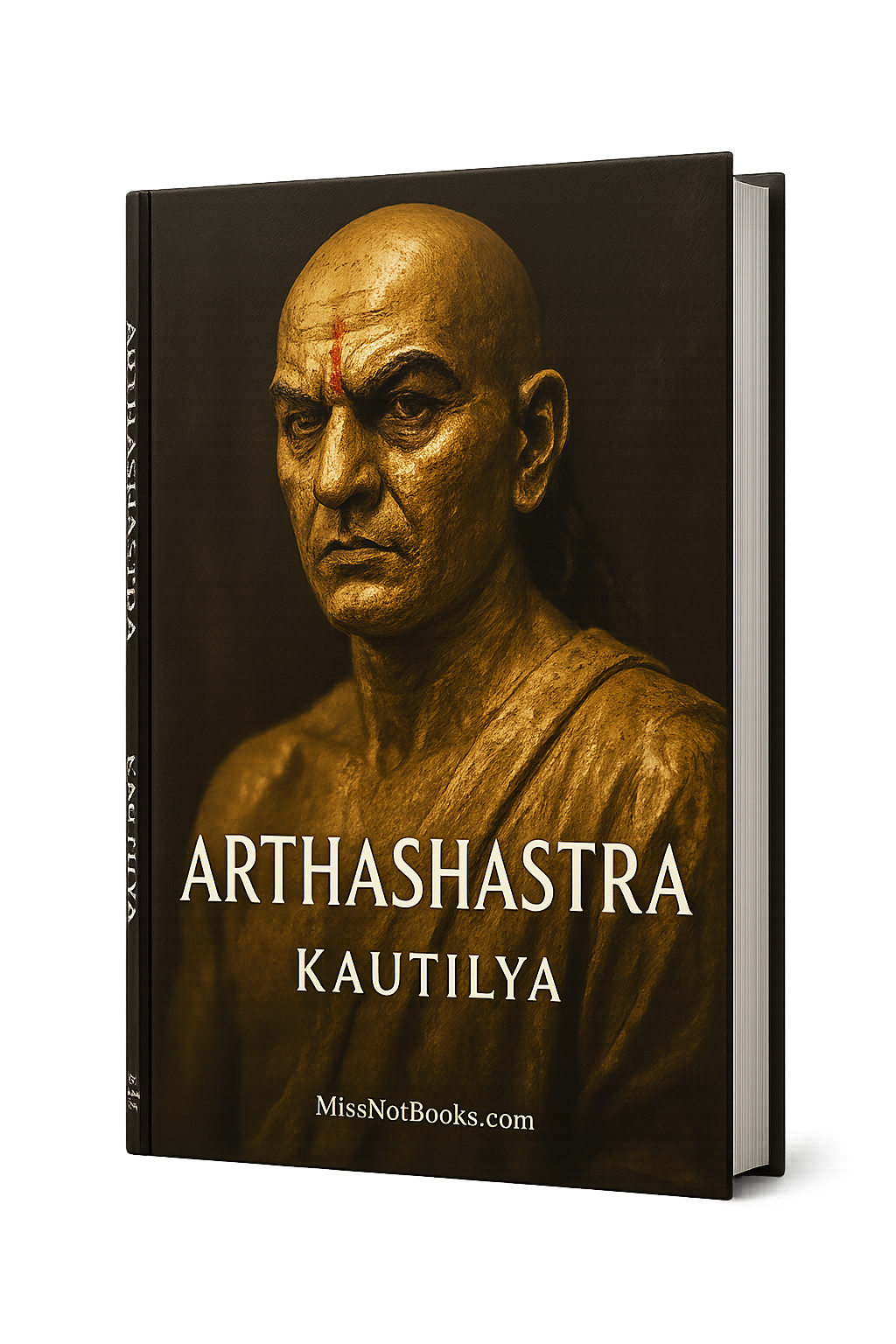
Arthashastra
In a world constantly in pursuit of power and governance, few texts have transcended time and geography to lay the foundational principles of statecraft and strategy as compellingly as one profound work. This book, through its incisive analysis and pragmatic strategies, revolutionized political theory and the understanding of leadership, offering insights that persist in influence across cultures and eras. Its transformative impact lies not merely in the guidelines it sets forth for rulers but also in its profound examination of human nature, ethics, and the dynamics of power.
Don’t miss the opportunity to engage with one of the most influential works of all time. Buy it today and explore the roots of political theory.
Core Ideas and Main Arguments:
- Realism in Politics: The author emphasizes a pragmatic approach to governance, suggesting that the ultimate aim of any ruler is to maintain power and stability, sometimes at the cost of moral considerations.
- Statecraft and Strategy: The text delves into various strategies a ruler may employ, from espionage and warfare to diplomacy, illustrating the importance of flexibility and adaptability in leadership.
- Economic Policies: Insights into the management of the economy, including taxation and trade, highlight the connection between strong governance and economic stability.
- Ethics vs. Practicality: A significant tension runs through the book between moral imperatives and the necessities of political success, challenging readers to consider the balance between ethics and effectiveness.
- Human Psychology: The exploration of human desires, fears, and motivations provides a fundamental understanding of how to manage both subjects and rivals effectively.
Author’s Intentions and Context:
The author, writing in the context of ancient India during a time of political fragmentation and power struggles, aimed to create a comprehensive guide for rulers to navigate the complexities of governance. Living in an era marked by intrigue and warfare, the book sought to address the need for a sophisticated understanding of administration, strategy, and realpolitik in a landscape rife with conflict and competition. By distilling the wisdom of the ages into practical recommendations, the author intended to provide the future leaders with tools necessary not just for survival, but for prosperity.
Structure of the Book:
The book is organized into thematic sections, each dedicated to different aspects of governance and statecraft.
- Introduction: Lays the groundwork for the philosophies presented.
- Book 1 - Knowledge of the State: Discusses the nature of the state and its rulers.
- Books 2-3 - Administration: Focuses on how to govern effectively.
- Books 4-5 - Strategy and Warfare: Provides insights into military tactics and the art of war.
- Concluding Chapters: Offer reflections on the moral underpinnings and practical applications of the strategies discussed.
Key Takeaways:
- Power dynamics are inherently complex and require a nuanced understanding of human behavior.
- The distinction between ethics and effectiveness in leadership is crucial to comprehend for effective governance.
- Economic strength is directly linked to political stability and vice versa.
- Long-term strategies in statecraft can lead to peace and prosperity, despite short-term challenges.
Why It’s Important to Read:
This book remains vital not only for politicians, scholars, and historians but also for anyone interested in the complexities of human governance and interaction. Its enduring relevance speaks to contemporary issues of leadership, ethics, and strategy, making it essential reading for those who seek to navigate the intricacies of influence and authority in any field. By understanding the principles laid out in this work, modern readers can glean insights applicable to a wide array of contexts, from business to diplomacy.
Impactful Quotes and Analysis:
-
“The world’s greatest leader is a slave to his desires.”
This quote embodies the central theme of the tension between ethics and the personal ambitions of rulers, serving as a timeless reminder of the struggles faced by those in power. -
“In war, victory is the aim, but the price of failure is a lesson.”
This phrase illustrates the harsh realities of strategy and governance, reinforcing the notion that even defeat can yield valuable insights for future endeavors. -
“He who wishes to be rich in a day will be hanged in a year.”
Here, the author warns against the pitfalls of impatience and greed, advocating for a measured approach to wealth acquisition and governance that remains relevant in today's fast-paced world.
About the Author:
Kautilya, also known as Chanakya, was an ancient Indian philosopher, economist, and statesman, believed to have flourished around 350-283 BCE. He served as the chief advisor to Emperor Chandragupta Maurya and played a crucial role in the establishment of the Maurya Empire. Renowned for his intellectual acumen in both philosophy and statecraft, Kautilya's legacy as the author of this foundational text endures, influencing political thought, governance practices, and strategy far beyond the borders of India.
This monumental work is Arthashastra by Kautilya, brought to you for educational purposes by MissNotBooks.com.