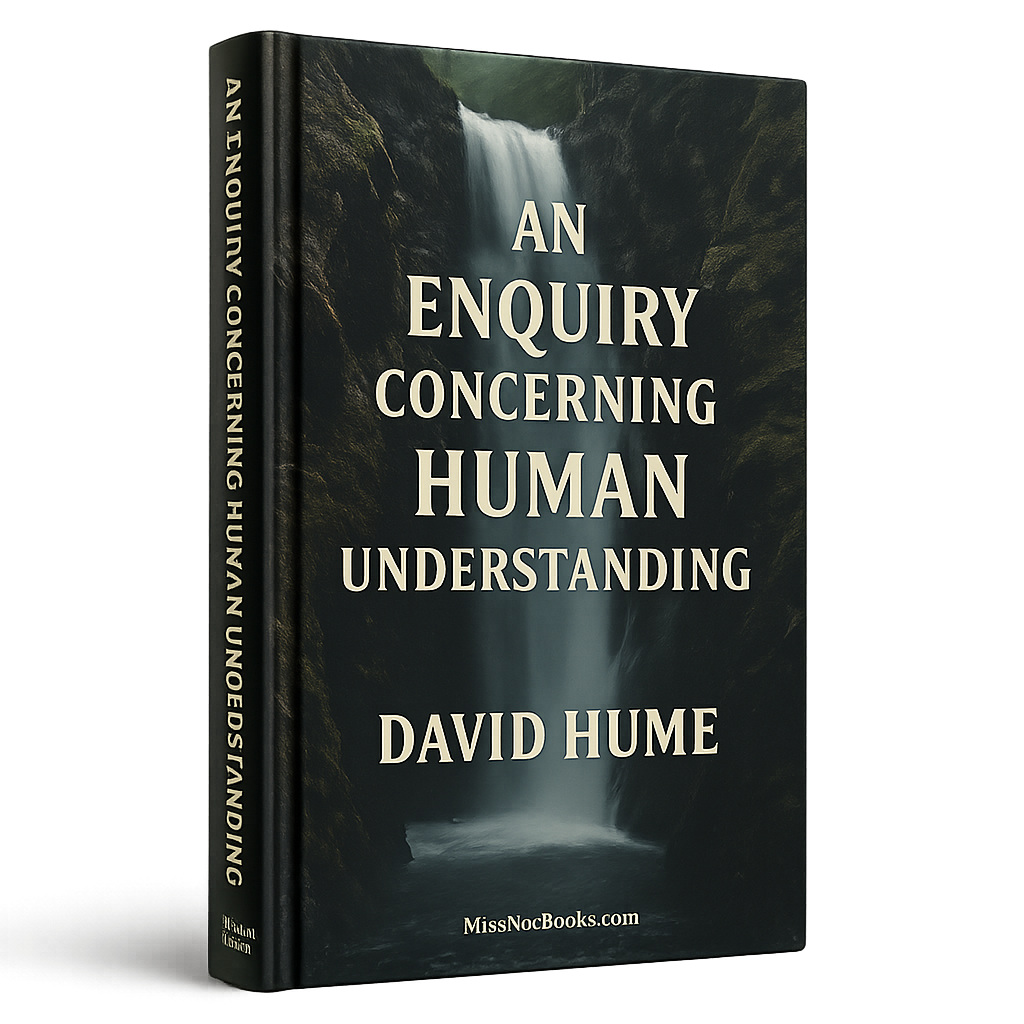
An Enquiry Concerning Human Understanding
In the realm of philosophical discourse, few works have sparked as profound a transformation in human thought as the one that challenges traditional notions of knowledge, existence, and the limits of human understanding. This groundbreaking text revolutionized the way individuals approach epistemology and empiricism, daring to question the very fabric of causation, the nature of belief, and the validity of human reason. By introducing a radical skepticism that examined the foundations of human cognition and belief systems, this work not only redefined philosophical inquiry but also laid the groundwork for modern philosophy, science, and cognitive theory.
Don’t miss the opportunity to engage with one of the most influential works of all time. Buy it today and explore the foundations of modern epistemology.
Core Ideas and Main Arguments
- Empiricism: The text argues passionately that all knowledge is ultimately derived from sensory experience, challenging rationalist perspectives that prioritize innate ideas or deductive reasoning.
- Skepticism about Causation: It presents a bold assertion that causation cannot be directly perceived, leading to a radical questioning of how humans ascribe cause and effect relationships.
- The Limits of Human Reason: The author emphasizes the limitations of human rationality and the fallibility of beliefs based on habits and customs rather than on rigorous proof.
- The Role of Impressions and Ideas: The distinction between impressions (immediate sensations) and ideas (reflections upon those impressions) is pivotal, reshaping the way we understand cognition and the formation of thoughts.
Author’s Intentions and Context
Written during the Enlightenment, the author sought to confront the prevailing philosophical doctrines that claimed certainty about human reasoning and the operations of the natural world. In an era marked by burgeoning scientific inquiry and religious skepticism, the work responds to a climate of dogmatism and offers a fresh perspective that champions doubt and inquiry over acceptance. By pushing against the boundaries of what could be known, this text directly engages with the philosophical challenges of its time, offering a lens through which to understand the nature of knowledge itself.
Structure of the Book
The text is organized into distinct sections that progressively build upon each other:
- Introduction to Human Understanding: Lays the groundwork for discussions on human cognition and understanding.
- Of Knowledge and Probability: Explores concepts of certainty, belief, and the nature of knowledge claims.
- Skeptical Doubts Concerning the Operations of the Understanding: Examines the limits of human reason and the implications of skepticism.
- Of Miracles: Turns the lens on religious belief, questioning accepted doctrines through rigorous analysis of human experience.
This structure facilitates a thorough exploration of the central thesis while maintaining a logical flow that invites critical reflection.
Key Takeaways
- The affirmation that knowledge is built upon sensory experience invites readers to reconsider how they acquire beliefs and understand the world.
- A recognition of human cognition's inherent limitations prompts a humbler approach to knowledge claims and philosophical discourse.
- The separation between impressions and ideas enriches our grasp of the cognitive processes that shape thoughts and beliefs.
Why It’s Important to Read
This work remains a cornerstone of philosophical literature, echoing across disciplines such as psychology, cognitive science, and history. Its insights continue to resonate in contemporary discussions about the nature of belief, rationality, and the scientific method. Graduate students, philosophers, scholars of human cognition, and anyone interested in the foundations of modern thought will benefit profoundly from engaging with its content. Understanding these complex ideas not only enhances one’s intellectual toolkit but also shapes how one navigates the world’s complexities.
Impactful Quotes and Analysis
-
“A wise man proportions his belief to the evidence.”
- This quote encapsulates the core principle of empiricism, underscoring the importance of aligning beliefs with observable phenomena rather than unfounded assumptions.
-
“Custom is the great guide of human life.”
- Here, the author highlights how deeply ingrained habits and societal norms shape our perceptions and decisions, reflecting on the powerful role of culture in human cognition.
-
“The life of man is of no greater importance to the universe than that of an oyster.”
- This provocative statement encourages readers to confront the scale of human existence in relation to the cosmos, prompting reflections on meaning and significance.
About the Author
David Hume (1711–1776) was a Scottish philosopher, historian, economist, and essayist known for his influential works that form a critical part of the Western philosophical canon. Often regarded as one of the greatest philosophers to write in English, Hume is best known for his ideas surrounding empiricism, skepticism, and naturalism, with a lasting legacy that profoundly influenced both modern philosophy and the development of social sciences.
This monumental work is An Enquiry Concerning Human Understanding by David Hume, brought to you for educational purposes by MissNotBooks.com.